How Often Should an Overhead Crane Be Inspected?
An overhead crane should be checked before operation and inspected at frequent and periodic intervals established from the governing rules, manufacturer’s manual, crane duty, operating hours, load spectrum, environment and inspection history. Under the U.S. OSHA general-industry framework for covered overhead and gantry cranes, frequent inspections fall within daily-to-monthly intervals and periodic inspections within 1-to-12-month intervals. Severe service or recurring defects require shorter intervals.
The Direct Answer: Use a Layered Inspection Schedule
There is no reliable “once a year” answer for every overhead crane. A low-use maintenance crane in a clean workshop and a high-cycle casting crane above a steelmaking process should not share the same schedule. Buyers should establish a layered program: operator checks before use, frequent inspections for components exposed to rapid wear or malfunction, periodic inspections for the complete crane, and additional inspections after installation, alteration, long idle periods, abnormal events or major repair.
| Inspection Layer | Typical Timing | Primary Purpose | Buyer / Owner Action |
|---|---|---|---|
| Pre-use / shift check | Before operation or at the start of the shift, according to site procedure. | Find visible or functional conditions that could make immediate operation unsafe. | Give operators a crane-specific checklist and stop-use criteria. |
| Frequent inspection | Daily to monthly in the U.S. OSHA framework; exact interval depends on exposure and service. | Inspect operating mechanisms, hooks, chains, controls, leaks and rapidly changing conditions. | Set task-specific intervals rather than assigning every item one monthly date. |
| Periodic inspection | 1 to 12 months in the U.S. OSHA framework; shorten for severe service or poor history. | Examine the complete crane, including structural, mechanical, electrical and runway-related condition. | Use qualified inspection personnel and retain dated findings, measurements and dispositions. |
| Initial / altered crane inspection | Before initial use and after alteration as required by the governing framework. | Confirm the supplied, installed or altered crane meets the approved design and functions correctly. | Define inspection, testing, documents and acceptance responsibilities in the purchase contract. |
| Return-to-service / special inspection | After specified idle periods, major repair, overload, collision, derailment or other abnormal event. | Verify affected systems and the complete crane where the event could create wider damage. | Require written authorization before operation resumes. |
1. How to Set the Correct Inspection Frequency
Start with the rules that apply at the installation location. OSHA 1910.179 is relevant to covered overhead and gantry cranes in U.S. general industry, but it is not a universal global schedule and does not cover every crane configuration or workplace. Projects outside the United States must use the applicable national and local requirements. The final program should then incorporate the manufacturer’s instructions and site-specific risk.

Use the daily, frequent and periodic crane inspection guide to build the detailed asset schedule. For U.S. projects, the OSHA 1910.179 buyer guide provides a procurement-oriented overview of the covered requirements.
2. What Should Be Checked Before Use or Each Shift?
The operator’s check is intended to identify obvious defects and abnormal operation before a load is committed. It is not a substitute for a qualified frequent or periodic inspection. The checklist must match the crane’s hoist type, controls, attachment, environment and operating method.
| Check Area | Operator Looks / Listens / Tests For | Escalation Trigger |
|---|---|---|
| Controls and motions | Correct direction, smooth response, neutral return, abnormal delay, vibration or noise. | Unexpected motion, control mismatch, severe vibration or unusual noise. |
| Braking | Load-holding behavior, stopping response and drift under the approved test procedure. | Load creep, excessive stopping distance or inconsistent brake release. |
| Hook and load block | Visible deformation, cracks, twist, damage, latch condition and free rotation as applicable. | Any visible crack, deformation, damaged latch or abnormal block condition. |
| Wire rope or load chain | Correct reeving, kinks, birdcaging, broken wires, crushing, corrosion, twist, damaged links or poor seating. | Damage beyond the applicable criteria or rope/chain not correctly seated. |
| Limits and safety functions | Required functional checks under the approved no-load/site procedure; warning and emergency functions. | Failed, bypassed or unreliable limit, warning, interlock or emergency function. |
| Crane path and surroundings | Obstructions, people, loose materials, damaged rails/conductors and adequate operating clearance. | Blocked travel path, damaged runway interface or unsafe work zone. |
A failed check must open a defect record and trigger the site’s lockout/tagout, isolation and repair process where required. Operators should never make an unapproved adjustment simply to complete the shift.
3. How Often Is a Frequent Inspection Required?
For U.S. OSHA-covered overhead and gantry cranes in general industry, “frequent” means daily-to-monthly intervals. That range does not mean every item can wait one month. OSHA identifies daily checks for functional operating mechanisms and certain hydraulic/pneumatic conditions, daily visual inspections for hooks and hoist chains, and monthly certification records for hooks and hoist chains. Running wire ropes require a thorough inspection at least monthly with a certification record under that framework.
Operating Mechanisms
Check maladjustment, excessive wear, abnormal operation and conditions affecting proper motion, braking or load control.
Hooks and Load Chain
Inspect deformation, cracks, twist, wear, link damage, stretch and end connections using the applicable manufacturer and governing criteria.
Ropes and Reeving
Examine visible condition frequently and complete the specified thorough inspection and record at the required interval.
Fluid Systems
Check deterioration, leakage, damaged lines, tanks, valves and other pneumatic or hydraulic parts where fitted.
4. How Often Is a Periodic Inspection Required?
For U.S. OSHA-covered cranes, periodic inspection falls within 1-to-12-month intervals depending on activity, service severity and environment. A 12-month interval is the outer end of that range, not an automatic default. A high-cycle, hot, dusty, corrosive or production-critical crane may need quarterly, monthly or other shorter inspections for selected systems.
| Periodic Inspection Area | Condition to Evaluate | Useful Record |
|---|---|---|
| Bridge, trolley and load-bearing structure | Deformation, cracks, corrosion, loose fasteners, damaged welds, missing parts and abnormal movement. | Marked-up photos, measurements, crack maps and engineering disposition. |
| Mechanical components | Drums, sheaves, shafts, bearings, gears, couplings, wheels, axles, guards and locking devices. | Wear values, clearances, lubricant condition and replacement forecast. |
| Brakes and controls | Wear, adjustment, thermal condition, holding/stopping performance and control reliability. | Measured wear, test result, adjustment and next due date. |
| Electrical and safety systems | Contactors, enclosures, conductors, collectors, cabling, grounding, limits, overload functions, alarms and emergency devices. | Functional test, measured values where applicable and fault history. |
| Runway and travel interface | Rails, clips, joints, end stops, bumpers, wheel flanges, alignment indicators and skew symptoms. | Wheel/rail wear trend, survey findings and corrective-action owner. |
| Access and protective equipment | Ladders, stairs, walkways, guardrails, lighting, labels, guarding and isolation provisions. | Access defect list and closeout evidence. |

Inspection depth must be sufficient to find the relevant defects. Visual examination may be adequate for some components, while measurements, nondestructive examination, oil analysis, thermal checks, electrical tests or partial disassembly may be necessary when condition, history or the governing criteria require them.
5. Initial, Idle, Repaired and Abnormal-Event Inspections
Calendar inspections do not cover every return-to-service decision. New and altered cranes require initial inspection before use under the U.S. OSHA framework, together with applicable operational and rated-load testing. The purchase contract should define the responsible parties, test scope, instruments, test loads, acceptance criteria and handover records.
| Trigger | Inspection / Test Decision | Release Evidence |
|---|---|---|
| New or altered crane | Initial inspection plus required operational and load testing before use. | Approved inspection/test reports, settings, drawings, manuals and punch-list closeout. |
| Idle 1 to less than 6 months | For U.S. OSHA-covered cranes, specified frequent and rope inspections before return to service. | Dated checklist, rope record and defect closeout. |
| Idle over 6 months | For U.S. OSHA-covered cranes, complete frequent, periodic and rope inspections before return. | Complete report, repairs and formal return-to-service authorization. |
| Standby crane | For U.S. OSHA-covered cranes, specified inspection at least semi-annually, plus required rope checks. | Asset-specific inspection and readiness record. |
| Major repair or component replacement | Inspect and test the affected system; expand scope when the repair changes structural, load-control or safety performance. | Repair procedure, parts traceability, test results and authorized release. |
| Overload, collision, derailment or unusual event | Quarantine and inspect all potentially affected structures, mechanisms, ropes, hooks, controls and runway interfaces. | Event investigation, engineering disposition, repairs, tests and release. |
Each crane should have a unique asset ID linking inspections, findings, photos, measurements, repairs, parts, tests and return-to-service approvals. Records should show who inspected, when, which crane and components were examined, what was found, the risk decision, corrective action, responsible person and closeout date.
6. When Should Inspection Intervals Be Shortened?
Shorten intervals when wear or deterioration can progress faster than the current schedule detects it. The change can apply to the complete crane or only to high-risk components. Use inspection trends and actual operating data rather than waiting for a breakdown.
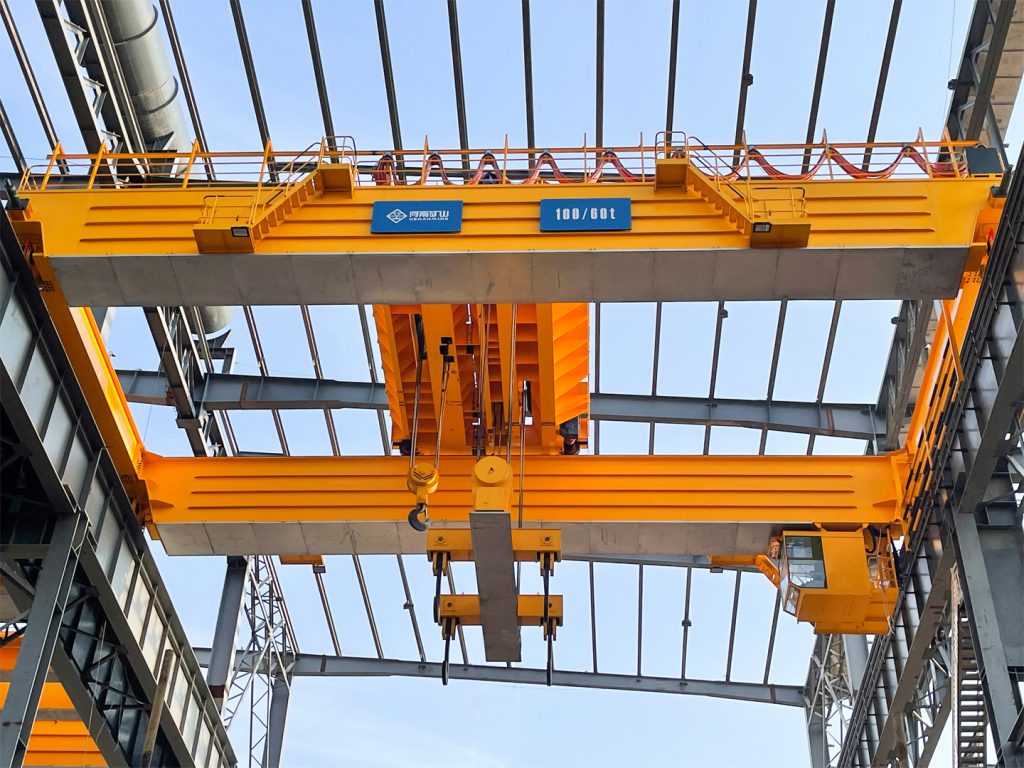
Buyers of severe-duty equipment should review the steel mill overhead crane buying guide and ladle crane specification guide before agreeing on inspection access, redundancy and maintenance scope.
7. What Buyers Should Require From a New Crane Supplier
Inspection cost and downtime are influenced by decisions made before purchase. The crane should provide safe, practical access to the components that the owner must inspect throughout its lifecycle.
- Component-level inspection and preventive maintenance schedule in the final operation and maintenance manuals.
- Permanent asset identification for crane, hoists, hooks, ropes/chains, drives and safety devices where traceability is required.
- Safe ladders, stairs, platforms, walkways, lighting, isolation points and fall-protection interfaces for the supplied configuration.
- Access or removal routes for brakes, motors, reducers, drums, sheaves, wheels, electrical panels and other major service components.
- Baseline settings and measurements for brakes, limits, overload devices, wheels, rails, ropes/chains and critical structures.
- Inspection forms, lubrication charts, drawings, parts lists, electrical/control documentation and required special tools.
- Training for operators, inspectors and maintenance personnel plus defined warranty/service response.
When comparing equipment, do not evaluate only purchase price. Review the overhead crane preventive maintenance checklist and confirm that inspection access is included in the proposed crane layout.
8. Overhead Crane Inspection Program Checklist
For outsourced inspection or lifecycle support, send Henan Mine Crane the crane model, capacity, span, lift height, duty, application, environment, age, operating hours, current manuals, last inspection report, known defects and required service scope.
9. Frequently Asked Questions
Is an annual inspection enough for an overhead crane?
Not by itself. Annual inspection may fall within a periodic program, but pre-use/shift checks and frequent inspections are also required. Severe service or adverse history may require periodic inspections at shorter intervals.
What is the difference between frequent and periodic inspection?
Frequent inspection targets operating mechanisms and components that can deteriorate or malfunction quickly. Periodic inspection is a broader examination of the complete crane, including structural, mechanical, electrical and travel systems.
Does OSHA require monthly overhead crane inspections?
For covered U.S. general-industry cranes, OSHA defines frequent inspection as daily to monthly and specifies daily and monthly requirements for certain items. Running ropes require a thorough inspection at least monthly. Applicability and exact task frequency must be confirmed for the crane and workplace.
Who can inspect an overhead crane?
The governing rules and owner program determine the required qualifications. Operator pre-use checks, designated-person inspections, technical measurements and engineering assessments may require different levels of competence and authorization.
Should a crane be inspected after a repair?
Yes. The affected systems should be inspected and functionally tested before return to service. Major structural, load-control or safety-related work may require engineering review and additional testing.
How often should a wire rope be inspected?
Visible rope condition should be observed during normal checks, and a thorough recorded inspection must follow the governing requirements and manufacturer’s criteria. Under U.S. OSHA 1910.179 for covered cranes, running ropes are thoroughly inspected at least monthly with a certification record.
Is inspection the same as preventive maintenance?
No. Inspection identifies condition and defects; preventive maintenance services, adjusts or replaces components to control deterioration. The two programs should share findings and schedules but remain clearly defined.
Final Recommendation
Do Not Use Annual Inspection as the Entire Program
Combine operator checks, frequent inspection, periodic inspection and event-driven return-to-service review.
Base Frequency on Real Service
Use duty, load spectrum, operating hours, environment, criticality and defect history to select intervals.
Make Every Finding Actionable
Define stop-use criteria, repair responsibility, closeout evidence and return-to-service authority.
Specify Inspection Access Before Purchase
Require safe access, clear manuals, baseline data, inspection forms, training and service support in the crane contract.
Request an Overhead Crane and Lifecycle Service Proposal
Send Henan Mine Crane your capacity, span, lifting height, duty, load spectrum, operating hours, application, environment, control method, destination, existing runway data and required inspection or maintenance scope. Our technical sales and engineering teams can prepare a project-specific crane configuration, inspection-access plan and commercial quotation.
Request an Overhead Crane Quote
Review Crane Lifecycle Services