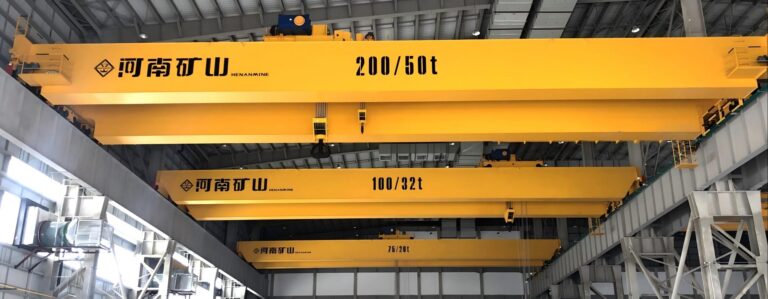
QZ Double-Girder Grab Overhead Crane
For bulk-material buyers who need a dedicated double-girder crane with a four-rope grab for repetitive loading, unloading, stockpile transfer or process feeding.

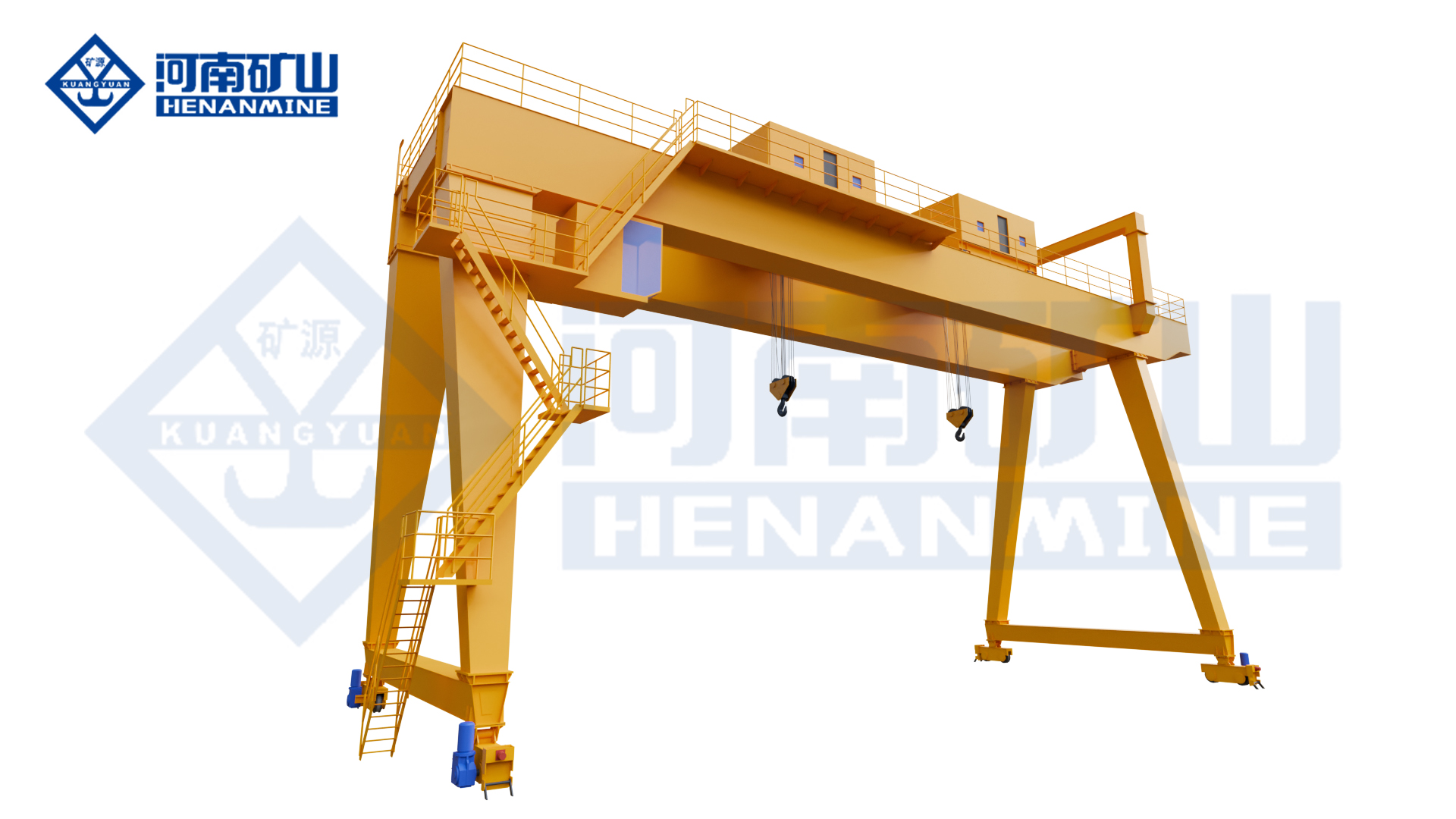
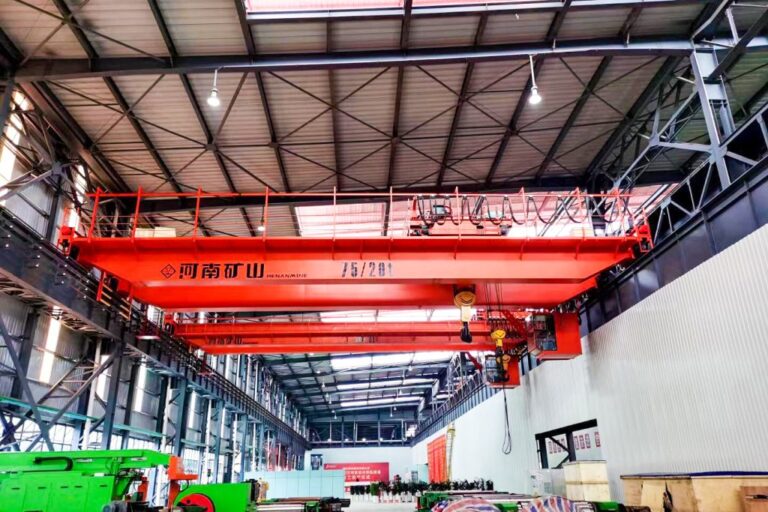
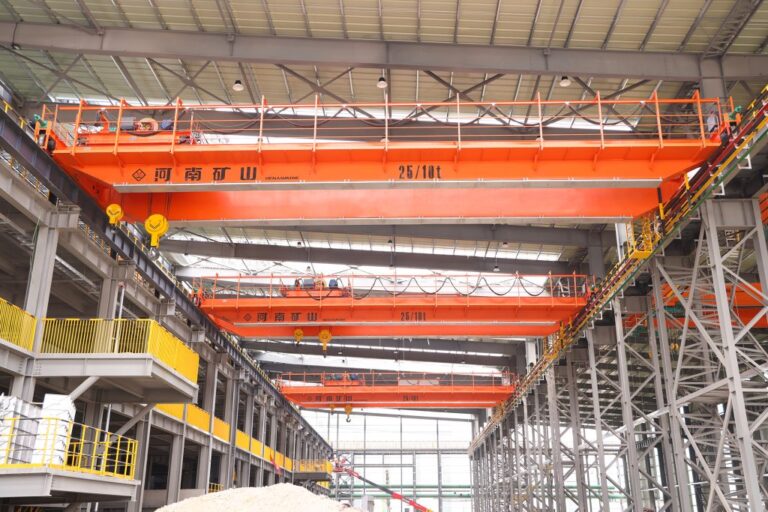
Henan Mine Crane QZ-family grab overhead crane showing the double-girder bridge and grab-bucket material-handling arrangement.
The QZ double-girder grab overhead crane is intended for loose bulk-material handling rather than general hook lifting. The official Henan Mine Crane QZ product-family source confirms a four-rope grab and lists ore, lime, raw coal, sand, coke, cement and slag among typical handled materials.
For procurement, crane tonnage alone is not enough. Bulk density, particle size, moisture, required throughput, grab self-weight, pickup depth, discharge height and operating cycle directly affect grab volume, hoisting duty, travel speeds and the final crane configuration.
Quick Specifications
| Product Model |
QZ |
| Product Type |
Double-Girder Grab Overhead Crane |
| Source-Confirmed Grab Type |
Four-rope grab |
| Source-Confirmed Material Examples |
Ore, lime, raw coal, sand, coke, cement, slag |
| Lifting Capacity |
Configured according to project requirements |
| Span |
Configured according to runway center distance |
| Lifting Height |
Configured according to stockpile, pit and discharge geometry |
| Working Duty |
Selected from required throughput, load spectrum and operating frequency |
| Control Method |
Configured according to project requirements |
Best For: Coal, ore, coke, slag, sand, lime, cement and other loose bulk materials handled repeatedly within a fixed workshop, warehouse or material-yard bay.
Request A QZ Grab Overhead Crane Quote
Product Overview
The official Henan Mine Crane QZ-family source identifies the QZ grab crane as a mature and flexible bulk-handling crane using a four-rope grab. It is positioned for warehouses, material yards and workshops.
This product should be engineered around the bulk-material process. A low-density material may require a large-volume grab even when the crane tonnage is modest, while dense ore or slag can reach the crane's suspended-load limit with a much smaller grab. The grab, ropes and any below-the-hook equipment must therefore be included in the load calculation.
The source page for cat=146 currently identifies one product: Grab Double-Girder Overhead Crane. The exact p=2715 detail page was not fully retrievable through the current crawler, so unpublished numerical parameters or p=2715-specific performance claims have not been invented.
Why Choose a QZ Double-Girder Grab Crane?
Purpose-Built Bulk Handling
A four-rope grab is better suited to repetitive loose-material pickup and discharge than a standard hook crane.
Double-Girder Bridge Platform
The double-girder layout provides a practical platform for a grab trolley and repetitive industrial bulk-handling cycles.
Material-Specific Grab Selection
Grab geometry can be selected around bulk density, particle size, moisture and flow characteristics.
Suitable for Repetitive Cycles
The product is intended for repeated loading, unloading and transfer rather than occasional maintenance lifting.
Automation Upgrade Path
Henan Mine Crane also publishes an intelligent QZ-family version with MES/WMS, positioning and anti-sway functions; these should be treated as optional project scope rather than assumed on the standard cat=146 product.
Product Images

Official Henan Mine Crane QZ-family source image showing the grab crane structure and bulk-material lifting arrangement.
|

Official Henan Mine Crane QZ-family source image showing the grab crane structure and bulk-material lifting arrangement.
|

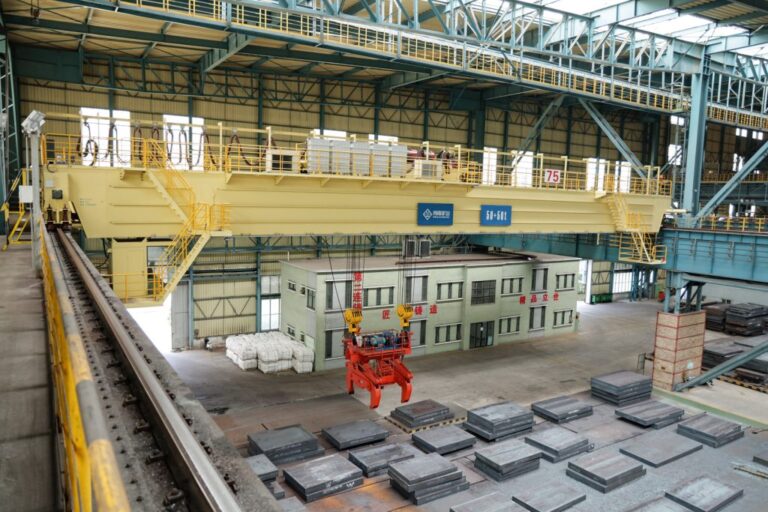
Official QZ-family source image associated with an intelligent grab-crane application in a steel-industry material-handling project.
|

Official QZ-family source image associated with an intelligent grab-crane application in a steel-industry material-handling project.
|

Official QZ-family source image associated with an unmanned grab-crane application for industrial bulk-material handling.
|
 Official Henan Mine Crane QZ-family source image for an electric grab bridge crane. Official Henan Mine Crane QZ-family source image for an electric grab bridge crane.
|
Main Crane Components
| Double-Girder Bridge |
Carries the grab trolley across the crane span; final structure is selected from capacity, span and duty. |
| Grab Trolley |
Supports the hoisting and grab-opening/closing functions required by the four-rope grab system. |
| Four-Rope Grab |
Source-confirmed QZ-family attachment for bulk materials. |
| Bridge Travel System |
Moves the crane longitudinally along the runway. |
| Electrical & Control System |
Configured for the required operator mode, speeds, safety functions and any optional automation. |
Technical Parameters
| Model |
QZ |
| Capacity |
Project-specific; include grab and all suspended equipment |
| Span |
Project-specific |
| Lifting Height |
Project-specific |
| Grab Type |
Four-rope grab confirmed by official QZ-family source |
| Grab Volume |
Selected from material density and required throughput |
| Hoisting Speed |
Project-specific |
| Grab Opening / Closing Performance |
Project-specific |
| Trolley Travel Speed |
Project-specific |
| Crane Travel Speed |
Project-specific |
| Working Duty |
Project-specific |
| Control Method |
Project-specific |
| Power Supply |
According to site electrical conditions |
| Indoor / Outdoor Configuration |
According to actual site conditions |
Source-Confirmed Facts & Buyer-Defined Options
Source-confirmed QZ-family facts:
- Model designation QZ.
- Four-rope grab is used as the dedicated lifting attachment.
- Typical materials listed by the official source include ore, lime, raw coal, sand, coke, cement and slag.
- Official source positions the QZ grab crane for warehouses, material yards and workshops.
Buyer-defined items:
- Rated capacity and grab self-weight
- Bulk density and particle size
- Grab volume and jaw / bucket design
- Required throughput and cycle time
- Span, lifting height and runway length
- Stockpile / pit / hopper geometry
- Control mode and operator visibility
- Outdoor, dust, corrosion or temperature conditions
- Automation, positioning or WMS/MES interface if required
Application Scenarios
| Coal Handling |
Coal yards, bunkers and process-feeding positions. |
| Ore / Mineral Handling |
Bulk ore transfer between pits, stockpiles and hoppers. |
| Coke / Slag Handling |
Repetitive bulk transfer in steel and metallurgical facilities. |
| Cement / Lime / Sand |
Loose-material loading and storage transfer. |
| Warehouse / Material Yard |
Fixed-bay bulk loading, unloading and stockpile management. |
How to Select the Right QZ Grab Overhead Crane
1. Start with the Bulk Material
Provide material name, loose bulk density, particle size, moisture, temperature and abrasiveness.
2. Define Required Throughput
State tonnes per hour, operating hours per shift and peak cycle requirement.
3. Select the Grab Around Density
Grab volume should be calculated together with material density and grab self-weight so the crane is not overloaded.
4. Provide Pickup and Discharge Geometry
Stockpile height, pit depth, hopper opening and discharge elevation determine lifting height and working envelope.
5. Define Duty from the Real Cycle
Grab cranes often work more intensively than maintenance cranes. State cycles per hour and percentage of loaded travel.
6. Define Control and Visibility
Explain whether the operator can see the pickup/discharge points and whether cabin, remote or automated operation is preferred.
7. Define Environment
Outdoor rain, heavy dust, corrosion, high temperature or low temperature should be stated before electrical and mechanical selection.
Bulk Material & Grab Selection Data
| Bulk Density |
One of the most important inputs for grab volume and crane suspended-load calculation. |
| Particle Size |
Large particles can require a different grab edge / tooth configuration. |
| Moisture / Stickiness |
Affects filling efficiency and clean discharge. |
| Abrasiveness |
Influences wear-part and grab-material selection. |
| Required Throughput |
Determines target cycle time and the combination of grab volume and crane speeds. |
| Grab Self-Weight |
Must be included in total suspended load. |
| Pickup Depth |
Pit or bunker depth affects lifting height and rope length. |
| Discharge Opening |
Hopper or receiving-area geometry affects grab opening and positioning. |
Safety & Control: What Buyers Should Confirm
• Rated-capacity and overload-protection requirements
• Upper / lower hoisting and travel limits
• Brake and emergency-stop requirements
• Safe grab opening / closing logic
• Operator visibility, cameras or remote-view requirements if needed
• Anti-collision requirements when multiple cranes share the runway
• Dust protection and environmental protection for electrical equipment
• Manual fallback and recovery procedures if automation is included
• Factory and site load / functional acceptance tests
Installation & Maintenance
Before manufacture, confirm runway span, rail / runway-beam condition, lifting height, pit / hopper geometry, power supply and erection access. The full grab envelope should be checked against walls, bunkers, hoppers, conveyors and other process equipment.
Maintenance should follow the supplied crane manual and actual duty. In addition to bridge and trolley mechanisms, the buyer should plan routine inspection of grab ropes, rope reeving, grab pins / joints, wear edges, drums, brakes and any sensors or cameras used for the bulk-handling process.
What Information Do We Need for a Quote?
| 1 |
Bulk material name |
| 2 |
Loose bulk density |
| 3 |
Particle size / moisture / abrasiveness |
| 4 |
Required throughput (t/h) |
| 5 |
Maximum suspended load |
| 6 |
Required grab volume or existing grab data if known |
| 7 |
Span |
| 8 |
Lifting height / pit depth |
| 9 |
Runway length |
| 10 |
Cycles per hour / operating hours |
| 11 |
Control method |
| 12 |
Workshop / yard / hopper layout |
| 13 |
Power supply |
| 14 |
Destination and installation / commissioning scope |
Frequently Asked Questions
What material can a QZ grab crane handle?
The official Henan Mine Crane QZ-family source lists ore, lime, raw coal, sand, coke, cement and slag as examples. The final grab must still be selected for the actual material.
Is the grab included in the crane capacity calculation?
For engineering selection, all suspended equipment below the crane—including the grab—must be included when checking the total suspended load.
How do I choose grab volume?
Use bulk density, filling behavior, grab self-weight and required throughput. A larger grab is not automatically better if it causes overload or excessive cycle time.
Can the crane be automated?
Henan Mine Crane publishes an intelligent QZ-family configuration with positioning, anti-sway and WMS/MES functions. Treat automation as project-specific scope rather than a standard assumption for the cat=146 product.
What data has the biggest effect on price?
Capacity, span, lifting height, duty, grab size, environmental protection, control mode and automation scope usually have the largest design impact.
Related Overhead Cranes
QZ Intelligent Grab Bucket Double-Girder Overhead Crane
QEN Grab & Hook Dual-Purpose Overhead Crane
QP Grab & Electromagnetic Dual-Purpose Overhead Crane
Request A QZ Double-Girder Grab Crane Quote
Send the bulk material, density, required throughput, span, lifting height, runway length, pit / hopper drawing, operating cycle and control requirements. Henan Mine Crane engineers can then size the grab, crane duty and motion configuration around the actual material-handling process.
Request A Quote | View Overhead Cranes