Port Material Handling Crane Project
40t Rail-Mounted Portal Crane Project for Port Cargo Handling
A 40t portal crane engineered for flexible loading, unloading, storage transfer and yard logistics involving offshore wind components, containers and other heavy port cargo.

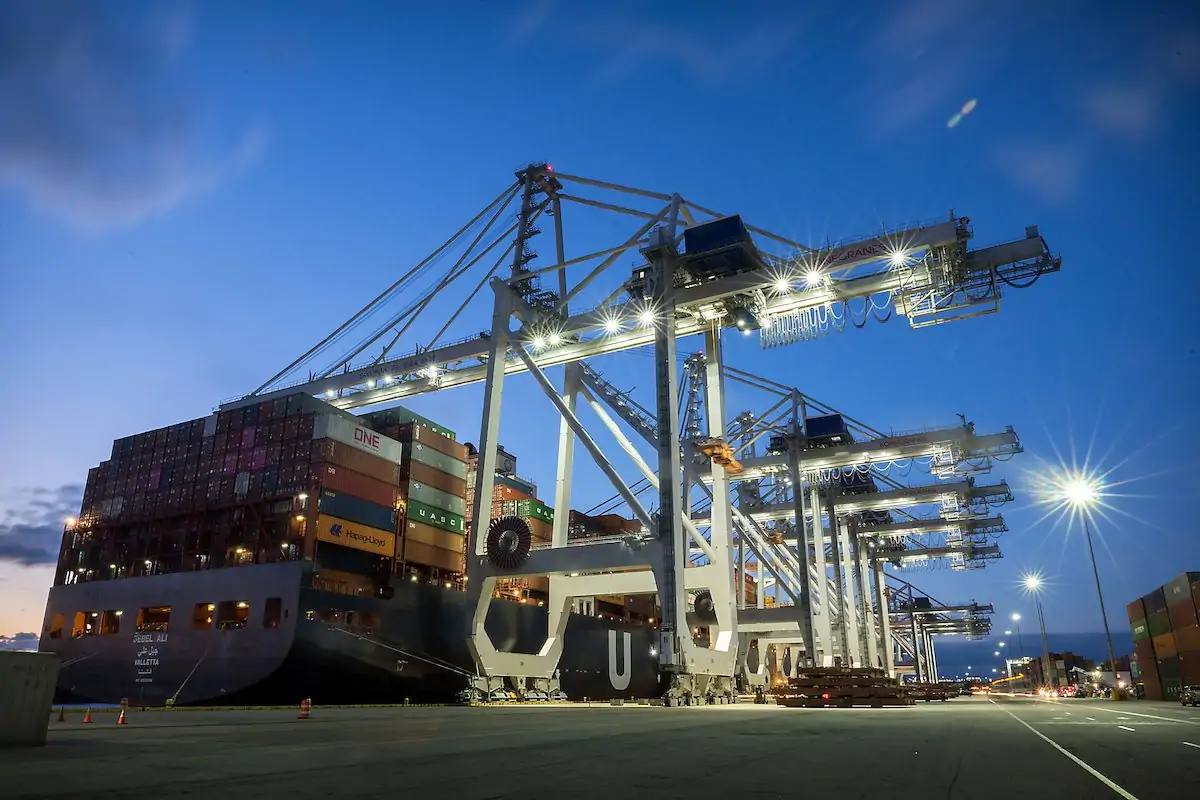
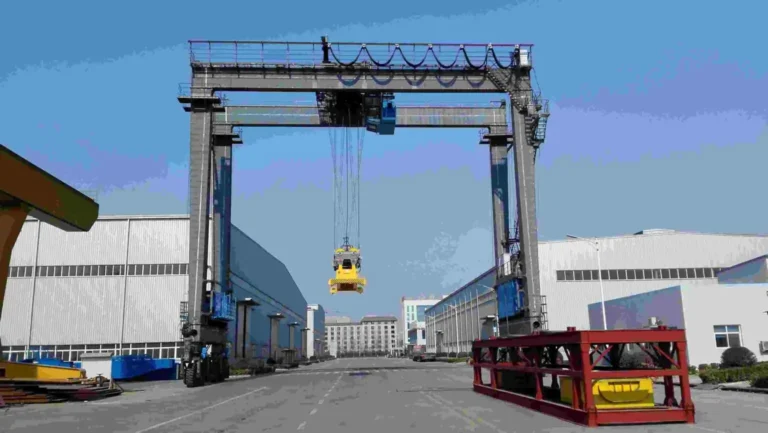
40t portal crane configured for heavy and mixed cargo handling in a port logistics environment.
| Rated Capacity40 tonnes |
Crane TypeRail-mounted portal crane |
CargoWind components, containers and heavy goods |
Motion ControlAC variable-frequency speed regulation |
Project Background
A port handling heavy industrial cargo needed one lifting system capable of serving several stages of the logistics process. Loads included large offshore wind power components, containers and other port goods moving between the quay, storage area and onward transport. The crane therefore had to combine useful lifting capacity with a wide working envelope and responsive control.
Henan Mine Crane developed and manufactured a 40t rail-mounted portal crane for this application. Its lifting, slewing, luffing and travelling mechanisms allow the operator to approach cargo from different positions, transfer it across the operating area and place it accurately at the selected loading or storage point.
The project focused on flexible operation, stable movement and dependable safety protection. Variable-frequency drives, limit switches, interlocking protection and accuracy-oriented manufacturing processes were integrated into the equipment package. The result is a practical port crane for buyers who need to handle mixed heavy cargo without sacrificing controlled low-speed positioning.
Planning a port crane procurement? Send the maximum cargo weight, cargo dimensions, lifting points, required outreach, rail gauge, lifting height, operating radius, travel distance, duty cycle, local wind conditions and power supply. Henan Mine Crane can prepare a project-specific configuration and commercial quotation.
Port Handling Requirements
Port cargo changes in weight, size, shape and lifting method. Offshore wind components require controlled handling of high-value, oversized structures. Containers need compatible lifting attachments and repeatable positioning. General heavy cargo may require hooks, lifting beams, slings or purpose-designed spreaders. A useful portal crane must be engineered around this complete cargo profile rather than a single nominal capacity.
The working area is equally important. Outreach determines whether the crane can reach the vessel, truck lane, rail wagon or storage position. Lifting height must provide clearance above cargo stacks and transport equipment. Rail gauge, tail radius and portal clearance must suit the existing civil works and allow vehicles or conveyors to pass through the portal where required.
Productivity depends on more than maximum speed. Long transfers need efficient motion, but landing a heavy component calls for smooth acceleration, stable slewing and precise low-speed control. The operating mechanisms therefore need coordinated speed profiles that match both rapid cargo transfer and careful final placement.
40t Portal Crane Solution
The supplied crane combines a portal support structure, rotating upper machinery and a luffing boom. Hoisting raises and lowers the cargo, slewing turns the boom around the crane axis, luffing changes the operating radius, and rail travel repositions the complete crane along the quay or yard. These four motions give the equipment a flexible three-dimensional working envelope.
A 40t rated capacity supports demanding industrial cargo while keeping the equipment adaptable to daily port operations. For a new project, the load chart is selected according to capacity at each radius, because safe lifting capacity can vary with outreach. Buyers should therefore provide both the maximum load and the radius at which that load must be handled.
The crane can be matched with an application-specific lifting attachment. Hook blocks support slings and lifting beams for machinery or wind components, while suitable spreaders can be evaluated for container duties. When several cargo types are planned, the technical proposal defines attachment changes, permitted operating modes and the corresponding rated capacities.
Buyers evaluating alternative layouts can also review Henan Mine Crane’s gantry crane range. A portal crane provides slewing and variable outreach, while a conventional gantry crane is often selected for straight-line coverage over a fixed rail span.
Flexible Lifting, Slewing, Luffing and Travel
Independent motion control allows the operator to select the best movement sequence for each cargo. During unloading, the crane can hoist clear of the vessel, slew toward the quay, adjust radius through luffing and lower the cargo onto a transporter or prepared storage support. Crane travel then extends service coverage along the rail.
Smooth combined motion helps reduce unnecessary stops and corrective movements. The exact level of simultaneous operation is defined during engineering according to the load, duty, motor capacity and safety logic. Operating commands are arranged so that prohibited or unsafe combinations are blocked by the control system.
For offshore wind cargo, lifting points, center of gravity, allowable inclination and temporary support positions should be confirmed before final design. These details influence hook approach, boom radius, attachment design, speed selection and operator visibility. Buyers planning a broader wind logistics facility can review the related offshore wind assembly crane solution.
AC Variable-Frequency Speed Control
The operating mechanisms use AC variable-frequency speed regulation. Instead of abrupt full-speed starts and stops, the drives provide controlled acceleration and deceleration. This supports steadier cargo movement, reduces mechanical shock and gives the operator finer control when approaching a landing position.
Different motions can be tuned for their individual tasks. Hoisting may use a low-speed range for pickup and landing, slewing may use a smooth ramp to limit load swing, and travel speed may be optimized for the length of the quay. Luffing control supports accurate adjustment of the operating radius without sudden boom movement.
For procurement, buyers should specify required maximum speeds, minimum stable speeds, acceleration times and cycle targets. These values allow the drive package to be selected against measurable operating goals and help balance throughput, positioning accuracy and equipment life.

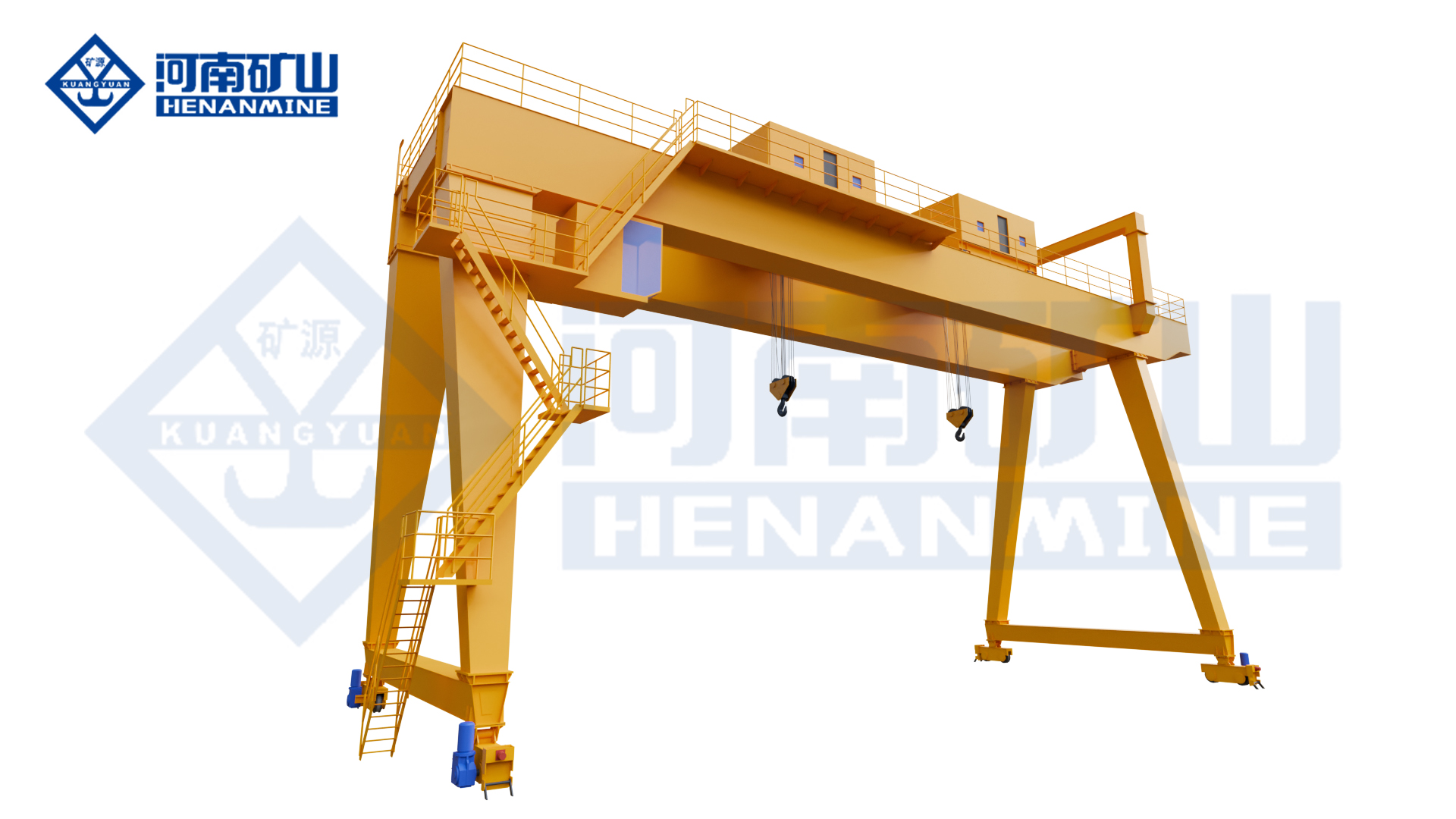
Portal structure and rotating boom system provide a flexible working radius for port cargo transfer.
Multiple Safety and Interlock Protections
Necessary limit switches and interlocking protection devices are integrated into the crane control package. Travel, slewing, luffing and hoisting limits help prevent mechanisms from moving beyond the approved operating range. Interlocks coordinate these limits with operating commands and stop incompatible actions.
A buyer-specific safety package can also include overload protection, emergency stops, audible and visual warnings, wind-speed monitoring, rail clamps or storm anchoring, anti-collision, access control, load indication and operating-zone restrictions. The final scope depends on local regulations, crane location and the interaction with ships, vehicles, people and nearby equipment.
Safety functions are checked during manufacturing and commissioning. Functional tests verify limits, alarms, brakes, emergency control and permitted motion combinations. Operator training then connects these systems with approved lifting procedures and daily inspection requirements.
Precision Manufacturing and Pre-Assembly
Installation accuracy is particularly important on a portal crane because the portal, rotating structure, boom and machinery must work as one coordinated system. The project used sectional prefabrication and pre-assembly machining to control the fit and alignment of key parts before delivery.
This manufacturing approach supports accurate assembly at site and stable movement after commissioning. Correctly matched structural interfaces help the crane achieve precise cargo pickup, reliable travel and smooth boom extension or retraction through the luffing movement.
Before shipment, the equipment package can be checked against approved drawings, quality plans and test procedures. For overseas procurement, documentation may include material and component records, welding and inspection reports, electrical drawings, operating manuals, spare-parts lists and packing schedules according to the contract scope.
Port Environment and Project Customization
Port cranes operate in wind, humidity, salt-laden air and changing temperatures. The buyer should state maximum operating and out-of-service wind speeds, corrosion category, ambient temperature, rainfall, lightning conditions and any special electrical protection requirements. Paint systems, enclosures, cables and exposed components can then be selected for the installation environment.
Civil and electrical interfaces are confirmed through the general arrangement. Rail type, wheel loads, rail gauge, foundation loads, buffer reactions, storm anchoring, power-feed arrangement and cable routing are coordinated with the port designer. Early interface review helps avoid changes after crane fabrication or quay construction.
Control station layout can be adapted to the operating process. A cabin offers direct visual control, while remote or pendant functions may support maintenance or specific local operations. Cameras, communication systems and monitoring can improve visibility where cargo, ship structures or the boom create blind areas.
Key Project Configuration
| Project Element |
Project Configuration |
| Application |
Port loading, unloading, storage transfer and cargo transportation support. |
| Rated Capacity |
40t portal crane. |
| Typical Cargo |
Offshore wind power components, containers and other heavy port goods. |
| Main Motions |
Hoisting, slewing, luffing and rail travel. |
| Speed Control |
AC variable-frequency regulation for the operating mechanisms. |
| Protection |
Required limit switches and interlocking protection devices. |
| Manufacturing Process |
Sectional prefabrication and pre-assembly machining for installation accuracy. |
| Operating Benefits |
Precise pickup, stable movement, smooth radius adjustment and flexible cargo coverage. |
Project Result
The 40t portal crane gives the port a flexible lifting platform for offshore wind components, containers and mixed heavy cargo. Four controlled motions allow the equipment to serve vessel, quay, storage and transport positions within its engineered working envelope.
Variable-frequency speed regulation supports both efficient transfer and careful final positioning. Limit and interlock protections strengthen operational control, while sectional prefabrication and pre-assembly machining support installation accuracy and stable mechanism performance.
For buyers, the same project concept can be customized around the required load chart, outreach, rail gauge, portal clearance, cargo attachments, local climate and operating duty. This turns the portal crane into a process-specific logistics asset rather than a standard lifting machine selected only by tonnage.
Information Required for a 40t Port Portal Crane Quote
Cargo Data
Maximum and typical weights, dimensions, lifting points, center of gravity, rigging weight, cargo type and attachment drawings |
Working Envelope
Outreach, minimum and maximum radius, lifting height, depth below rail, rail gauge, travel length and portal clearance |
Performance
Duty class, annual throughput, operating hours, target cycle, required motion speeds and positioning requirements |
Site Conditions
Temperature, operating wind, storm wind, corrosion category, humidity, rainfall, seismic data and hazardous-area requirements |
Interfaces
Power supply, rail and foundation details, nearby cranes, ship range, vehicle lanes, control method and plant communication |
Commercial Scope
Delivery port, installation, commissioning, testing, training, spare parts, warranty, documentation and required standards |
Frequently Asked Questions
What is a port portal crane used for?
A port portal crane loads, unloads and transfers cargo between vessels, the quay, storage areas and land transport. Its rotating boom and rail-mounted portal provide flexible radius and travel coverage for heavy or mixed cargo.
Can the 40t portal crane handle both wind components and containers?
Yes, when the load chart, operating radius and lifting attachment are engineered for each cargo. The technical proposal defines permitted loads, attachments and operating modes so the crane can safely serve the planned cargo mix.
Why is capacity at radius important?
A portal crane’s allowable load can depend on boom outreach. A request for “40t capacity” should therefore state the radius at which 40t must be lifted, as well as the full working-radius range and other load points.
What does variable-frequency control improve?
Variable-frequency drives provide smoother acceleration, deceleration and low-speed control. This helps reduce mechanical shock, supports stable cargo transfer and gives the operator better control during pickup and placement.
How is a portal crane protected against port weather?
Protection can include a suitable corrosion-resistant coating system, outdoor electrical enclosures, wind monitoring, rail clamps or anchoring, drainage, lightning protection and components selected for local temperature and humidity.
What is needed to obtain a commercial quotation?
Provide cargo data, capacity at radius, outreach, lift, rail gauge, portal clearance, travel distance, duty, speeds, environment, power supply, standards, delivery destination and the required installation and service scope.
Request a Custom 40t Port Portal Crane Quote
Send your cargo list, capacity-at-radius requirements, port layout, rail details, environmental conditions and operating targets. Henan Mine Crane will prepare a tailored technical proposal and commercial quotation.
Get a Portal Crane Proposal and Price