Nuclear Power Heavy Lifting Project
550t Intelligent Double-Girder Overhead Crane Project for Nuclear Power
A 550t heavy-duty overhead crane combining PLC control, full-crane variable-frequency drives, anti-sway technology and regenerative energy recovery for demanding nuclear power lifting operations.

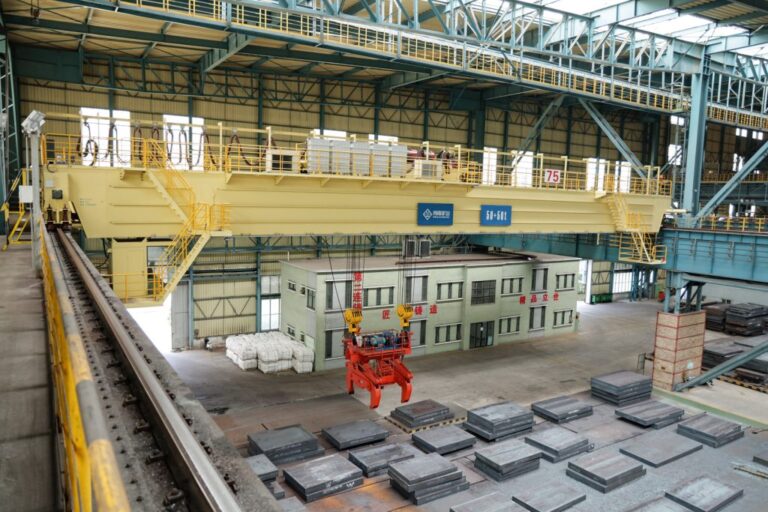
550t intelligent double-girder overhead crane prepared for delivery to a nuclear power application.
| Rated Capacity550 tonnes |
Crane TypeDouble-girder overhead crane |
Control SystemPLC and full-crane VFD control |
Intelligent FunctionsAnti-sway and energy recovery |
Project Background
Nuclear power projects require heavy lifting equipment that can move high-value loads with controlled motion, dependable braking and predictable response. The crane must support plant construction, equipment handling or maintenance processes while meeting strict project requirements for safety, quality and operational reliability.
Henan Mine Crane engineered and manufactured a 550t double-girder overhead crane specifically for a nuclear power application. The crane was dispatched in April 2025 with an intelligent control package designed to combine large lifting capacity with smooth movement and efficient energy use.
Full-crane variable-frequency control, a PLC-based control system, regenerative energy recovery and anti-sway technology form the central operating package. These functions address the priorities that matter to nuclear and energy-sector buyers: stable handling, precise control, high system reliability and lower avoidable power loss during frequent crane movements.
Preparing an RFQ for a nuclear power crane? Send the maximum load, rigging and lifting-beam weight, load dimensions, lifting points, span, lifting height, hook approaches, duty class, motion speeds, positioning tolerance, required redundancy, applicable standards and project quality requirements.
Nuclear Power Lifting Requirements
A 550t lift places demanding requirements on the bridge structure, trolley, hoisting machinery, brakes, wire-rope system, hook block and runway interface. Capacity must include the lifted component, slings, lifting beam and other below-the-hook equipment. The design basis must also account for the actual load spectrum instead of treating every lift as an isolated maximum-capacity event.
Precision is critical when a large component approaches an installation position. High top speed alone does not improve the process if the crane cannot maintain smooth low-speed motion. The required minimum controllable speed, acceleration time, stopping behavior and positioning tolerance should therefore be defined before drive and control selection.
Reliability requirements influence the complete system architecture. Buyers should identify critical lifts, permitted single-failure conditions, required braking arrangements, emergency recovery procedures, backup power needs and inspection access. These project-specific requirements determine which redundancy and monitoring functions belong in the final technical specification.
550t Double-Girder Overhead Crane Solution
The double-girder bridge provides the structural platform required for the 550t hoisting system and distributes wheel loads to the runway. The trolley carries the hoisting machinery across the bridge, while the complete crane travels along the building runway to cover the designated lifting area.
For a new project, the general arrangement is developed around the buyer’s building and lifting process. Span, runway elevation, available headroom, hook approach, lift, maintenance clearances and access routes define the bridge and trolley geometry. Maximum wheel loads, fatigue wheel loads, horizontal forces and buffer reactions are supplied for coordination with the plant structure.
The main hook and any required auxiliary hook are selected according to the component and rigging procedure. A detailed lifting study confirms load sharing, lifting points, center of gravity and permitted component attitude. Buyers can compare related double-girder overhead crane configurations before finalizing capacity and layout requirements.
Full-Crane Variable-Frequency Control
The hoisting, trolley-travel and bridge-travel systems use variable-frequency control. Adjustable acceleration and deceleration replace abrupt starts and stops, reducing mechanical shock and supporting stable movement of heavy suspended loads.
The drive profiles can provide efficient travel across open areas and controlled low-speed motion near the final position. Smooth speed changes reduce corrective movements and help the anti-sway function manage load oscillation. This is especially valuable when the lifted component has a high center of gravity, large dimensions or tight installation clearances.
Procurement specifications should state maximum and minimum speeds for each mechanism, acceleration and deceleration times, inching requirements and the expected production or maintenance cycle. These measurable targets allow the motors, drives, brakes and gearboxes to be selected for the actual operating process.
PLC Control and Operating Interlocks
The PLC coordinates crane commands, mechanism status, limits, alarms and permitted operating modes. Centralized logic gives the crane a consistent response to normal commands and abnormal conditions, while fault information supports faster troubleshooting and maintenance planning.
Control logic can manage overload signals, upper and lower hoist limits, travel limits, brake status, speed transitions and emergency stopping. Project-specific interlocks can prevent prohibited movements or restrict speed within defined operating zones. The final cause-and-effect logic is reviewed against the buyer’s lifting procedure and safety philosophy.
For plant integration, the PLC package can be coordinated with monitoring, event recording, cameras, load displays and authorized communication interfaces. Data points, alarm levels, record retention and cybersecurity boundaries should be agreed during the electrical design stage.

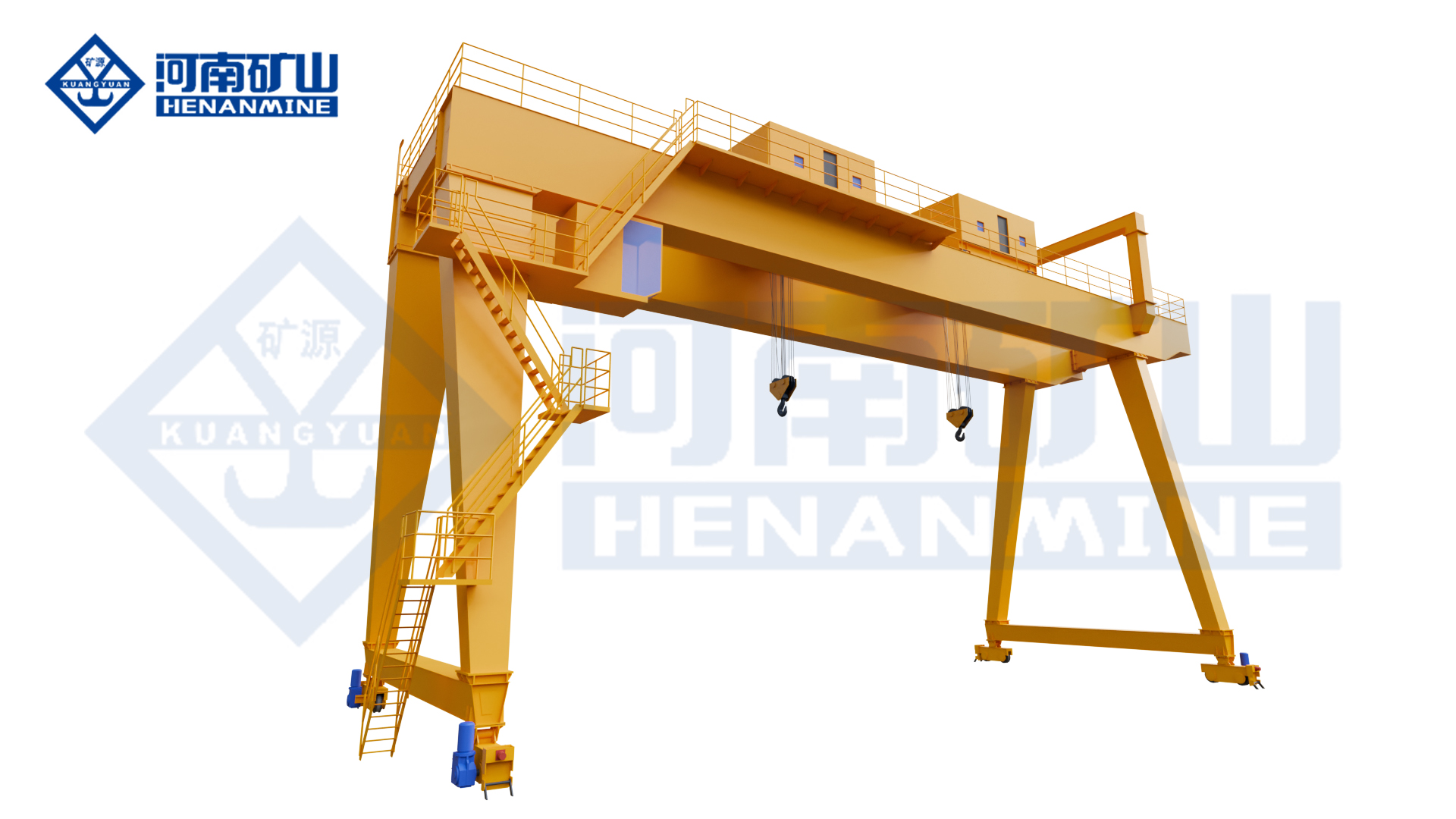
Heavy double-girder bridge and trolley arrangement engineered for 550t lifting.
|

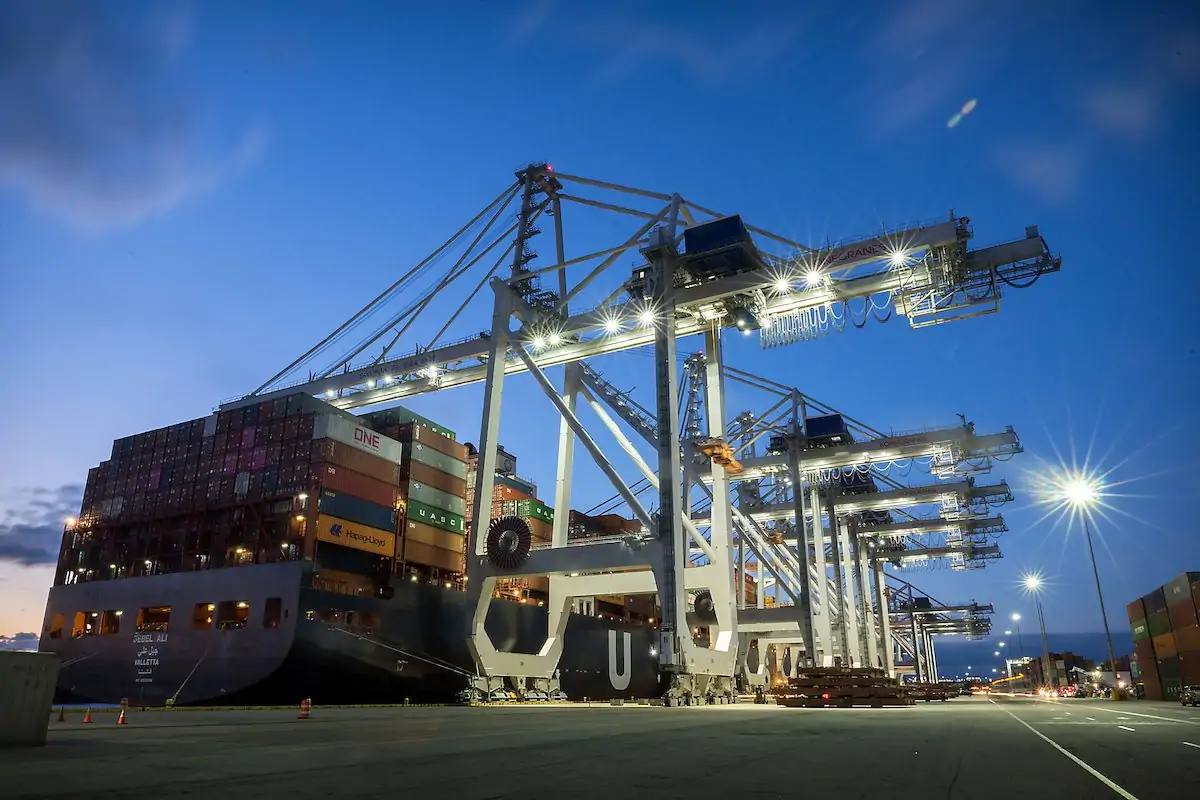
Completed crane package prepared for controlled transport and project delivery.
|
Regenerative Energy Recovery
During lowering and deceleration, crane motors can operate in a regenerative condition. The integrated energy recovery system returns usable electrical energy to the grid instead of dissipating all of it as heat. This improves energy utilization and can reduce thermal loading in the electrical system.
The commercial value depends on operating frequency, load profile, lowering distance, motion speeds and the site power system. Energy recovery should therefore be evaluated against a representative duty cycle rather than treated as a fixed percentage saving for every application.
Power-quality requirements, harmonic limits, transformer capacity and grid-connection conditions are confirmed with the buyer. The regenerative drive package is then coordinated with the plant electrical design, protection system and metering requirements.
Anti-Sway for Stable Heavy-Load Positioning
Anti-sway control reduces suspended-load oscillation during trolley and bridge movement. A more stable load can approach the landing zone sooner, helping the operator complete precision movements with fewer corrections and lower collision risk.
System performance is coordinated with rope length, travel speed, acceleration, load geometry and the control mode. Commissioning uses representative operating conditions so the anti-sway response matches the project’s actual heavy components and lifting paths.
Anti-sway supports the lifting process but does not replace correct rigging or a verified lifting plan. Load balance, sling angles, center of gravity, lifting-beam design and permitted environmental conditions remain part of the approved operation.
Heavy-Duty Mechanical and Structural Engineering
A 550t crane is designed from the complete load spectrum, operating class and required service life. Structural calculations address static strength, stability, fatigue and local load paths. Machinery selection considers motor duty, gearbox rating, brake capacity, drum geometry, rope reeving, sheave arrangement and maintainability.
The hoisting system is arranged to provide controlled lifting and dependable load holding. Brake configuration, overspeed protection, load measurement and emergency recovery are selected according to the project risk assessment and technical specification. Inspection and replacement access are considered during layout design.
Transportation and installation planning begin before fabrication is complete. Shipping section sizes, site lifting equipment, assembly zones, runway readiness and access routes are coordinated so the crane can be delivered, erected and commissioned without avoidable site delays.
Safety, Testing and Quality Documentation
The final safety package is developed around the applicable nuclear, crane, electrical and site standards specified by the buyer. Typical functions can include overload protection, redundant limits where required, emergency stops, brake monitoring, travel protection, restricted zones, warning devices and controlled fault recovery.
Factory and site tests verify structural assembly, mechanisms, brakes, limits, PLC logic, VFD operation, anti-sway, energy recovery, alarms and emergency functions. Load testing and production simulation confirm the approved lifting modes before the crane enters service.
Project documentation can be matched to the buyer’s quality plan. The deliverable package may include approved drawings, calculations, material and component records, inspection reports, welding records, electrical schematics, PLC documentation, test certificates, manuals, spare-parts lists and training records.
Key Project Configuration
| Project Element |
Installed Project Configuration |
| Application |
Heavy lifting for a nuclear power project. |
| Rated Capacity |
550 tonnes. |
| Crane Structure |
Heavy-duty double-girder overhead crane. |
| Motion Control |
Full-crane variable-frequency control for smooth acceleration, travel and positioning. |
| Automation Platform |
PLC-based control system. |
| Load Stability |
Advanced anti-sway control for stable heavy-load handling. |
| Energy Efficiency |
Regenerative energy recovery feeding usable braking energy back to the grid. |
| Delivery Milestone |
Dispatched in April 2025. |
Project Result
The 550t double-girder overhead crane provides a high-capacity lifting platform for demanding nuclear power operations. Its structural and mechanical arrangement supports heavy component handling across the designated working area.
Full-crane VFD control and PLC coordination deliver smooth, repeatable motion. Anti-sway improves load stability near installation positions, while regenerative energy recovery returns usable power to the grid during suitable operating phases.
The project demonstrates how heavy lifting capacity can be combined with intelligent control and energy-conscious operation. Buyers planning related work can also review the 100t nuclear project gantry crane or explore additional industrial overhead crane options.
Information Required for a 550t Nuclear Crane Quote
Load Data
Maximum and typical weights, dimensions, center of gravity, lifting points, rigging and lifting-beam weight |
Building Layout
Span, runway length and elevation, lifting height, headroom, hook approaches, maintenance zones and runway capacity |
Operating Duty
Duty class, load spectrum, annual lifts, operating hours, motion speeds, positioning tolerance and critical-lift procedures |
Safety Requirements
Redundancy, brake philosophy, limits, emergency recovery, restricted zones, monitoring and required risk controls |
Electrical Interface
Power supply, grid requirements, energy recovery, plant communication, data recording and cybersecurity boundaries |
Project Scope
Applicable standards, quality plan, documentation, delivery, installation, commissioning, training, spares and warranty |
Frequently Asked Questions
Why use a double-girder crane for a 550t nuclear power lift?
A double-girder bridge provides the structural depth and trolley support needed for very high capacities. The final design is calculated from span, load spectrum, lifting height, duty and project safety requirements.
What does full-crane VFD control mean?
It means the principal operating mechanisms use variable-frequency drives for controlled speed, acceleration and deceleration. This supports smooth heavy-load transfer and precise low-speed positioning.
How does regenerative energy recovery reduce operating cost?
The system returns usable energy generated during suitable lowering and deceleration phases to the electrical grid. Actual savings depend on the crane’s load profile, motion frequency and site power conditions.
Can the crane be designed to a customer-specified nuclear standard?
Yes. The applicable crane, nuclear, electrical, seismic, quality and documentation standards should be included in the RFQ so the design, testing and deliverables can be planned accordingly.
Is anti-sway useful at very low speed?
Yes. Anti-sway helps stabilize the suspended load during acceleration, travel and stopping, reducing corrective movement before precise placement. Its settings are tuned to the crane and representative loads.
What information is required before pricing?
Provide load and rigging drawings, capacity, span, lift, approaches, speeds, duty, positioning accuracy, redundancy, standards, power supply, building data, documentation requirements and service scope.
Request a 550t Nuclear Power Crane Proposal
Send your load drawings, plant layout, duty requirements, control philosophy, applicable nuclear standards and project service scope. Henan Mine Crane will prepare a customized technical proposal and commercial quotation.
Get a Nuclear Crane Quote