Intelligent Hot-Rolling Mill Project
34-Crane Hot-Rolling Mill Fleet Project for Chongqing Panhua Plate
A standardized fleet of 34 double-girder overhead cranes rated from 10t to 100t, engineered for production, roll handling, tooling, equipment service and maintenance across a 4.5-million-tonne steel plate facility.

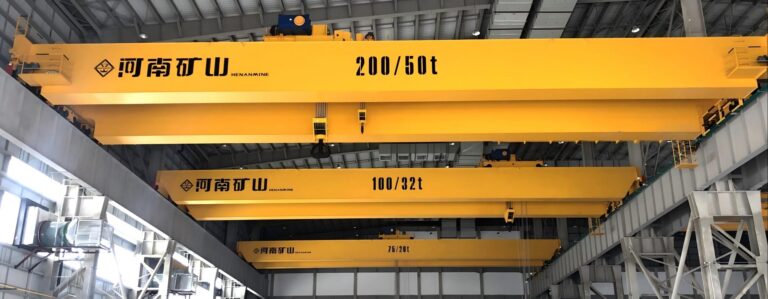
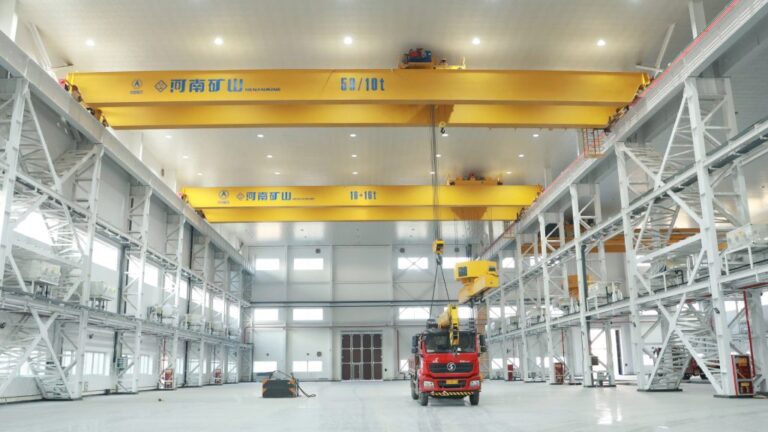
Double-girder overhead crane fleet installed across the Chongqing Panhua Plate hot-rolling project.
| CustomerChongqing Panhua Plate |
Fleet Size34 double-girder overhead cranes |
Capacity Range10t to 100t |
Plant Capacity4.5 million tonnes per year |
Project Background
Henan Mine Crane supplied 34 double-girder overhead cranes for Chongqing Panhua Plate’s intelligent hot-rolling project. The cranes cover capacities from 10t to 100t and support a steel plate production base with an annual capacity of 4.5 million tonnes.
A hot-rolling mill does not use one crane configuration for every bay. Production materials, steel products, rolls, tooling, mechanical assemblies and maintenance loads differ in weight, dimensions, temperature and handling frequency. Each crane therefore had to match its workstation while the complete 34-crane package followed one coordinated fleet strategy.
The project focused on multi-capacity scheduling, rolling-mill production support, maintenance lifting, phased delivery and standardized fleet management. Common control principles, documentation and spare-parts planning help the plant manage a large number of cranes without losing the application-specific configuration required at each process position.
Procurement priority: Build the crane schedule by workshop and process station first, then standardize controls, maintainable components, documentation, testing and spare parts across cranes with compatible duty.
Project Completion and Site Coordination
A 34-crane supply requires coordination beyond individual crane manufacture. Workshop drawings, runway data, power supplies, delivery routes, installation access and commissioning windows must be aligned with the construction and equipment schedule for each bay.
The project team coordinated technical clarification, manufacturing, inspection, transport and on-site milestones around the hot-rolling plant schedule. Customer review and project completion activities confirmed the transition from fleet delivery to production support.

Completion milestone for Chongqing Panhua Plate’s 4.5-million-tonne intelligent hot-rolling project.
|

Customer and project team reviewing crane installation and workshop conditions.
|
10–100t Multi-Capacity Crane Planning
The 10–100t range allows each workshop to receive lifting capacity appropriate to its heaviest normal load and maintenance task. Lighter cranes can serve tooling, smaller assemblies and routine maintenance. Higher-capacity units support rolls, large production equipment and heavier steel-handling requirements.
Capacity selection includes the lifted component, hook block, spreader, sling and any process attachment. The engineering team also reviews load dimensions, center of gravity, pickup points, lifting height and required hook approach. A crane should not be oversized only to simplify the fleet schedule, because higher capacity changes wheel loads, building requirements, energy use and cost.
Every crane receives a defined duty class based on its load spectrum and cycle frequency. A 20t maintenance crane used intermittently is not designed on the same basis as a 20t production crane operating through repeated shifts. Buyers can review the crane duty class guide before preparing a multi-crane schedule.
Double-Girder Crane Fleet Solution
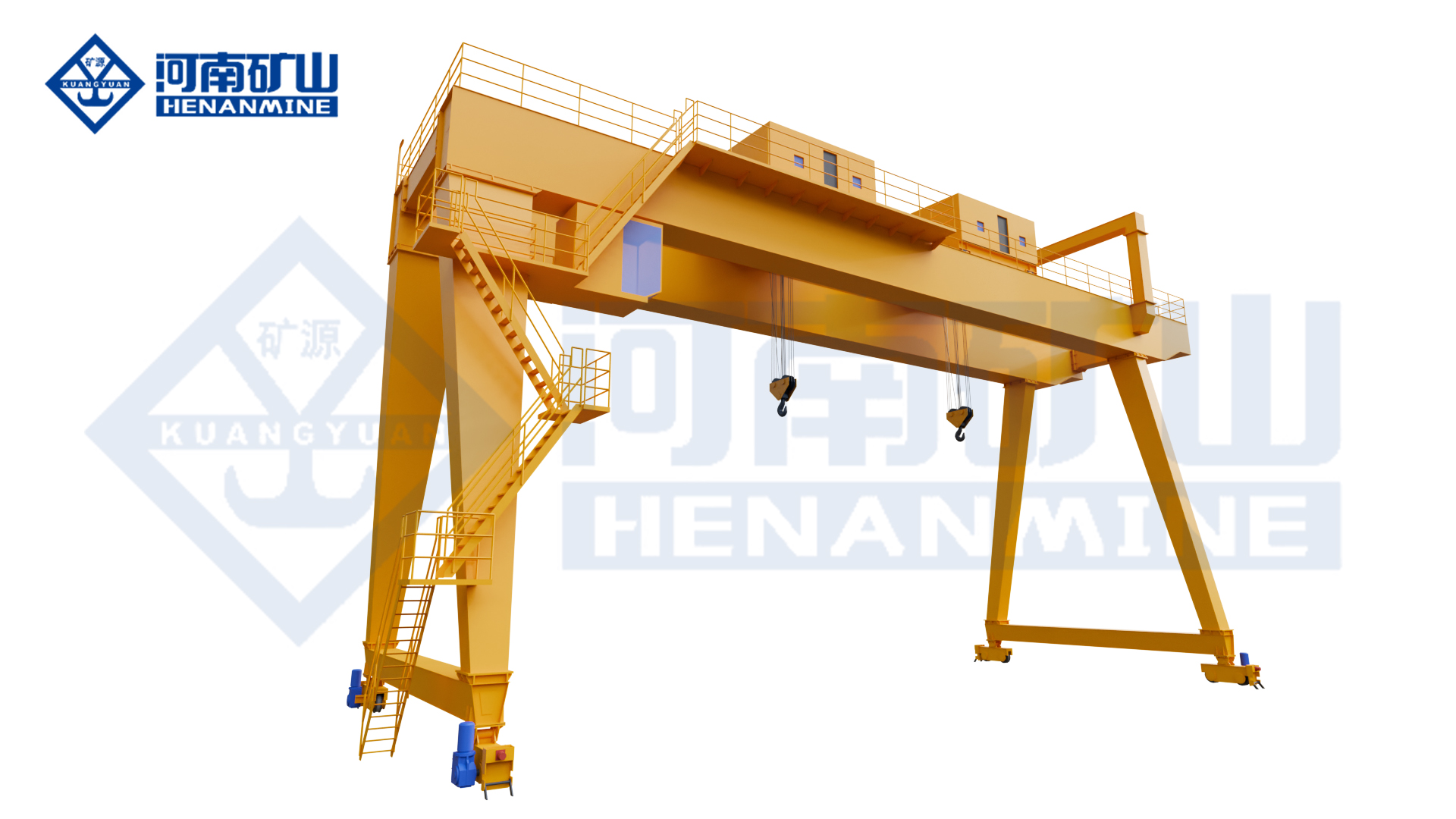
Double-girder overhead cranes provide the structural stiffness, hook coverage and trolley arrangement required across the hot-rolling workshops. Span, lifting height, end approach and wheel loads are configured for each runway and process position.
Variable-speed hoisting and travel allow efficient movement through clear sections of the bay and controlled positioning around production equipment. The final speed range, control method and braking arrangement follow the operating task. Cab, radio remote or pendant control can be selected according to visibility, cycle frequency and plant requirements.
Buyers planning a comparable fleet can review the double-girder overhead crane product range. Specialized slab handling cranes can be evaluated where the load route requires dedicated steel-product attachments or automatic handling functions.

Double-girder crane installed above a hot-rolling production and service area.
|

Crane fleet coverage across a large steel-plate manufacturing workshop.
|
Production and Maintenance Roles
The crane fleet supports several categories of work across the hot-rolling base. Production cranes handle steel products, process materials and items transferred between workstations. Service cranes support roll changes, tooling movement and maintenance of motors, gearboxes and other large assemblies.
Production cranes are selected for repeatable cycles and the temperature, scale or dust found near the rolling process. Maintenance cranes may operate less frequently but require useful hook approach, precise low-speed control and access to equipment positions that cannot be reached from the floor.
The lifting attachment is matched to the load. Hooks and slings support general maintenance, while beams, clamps, magnets or dedicated attachments may be required for rolls, plates or coils. The attachment weight and geometry must be included in the crane capacity and headroom calculation.
Standardized Controls, Components and Documentation
A 34-crane fleet becomes difficult to maintain if each unit uses unrelated control interfaces and component families. The project therefore coordinates operator controls, alarms, electrical architecture, motors, brakes, gearboxes, wheels and common consumables where the technical duty allows.
Standardization does not mean every crane is identical. Capacity, span, lifting height, speed, duty and environmental protection remain matched to the workstation. Common components are used only where their ratings and operating conditions are compatible.
Fleet documentation is organized by crane identification and workshop location. Drawings, manuals, inspection records, electrical diagrams, test certificates and spare-parts lists allow plant teams to locate the correct information for each unit while retaining a consistent document structure.

Overhead crane serving roll storage, equipment handling and maintenance work.
|

Double-girder crane configured for the load, span and service duty of its assigned bay.
|
Safety and Environmental Configuration
Each crane is configured for the environmental conditions at its position. Areas close to the rolling line may require protection from radiant heat, scale, dust and elevated ambient temperature. Other workshops may prioritize enclosure protection, visibility or collision control between cranes.
Overload protection, hoisting limits, bridge and trolley limits, emergency stops and warning devices form the basic safety system. Anti-collision functions and restricted travel zones are applied where multiple cranes share a runway or work near process equipment.
Runway condition is verified before commissioning. Rail alignment, elevation, span, end stops, power supply and building clearances affect crane travel and service life. Wheel loads and dimensional data are coordinated with the plant’s structural and installation teams.
Phased Manufacturing, Delivery and Handover
The 34 cranes were managed as a fleet but released according to the readiness of individual workshops. Phased manufacturing and delivery allow site teams to install cranes in the sequence required by building completion, production equipment installation and commissioning.
Each shipment requires correct crane identification, component packing and document control. Bridge sections, trolleys, end carriages, electrical panels and loose parts are matched to the assigned unit and destination bay.
Handover covers inspection, functional testing, operator and maintenance information, outstanding-item closure and spare-parts records. This fleet-level process helps the plant transition from project construction to long-term crane management.

Project handover and supplier coordination milestone for the hot-rolling base.
|

Installed double-girder crane operating above the steel-plate production area.
|
Key Project Configuration
| Project Item |
Configuration and Procurement Value |
| Fleet Quantity |
34 double-girder overhead cranes coordinated as one hot-rolling mill package. |
| Capacity Range |
10t to 100t configurations matched to production, roll, tooling, equipment and maintenance loads. |
| Plant Application |
Multiple workshops within a 4.5-million-tonne intelligent hot-rolling and steel-plate base. |
| Fleet Standardization |
Coordinated controls, documentation, common components and spare-parts planning where duty permits. |
| Delivery Strategy |
Phased manufacture and shipment aligned with workshop construction and commissioning. |
| Lifecycle Support |
Structured manuals, inspection records, maintenance plans and fleet spare-parts lists. |
Project Result
The 34-crane fleet gives Chongqing Panhua Plate dedicated lifting coverage across production and maintenance positions in the intelligent hot-rolling base. Capacities from 10t to 100t allow the plant to match each crane to the load and duty of its workstation.
Standardized controls, documentation and maintainable components simplify operator training, spare-parts planning and long-term service. Phased delivery supported the construction and commissioning schedule of the large steel-plate project.
The project demonstrates how a crane manufacturer can supply a complete rolling-mill fleet while preserving the capacity, span, speed, duty and environmental configuration required in each bay.
Information Required for a Hot-Rolling Mill Crane Fleet Quotation
Provide one crane schedule covering every workshop and process position. Each line should include the following information:
Crane Parameters
Quantity, capacity, span, lifting height, runway length, headroom and hook approach |
Load Data
Load description, maximum weight, dimensions, center of gravity, pickup points and attachment |
Operating Duty
Lifts per hour, shifts, load spectrum, required speeds, positioning and control method |
Environment
Temperature, radiant heat, scale, dust, fumes, humidity and electrical conditions |
Project Schedule
Drawing dates, manufacturing sequence, site readiness, delivery batches and commissioning windows |
Commercial Scope
Testing, transport, installation, commissioning, training, spares and service support |
The overhead crane preventive maintenance checklist can help buyers define fleet inspection, service access and spare-parts requirements before the commercial offer is finalized.
Frequently Asked Questions
Can one supplier provide a complete crane fleet for a new rolling mill?
Yes. The Chongqing Panhua Plate project included 34 double-girder cranes rated from 10t to 100t. The complete package can cover engineering, manufacture, testing, phased delivery and commissioning support.
How should capacities be selected across the fleet?
Each crane should be selected from its heaviest load, attachment, duty cycle, workshop geometry and maintenance tasks. Capacity should be optimized by workstation rather than copied across the plant.
What should be standardized in a 30-plus-crane project?
Operator interfaces, control architecture, common component families, alarms, documentation, inspection formats and spare-parts lists can be standardized where the crane duty permits.
Can production and maintenance cranes use different duty classes?
Yes. Duty class follows the load spectrum and operating frequency of each crane. Two cranes with the same capacity may require different motors, brakes, gearboxes and structural fatigue design.
Can delivery be divided by workshop?
Yes. Phased delivery can follow building completion and commissioning priorities. The schedule should be agreed early so drawings, manufacturing and logistics support the required installation sequence.
Request a Hot-Rolling Mill Crane Fleet Quotation
Send your workshop drawings, crane schedule, load list, production duty and project timeline. Henan Mine Crane will prepare a coordinated technical proposal, delivery plan and commercial quotation for the complete crane fleet.
Request a Fleet Quote