Pumped Storage Power Station Crane Project
600t Dual-Hook Overhead Crane Project for a Pumped Storage Power Station
A heavy-duty powerhouse crane using high-strength steel, high-precision dual-hook synchronization, intelligent anti-sway and digital monitoring for major generating-equipment installation and lifecycle maintenance.

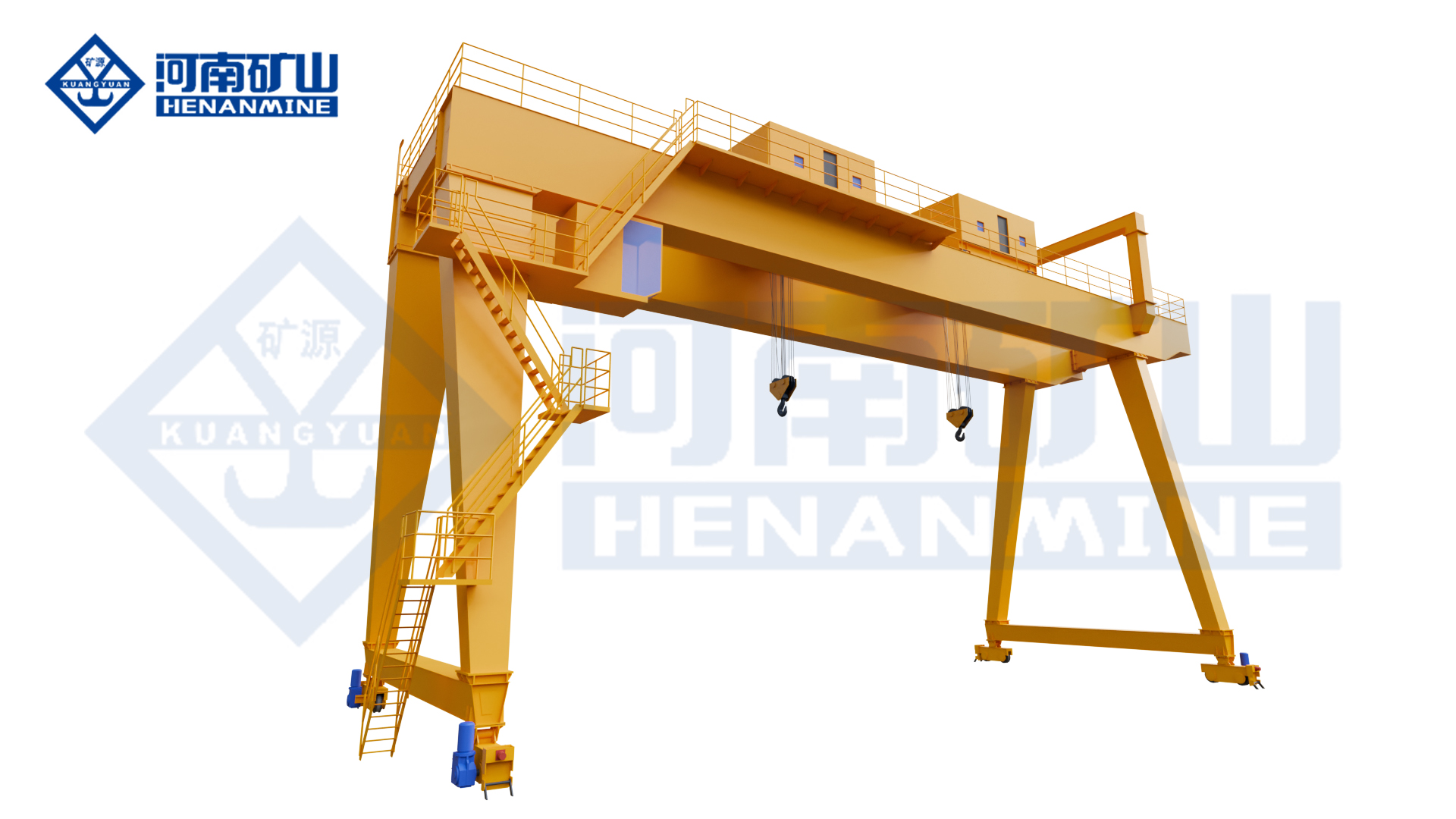
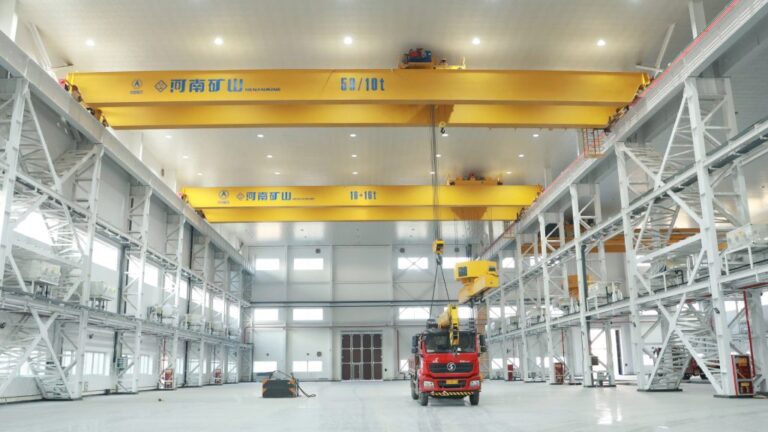
600t-class heavy-duty bridge crane prepared for pumped-storage power station equipment handling.
| Rated Capacity600t class |
Primary ApplicationPumped-storage powerhouse |
Lifting ControlHigh-precision dual-hook synchronization |
Smart FunctionsAnti-sway and digital monitoring |
Project Background
Henan Mine Crane supplied a large batch of different crane types for a national pumped-storage clean-energy project. The referenced 600t bridge crane is designed for major power-generation equipment installation, handling and future overhaul inside the powerhouse.
Pumped-storage stations contain large generator-motor and turbine components that must move through restricted building geometry. The crane is needed during the construction and installation stage, then remains part of the station’s long-term maintenance infrastructure after commercial operation begins.
The project crane uses a high-strength steel structure, high-precision dual-hook synchronization, intelligent anti-sway and digital operating monitoring. These functions address the central buyer requirements for ultra-heavy lifting: balanced load control, stable travel, structural coordination and lifecycle availability.
Procurement priority: Specify the heaviest equipment together with the lifting beam, rigging and attachments. The RFQ must also define lifting points, allowable tilt, travel path, installation elevation, powerhouse clearances, runway loads and the future overhaul sequence.
The Pumped Storage Heavy-Lifting Challenge
A 600t-class load creates requirements that cannot be evaluated from rated capacity alone. The total suspended load includes the generator or turbine component, lifting beam, hooks, slings and any special installation tooling. The crane must support this load through the complete lifting and travel route.
Large rotating equipment may use two lifting points. Differential hook movement can tilt the component, change the load share between lifting points and affect clearance inside the installation opening. The permitted height difference and load imbalance therefore need measurable control and acceptance criteria.
Powerhouse geometry adds another constraint. Hook approach, lifting height, trolley arrangement, crane girder depth and service platforms all influence whether the crane can pick up, rotate, lower and position the component at the required location. The building and crane must be coordinated before runway and powerhouse structures are finalized.
600t Heavy-Duty Powerhouse Crane Solution
The referenced crane combines a heavy-duty bridge structure with synchronized hoisting control and digital safety functions. High-strength steel is used to meet the structural demands of the project while the complete design is coordinated with crane dead weight, wheel loads and the supporting runway.
The main lifting arrangement supports balanced multi-point handling of major generator and turbine components. High-precision dual-hook synchronization controls differential movement, while intelligent anti-sway reduces oscillation during bridge and trolley travel.
Digital monitoring gives operators and maintenance teams visibility into crane operating conditions. For a production-critical powerhouse crane, operating records, alarms and component status can support fault response, inspection planning and lifecycle maintenance.
Buyers can review Henan Mine Crane’s double-girder overhead crane configurations before developing the project-specific powerhouse crane specification.
600t-Class Capacity and Load Definition
The crane capacity is verified against the heaviest planned lift, not only the equipment nameplate weight. The purchasing specification should list every major component and identify its maximum shipping or assembly condition, center of gravity, lifting points and required orientation.
Lifting beams and rigging can add substantial suspended weight. Buyers should state whether the rated capacity includes or excludes specific attachments and define the permitted load on each hook. If different hook combinations are used, the allowed combined loads and simultaneous motions must be written into the technical agreement.
A load schedule also prevents unnecessary oversizing. Installation-stage lifts, routine maintenance lifts and occasional major overhaul lifts can be separated so that main and auxiliary lifting systems are matched to their actual functions.
High-Precision Dual-Hook Synchronization
The project’s high-precision dual-hook synchronization supports balanced lifting when a large component is suspended from two points. The control system coordinates hook movement so differential height remains within the agreed operating range.
A buyer should define synchronization as a measurable performance requirement. The specification can state maximum hook-height difference, permitted load-share difference, lifting speed, reference measurement point, test load and the response if one mechanism deviates from the other.
The lifting procedure must also address unequal rigging length, component center-of-gravity offset and structural deflection. Synchronization control assists balanced lifting but does not replace verified rigging design and an approved heavy-lift plan.

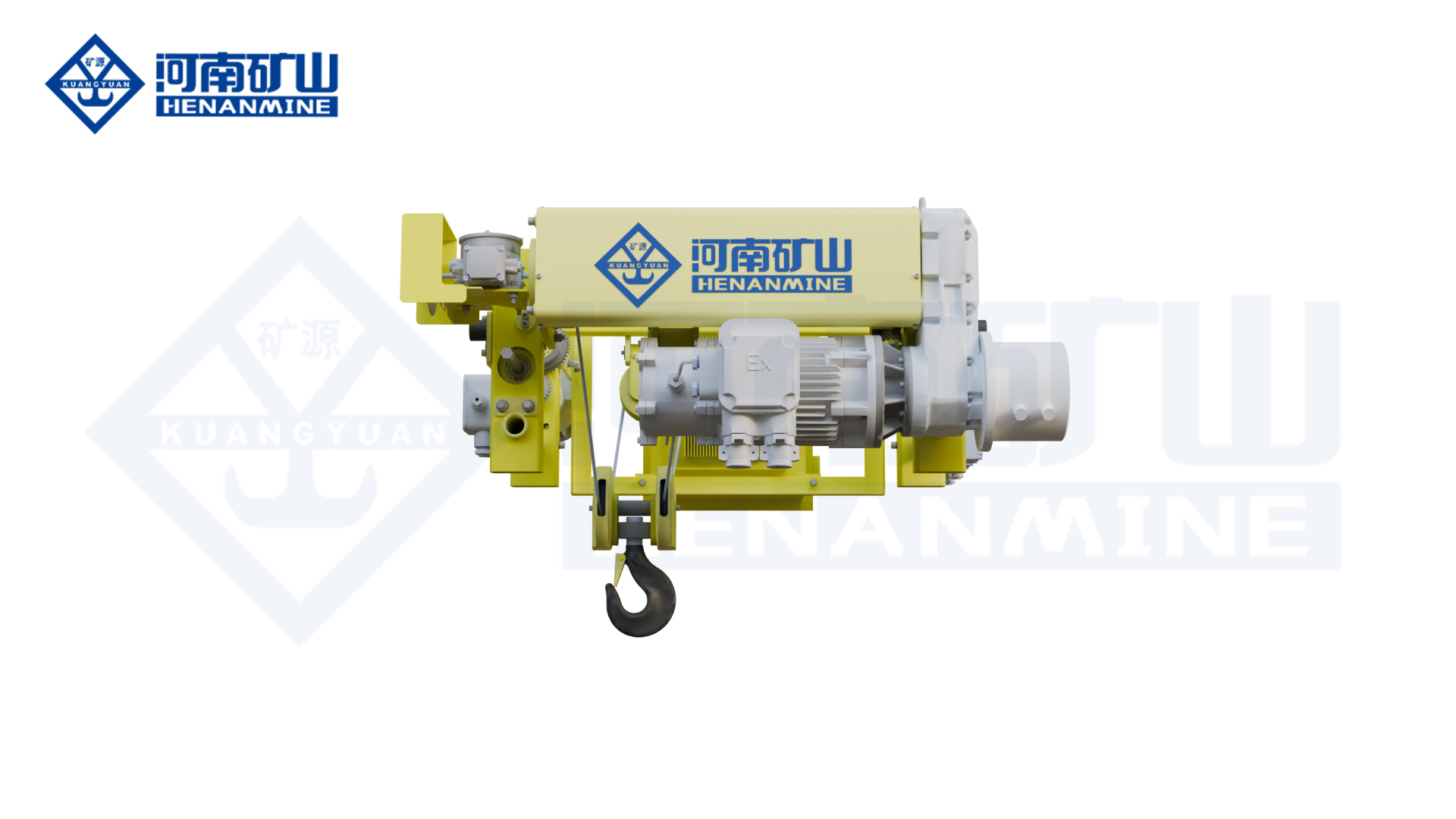
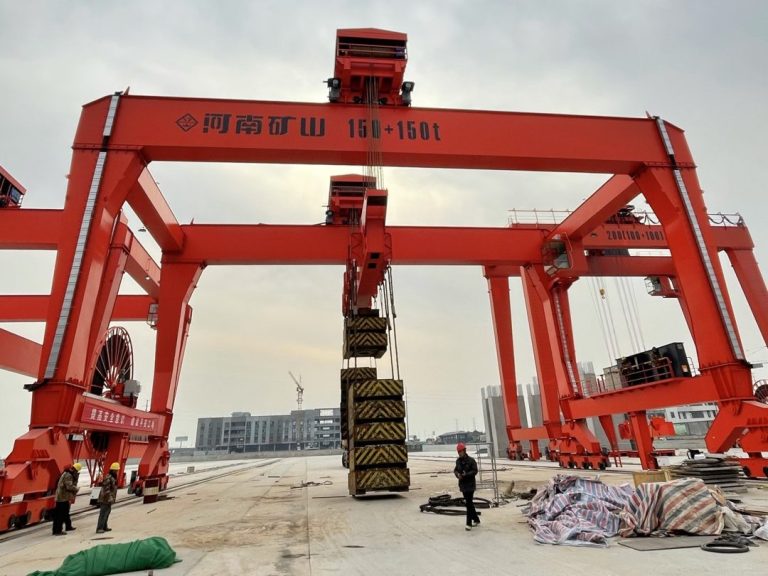
Heavy-duty bridge and dual high-capacity lifting systems for pumped-storage generating-equipment handling.
Intelligent Anti-Sway and Controlled Positioning
A large suspended component can oscillate during acceleration, deceleration and direction changes. Intelligent anti-sway reduces load movement during bridge and trolley travel, helping operators approach installation positions more steadily.
The procurement specification should distinguish travel speed from final positioning speed. Higher speeds reduce non-productive travel time, while stable low-speed control supports final alignment with the generator pit, maintenance stand or installation fixture.
Required positioning tolerance should identify the controlled axis, load condition and measurement point. Factory and site tests can verify low-speed stability, stopping behavior and anti-sway performance under defined load and travel conditions.
High-Strength Structure and Building Coordination
High-strength steel supports the structural requirements of the 600t-class crane. Material selection is only one part of the design: girder configuration, trolley loads, fatigue, deflection, wheel loads and load combinations must be coordinated with the operating duty and powerhouse structure.
The crane supplier should provide maximum and minimum wheel loads, horizontal loads, buffer loads and other runway design information at the agreed project stage. Building designers can then verify runway girders, columns, foundations and rail fastening.
Clearance drawings should show the crane envelope, trolley, hooks, ropes, platforms, access stairs and maintenance removal paths. Early coordination helps prevent conflicts with roof structures, ventilation, cable routes and powerhouse equipment.
Powerhouse Lifting-Route Engineering
The crane is selected around the complete movement of major equipment. The engineering review traces each component from delivery and assembly through pickup, travel, positioning and lowering into the installation zone.
For an underground powerhouse, the route may include restricted headroom, service floors, installation openings and equipment already in place. Hook approach, lifting height and the lowest possible hook position are checked at every critical point.
The same study should include long-term overhaul. A crane that completes the initial installation must still be able to remove major components after surrounding systems, platforms and enclosures have been installed.
Digital Monitoring and Lifecycle Reliability
Digital monitoring provides operating visibility for a crane expected to serve throughout the power station lifecycle. The project scope can include load, mechanism status, operating hours, starts, alarms and maintenance-related information according to the buyer’s requirements.
Monitoring points should support practical decisions. Data ownership, storage period, alarm priorities, access permissions and interfaces with the plant system are defined during technical clarification rather than left as a general request for a “smart crane.”
Maintenance access is equally important. Walkways, platforms, lighting and removal routes should allow inspection and replacement of brakes, ropes, hooks, wheels, drives, motors, electrical equipment and sensors without creating unnecessary outage time.
Installation, Testing and Acceptance Planning
A 600t crane project requires early planning for transport, site access, erection equipment, assembly space and powerhouse readiness. Large structural sections and trolley components must reach the installation level through the available access route.
The supply agreement should divide responsibilities for runway survey, rail readiness, power supply, temporary lifting equipment, erection supervision, commissioning and test loads. Project milestones can be linked to building completion and generating-unit installation.
Acceptance tests can cover structural and mechanism operation, brakes, limit devices, overload protection, dual-hook synchronization, low-speed control, anti-sway and digital monitoring. Performance criteria, test loads, measurement methods and documentation are agreed before manufacturing is complete.
Key Project Configuration
| Project Element |
Referenced Configuration and Buyer Value |
| Project Application |
National pumped-storage clean-energy project. |
| Crane Type |
600t-class heavy-duty bridge crane for powerhouse equipment handling. |
| Primary Loads |
Major generator-motor and turbine components during installation and overhaul. |
| Structure |
Heavy-duty structure using high-strength steel. |
| Hoisting Control |
High-precision dual-hook synchronization for balanced multi-point lifting. |
| Travel Control |
Intelligent anti-sway for more stable bridge and trolley movement. |
| Monitoring |
Digital operating monitoring for supervision, fault response and lifecycle maintenance. |
| Lifecycle Role |
Construction-stage installation plus long-term power-station inspection and overhaul. |
Project Result
The 600t-class overhead crane provides the pumped-storage project with heavy lifting capability for major generator and turbine equipment. Its dual lifting arrangement supports the balanced handling required by large multi-point loads.
High-precision hook synchronization controls differential movement, while intelligent anti-sway improves load stability during bridge and trolley travel. The high-strength structure is coordinated with the demanding capacity and powerhouse application.
Digital monitoring supports operating supervision and maintenance planning after the installation stage. The crane therefore serves both project construction and the long-term overhaul requirements of the power station.
Information Required for a Pumped Storage Crane Quote
Send the following information so Henan Mine Crane can prepare a project-specific technical proposal and commercial quotation:
Heavy-Lift Data
Component weights, lifting beam and rigging weight, dimensions, center of gravity, lifting points and allowable tilt |
Powerhouse Layout
Cross-sections, span, runway length and elevation, installation openings, lifting heights and equipment clearances |
Crane Performance
Capacity, hook arrangement, duty, speeds, positioning, synchronization, anti-sway and control requirements |
Lifting Sequence
Delivery, assembly, pickup, travel, installation, rotation, lowering and future overhaul procedures |
Project Interfaces
Building loads, rail standard, power supply, digital interfaces, access, erection conditions and commissioning dates |
Commercial Scope
Design, testing, transport, erection, commissioning, training, spare parts, warranty and lifecycle service |
Use the overhead crane RFQ guide and overhead crane selection guide when preparing the enquiry package.
Frequently Asked Questions
What is a 600t pumped storage overhead crane used for?
It handles major generator-motor and turbine components during power-station installation, commissioning and planned overhaul.
Why does the crane use synchronized dual hooks?
Large components may be lifted at two points. Synchronization controls differential hook movement and helps keep the load within its permitted tilt during lifting and lowering.
Does the 600t capacity include the lifting beam?
The commercial specification must state this explicitly. The total suspended load includes the component, lifting beam, rigging and attachments, and must remain within the permitted crane and hook ratings.
Can the crane be used after the power station is commissioned?
Yes. A powerhouse crane is planned for installation-stage lifting and long-term maintenance, inspection, major overhaul and component replacement.
What building information does the crane supplier need?
Provide powerhouse plans and cross-sections, span, runway elevation, installation openings, lifting path, equipment clearances, rail details, access and allowable building loads.
What should be tested before final acceptance?
Testing can verify mechanisms, brakes, protection, hook synchronization, low-speed control, anti-sway, digital monitoring and operation under the contractually agreed load conditions.
Request a Pumped Storage Overhead Crane Quote
Send your heaviest lift, lifting points, powerhouse drawings, installation sequence, synchronization requirement and project schedule. Henan Mine Crane will prepare a project-specific heavy-duty crane proposal and commercial quotation.
Request a Custom Project Quote