Ultra-Heavy Waterfront Industrial Project
750t Industrial Gantry Crane Project in Zhejiang
A 750t double-girder gantry crane engineered with synchronized multi-point lifting, automatic load balancing, a project-specific double-rail arrangement, automatic positioning, 10 kV power and regenerative energy recovery.

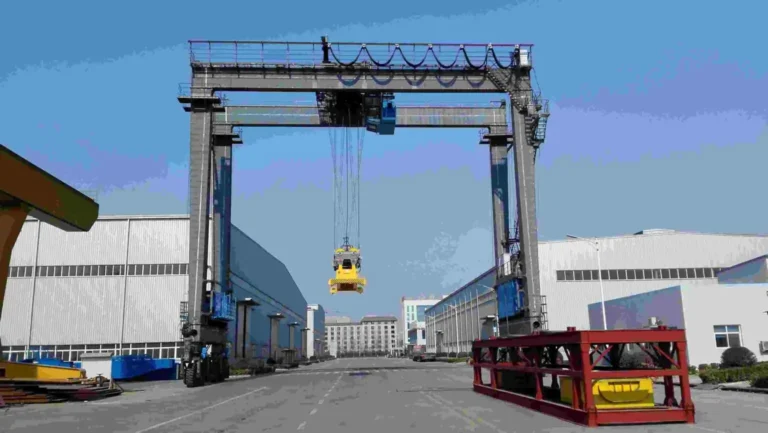
750t double-girder gantry crane installed at a large waterfront industrial project in Zhejiang.
| Project LocationZhejiang, China |
Rated Capacity750t double-girder gantry crane |
Lifting SystemSynchronized multi-point load balancing |
Power and Energy10 kV supply with regenerative recovery |
Project Background
Henan Mine Crane manufactured a 750t double-girder gantry crane for a large industrial project in Zhejiang. The crane operates in a waterfront work area where ultra-heavy components must be lifted, transferred and positioned across a dedicated runway.
At 750t capacity, the crane cannot be treated as independent equipment added after the site has been designed. Crane structure, lifting frame, lifting points, rails, wheel loads, foundations, power supply and installation plan must be developed as one coordinated project.
The project crane uses PLC and VFD communication control, synchronized multi-point lifting, automatic load-balance adjustment, automatic positioning, a single-side double-rail travel arrangement, 10 kV power and regenerative energy recovery during lowering.
Procurement priority: A 750t gantry crane quotation should begin with the complete lifting study, including load weight, lifting beam and rigging, dimensions, center of gravity, lifting points, allowable tilt, runway geometry, wheel-load limits and foundation data.
The 750t Ultra-Heavy Lifting Challenge
An ultra-heavy load may require several lifting points to control structural stress and maintain its approved orientation. If one point moves faster than the others, load distribution changes across the lifting frame and component. The crane therefore needs coordinated feedback and adjustment rather than several independent hoists operated only by visual judgment.
Wheel load is another governing factor. Crane deadweight, rated load, trolley position, acceleration, skew and wind all contribute to the forces transmitted into the rails and civil structure. At this capacity, wheel pressure can determine the number of wheels, rail arrangement and foundation cost.
Long outdoor travel requires stable motion and reliable positioning. The electrical system must also manage the power required for lifting while handling the electrical energy generated when a very heavy load is lowered. These mechanical, civil and electrical requirements must be confirmed before fabrication begins.
750t Double-Girder Gantry Crane Solution
The crane combines a high-capacity double-girder structure, multiple lifting mechanisms, synchronized controls, heavy-duty travel equipment and a whole-vehicle safety-monitoring system. High-strength special steel is used in the structure to support the required strength and fatigue performance while controlling crane self-weight.
The gantry dimensions are engineered around the load envelope, runway, working area and required hook approaches. The lifting system is matched to the project lifting frame and lifting-point geometry so each connection can be monitored during the cycle.
Buyers planning a comparable project can review the gantry crane product range, but the final 750t configuration must be based on project-specific structural, civil, electrical and operating data.
Synchronized Multi-Point Lifting
The project crane lifts from multiple points using synchronized motion control. Feedback from the lifting mechanisms allows the PLC to compare movement and identify differences between points during hoisting or lowering.
When the measured condition moves outside the approved balance range, the control system adjusts the relevant lifting point according to the programmed logic. This helps keep the lifting frame and load within the permitted level or tilt condition.
The buyer must define lifting-point quantity, spacing, maximum point load, permissible load difference, allowable height difference and response to a sensor or drive fault. The technical agreement should also state whether the mechanisms may operate individually during setup and how synchronized mode is verified before lifting.

Multiple lifting points carrying test loads during the synchronized heavy-load test.
|

Project load test demonstrating multi-hook lifting and automatic balance control.
|
Automatic Load-Balance Adjustment
Synchronized movement controls position, while load-balance monitoring checks how the suspended weight is distributed. These two conditions are related but not identical because a load can remain level while individual lifting-point forces change.
The control system uses the approved feedback arrangement to monitor the lifting points and make controlled corrections. Alarm and stop thresholds prevent continued movement when the measured difference exceeds the permitted range.
For quotation and design, buyers should provide the structural engineer’s permitted point loads, load-distribution tolerance and allowable component deformation. The lifting frame must be analyzed together with the crane because frame stiffness affects the force transferred to each point.
Single-Side Double-Rail Wheel-Load Optimization
The Zhejiang project uses a special single-side double-rail arrangement to reduce bridge-travel wheel pressure under the site’s specific conditions. Distributing force through additional rail support allows the runway concept to address the large reactions produced by the 750t crane.
This arrangement is project-specific and should not be copied without analysis. Rail spacing, wheel groups, equalization, structural stiffness, skew control and foundation behavior must be evaluated as a complete load path.
The crane supplier should provide maximum and minimum wheel loads, horizontal forces, load combinations and rail requirements to the civil designer. The civil designer confirms foundation capacity, settlement limits, alignment tolerances and drainage for the outdoor runway.
PLC and VFD Communication Control
PLC and variable-frequency drive communication coordinates hoisting, gantry travel, lifting-point balance, positioning and safety interlocks. Controlled acceleration and deceleration reduce dynamic forces on the crane, load and runway.
The PLC receives position, speed, lifting-point and equipment-status signals, compares them with the active command and permits the next movement only when the required conditions are valid. Operating modes can separate normal synchronized lifting, setup, inspection and authorized recovery.
Communication-loss behavior and fault response must be defined before commissioning. The crane should hold or stop in the approved state when critical feedback is unavailable instead of continuing an incomplete automatic sequence.
Automatic Positioning
Automatic positioning supports repeatable movement between defined pickup, transfer and placement areas. Position feedback allows the control system to manage travel along the long waterfront runway and reduce repeated manual alignment.
The buyer should define positioning stations, permitted approach direction, safe lifting height, target tolerance and obstacles. The acceptance method must distinguish crane-position accuracy from final suspended-load placement, which is also affected by swing, wind, rigging and load geometry.
Outdoor automatic movement requires defined access control and travel-zone rules. Personnel, vehicles and other equipment must not enter the operating corridor without the required authorization and warning sequence.
10 kV Power Supply and Regenerative Energy Recovery
The project crane uses a 10 kV power supply suited to the installed high-capacity equipment and site electrical system. The supply boundary, transformer and distribution arrangement, protection, grounding, cable routing and power quality requirements are coordinated with the project electrical design.
During lowering, the hoisting motors operate regeneratively and generate electrical energy. Instead of dissipating all recoverable energy as heat, the drive system returns suitable energy to the approved electrical system.
The source reports a 25–30% energy-saving figure for this specific crane. Actual savings for another project depend on lifted load, lowering height, number of cycles, motor operation, drive efficiency and the receiving electrical network. Energy estimates should therefore use the buyer’s real duty cycle rather than the project figure alone.
Whole-Crane Safety Monitoring
A whole-vehicle safety-monitoring system provides operating status and protection information for the ultra-heavy crane. The monitored scope can include load, lifting-point differences, mechanism position, drive status, brakes, travel limits, wind conditions, power and system alarms according to the final specification.
Alarm priorities help the operator distinguish between warnings, controlled stops and conditions requiring emergency action. Operating records support fault analysis, maintenance planning and review of heavy-lift cycles.
Monitoring does not replace independent safety devices or inspection. Limiters, emergency stops, brakes, buffers, rail clamps or storm-protection equipment and access systems are selected according to the crane layout, outdoor conditions and applicable project requirements.

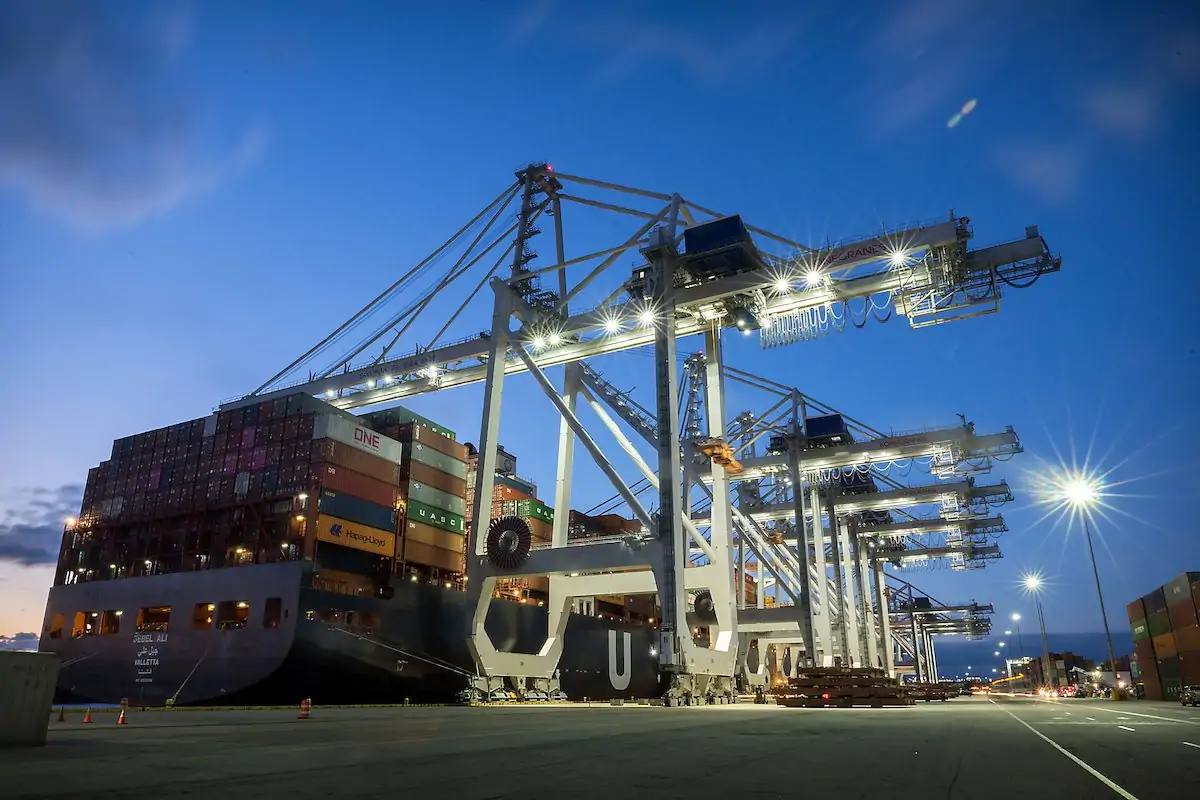
Wide project view showing the 750t crane, dedicated runway and waterfront working area.
Structural, Runway and Foundation Coordination
High-strength special steel helps control structural self-weight while meeting the required strength and fatigue design. Material selection, welding, heat treatment where applicable, nondestructive examination and dimensional inspection are included in the approved quality plan.
The runway and foundation must maintain alignment under static and operating loads. Differential settlement, rail elevation, gauge, straightness and support stiffness affect wheel behavior and crane skew. Survey and acceptance criteria should be agreed before the crane is commissioned.
Waterfront exposure requires the buyer to provide wind, rain, humidity, temperature, salt or corrosive conditions and storm requirements. Coating, enclosure protection, drainage, cable systems and storm anchoring are then selected for the site.
Key Project Configuration
| System |
Project Configuration and Procurement Value |
| Rated Capacity |
750t double-girder gantry crane for an ultra-heavy industrial project. |
| Lifting Control |
Synchronized multi-point lifting with automatic load-balance adjustment. |
| Travel Arrangement |
Project-specific single-side double-rail arrangement to reduce wheel pressure. |
| Motion Control |
PLC and VFD communication for coordinated travel, lifting and safety interlocks. |
| Positioning |
Automatic positioning for repeatable pickup and placement-area approach. |
| Structural Material |
High-strength special steel used to control self-weight and support structural performance. |
| Electrical System |
10 kV project power supply with regenerative energy recovery during lowering. |
| Energy Result |
Source-reported 25–30% energy saving for this project configuration. |
| Safety System |
Whole-crane safety monitoring for operating status, protection and alarms. |
Project Result
The 750t double-girder gantry crane provides the Zhejiang project with a dedicated platform for ultra-heavy waterfront lifting. Synchronized multi-point operation and automatic balance adjustment support controlled load distribution during hoisting and lowering.
The special single-side double-rail arrangement addresses project wheel-pressure requirements, while PLC/VFD control and automatic positioning coordinate travel and placement. High-strength special steel helps manage crane self-weight without separating structural design from fatigue and safety requirements.
The 10 kV electrical system supports the high-capacity equipment, and regenerative lowering returns suitable energy to the project network. The source reports 25–30% energy savings for this crane under its specific operating configuration.
Information Required for a 750t Gantry Crane Quotation
Send the following data so the lifting system, structure, runway concept, electrical equipment and commercial scope can be engineered:
Load Data
Maximum and normal weight, dimensions, center of gravity, lifting points, point loads and allowable tilt |
Rigging System
Lifting-frame drawings, frame weight and stiffness, hook arrangement, slings and attachment interfaces |
Crane Parameters
Capacity, span, lifting height, runway length, speeds, duty class, cycles and positioning targets |
Civil Data
Rail and foundation drawings, allowable wheel loads, settlement limits, site survey and travel-area clearances |
Electrical Data
Available supply, network conditions, regenerative-energy requirements, interfaces and monitoring scope |
Site and Supply
Wind, corrosion, temperature, transport, erection, testing, commissioning, training and service scope |
Use the gantry crane selection guide to organize layout data and the crane duty class guide to define the operating cycle and load spectrum.
Frequently Asked Questions
What is the capacity of the Zhejiang project gantry crane?
The referenced project uses a 750t double-girder gantry crane for ultra-heavy industrial lifting.
How are multiple lifting points kept synchronized?
Position and load feedback are compared by the control system. The crane adjusts approved lifting-point movements and stops or alarms if differences exceed the permitted range.
Why does this crane use a double-rail arrangement?
The project uses a special single-side double-rail arrangement to reduce travel wheel pressure under its specific site and civil-design conditions.
Can a 750t crane use automatic positioning?
Yes. The project crane includes automatic positioning for repeatable movement to defined pickup and placement areas.
How much energy can regenerative lowering save?
The source reports 25–30% energy savings for this project. Actual savings for another crane depend on load cycles, lowering height, operating time, drive efficiency and the electrical network.
Can the crane supplier provide runway and foundation loads?
Yes. The crane supplier can provide wheel loads, horizontal forces, load combinations and rail requirements for coordination with the buyer’s civil engineer.
Request a 750t Industrial Gantry Crane Quote
Send your load and lifting-frame drawings, runway and foundation data, required synchronization accuracy, power supply and operating cycle. Henan Mine Crane will prepare a project-specific technical proposal and commercial quotation.
Request a Custom Quote