Aerospace Plant Crane Fleet Solution

Project coordination meeting for aerospace manufacturing crane supply and long-term lifting equipment cooperation.
An established aerospace manufacturing group may need dozens of cranes across heat-treatment, machining, composite-material, assembly and maintenance workshops. The purchasing challenge is to combine application-specific crane sizing with common operating, maintenance and quality standards.
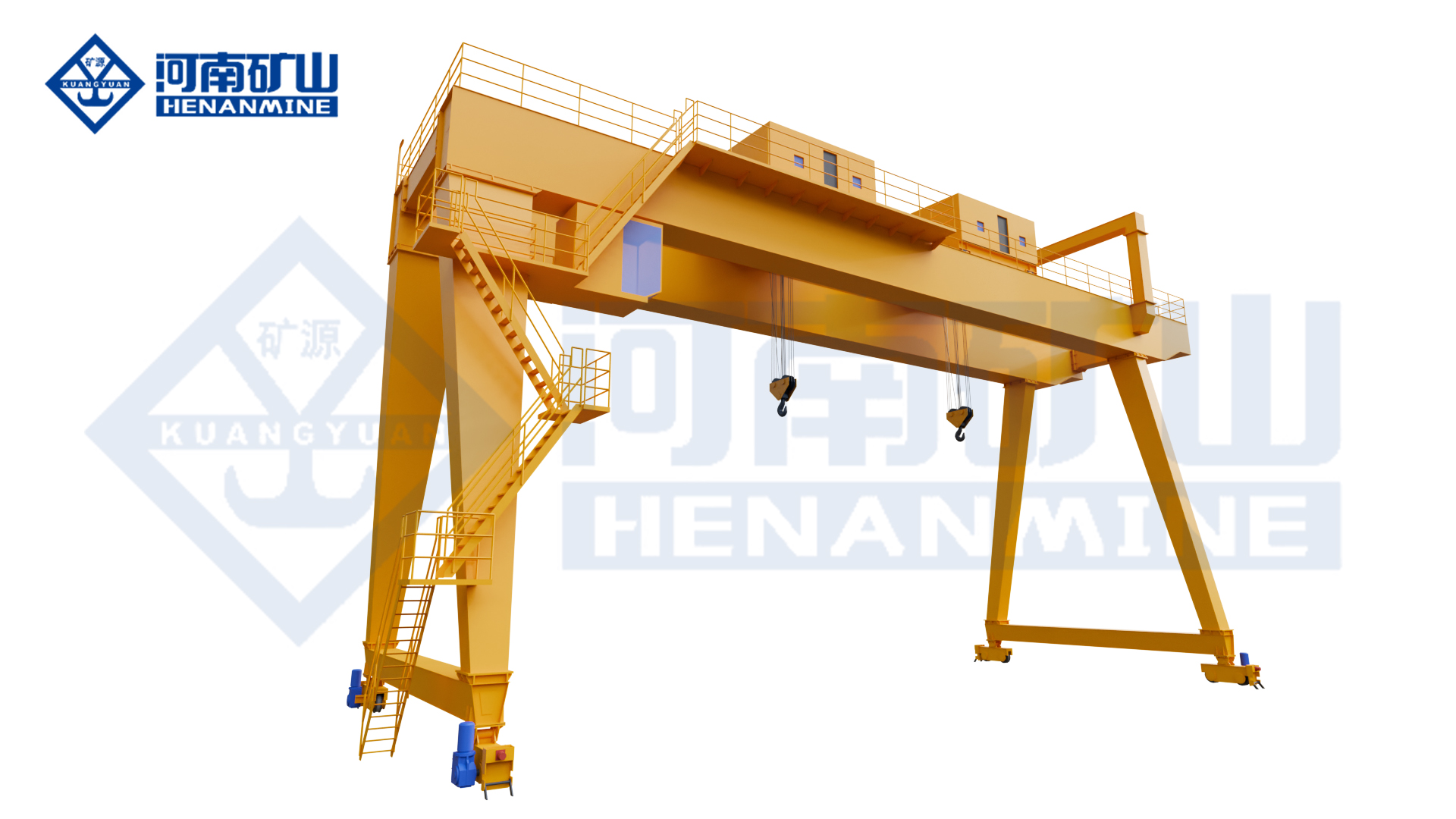
The source project describes a long-term aerospace cooperation that began with a 32-ton crane for a heat-treatment workshop and later expanded to more than 62 sets of different crane types. The project images show a broad range of bridge and gantry crane configurations used across aerospace facilities.
Project Background
Aerospace plants often grow in phases, which means cranes are purchased for different buildings and production lines over many years. Without a fleet strategy, spare parts, control systems and maintenance procedures can become unnecessarily complex.
A better procurement approach is to establish common technical requirements for controls, motors, brakes, electrical components and maintenance documentation, then customize capacity, span, lifting height and attachment for each workshop.
Customer Challenges
- Multiple workshops with different load weights, spans and lifting heights.
- Need to standardize maintenance and spare parts across a growing crane fleet.
- Combination of heavy production lifting, tooling handling and maintenance work.
- New buildings and production expansions requiring phased crane delivery.
- Different load geometries, including long aerospace and composite components.
Henan Mine Crane Solution
Henan Mine Crane can develop a crane schedule covering every workshop, then group cranes by capacity, duty and application. This allows common components and controls to be standardized where practical while preserving the specific lifting arrangement needed at each workstation.
The source project history shows a progression from an initial 32-ton crane to more than 62 sets of different lifting equipment. This type of long-term fleet planning is useful for aerospace companies expanding production capacity over multiple phases.
For new facilities, the buyer can submit a plant layout and crane schedule so capacities, spans, lifting heights, runway lengths and installation priorities can be reviewed as one coordinated package.
| Recommended Crane Fleet |
Double-Girder Overhead Cranes / Workshop Cranes / Gantry Cranes |
| Referenced Cooperation |
Expanded from an initial 32t crane to more than 62 crane sets |
| Typical Areas |
Heat treatment, composite materials, machining, assembly and maintenance |
| Fleet Strategy |
Common technical standards with workshop-specific capacity and configuration |

Customer team reviewing crane manufacturing and structural production during supplier inspection.
|

Factory inspection focused on crane manufacturing, components and quality-control processes.
|

Customer delegation reviewing production and machining capability relevant to customized crane manufacturing.
|

Aerospace project team inspecting manufacturing facilities and production equipment.
|

Project team beside a bridge crane manufactured for aerospace lifting applications.
|

Customer and supplier team pictured with aerospace overhead crane equipment.
|
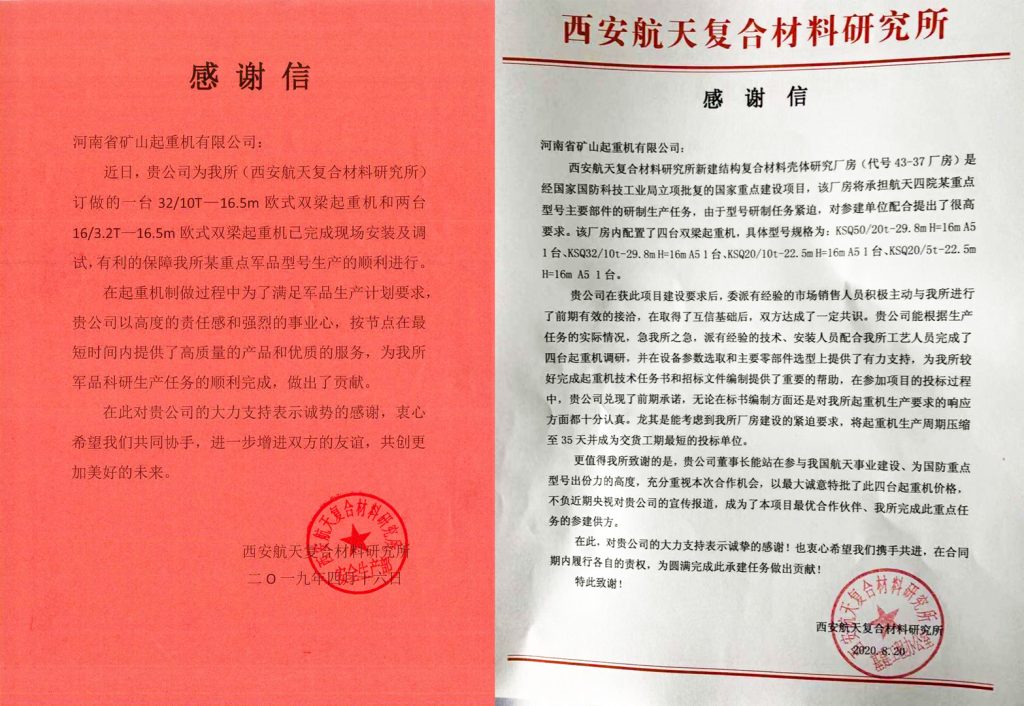
Customer appreciation letters associated with successful aerospace crane project support and delivery.
|

Heavy bridge crane configuration used for aerospace plant production and component handling.
|

Multiple bridge cranes with different capacities installed to serve different aerospace production tasks.
|

Bridge crane installed during construction of a large aerospace manufacturing workshop.
|

50/20-ton overhead crane installed in a large aerospace facility during plant construction.
|

20-ton gantry crane used for outdoor or between-building material handling at an aerospace production site.
|
Key Technical Features
Multi-Crane Project Planning
A crane schedule can coordinate capacities, spans, lifting heights and delivery sequence across the plant.
Standardized Maintenance Platform
Common electrical and mechanical components can reduce spare-parts complexity.
Application-Specific Configurations
Heavy-duty, auxiliary and outdoor cranes can be combined within one fleet.
Phased Expansion Support
The technical platform can be maintained as new workshops and production lines are added.
Application Scenarios
| Heat-Treatment Workshops |
Handling production loads and fixtures where process equipment affects crane clearance. |
| Composite Material Facilities |
Lifting long shells, molds, tooling and large production components. |
| Assembly Workshops |
Bridge cranes for full-bay coverage and controlled component positioning. |
| Outdoor Material Handling |
Gantry cranes for loads that must move between buildings or outdoor work areas. |
Why Choose Henan Mine Crane
- One engineering approach can cover a broad range of crane capacities and workshop types.
- Fleet standardization can reduce long-term maintenance complexity.
- Henan Mine Crane can coordinate crane manufacturing with phased factory expansion.
- Customized lifting attachments can be added for long, cylindrical or irregular aerospace components.
Frequently Asked Questions
How do I standardize cranes across an aerospace factory?
Define common electrical brands, control philosophy, safety devices, maintenance documentation and spare-parts strategy, then size each crane for its individual workshop.
Should every workshop use the same crane type?
No. Heavy assembly, tooling, maintenance and outdoor handling may require different crane types. Standardize common components where practical rather than forcing one crane model everywhere.
What should an aerospace plant crane schedule include?
List crane ID, workshop, capacity, span, lifting height, runway length, duty cycle, load type, control method, power supply and required delivery date.
Request A Aerospace Plant Crane Fleet Solution
Send your load data, component drawing, workshop layout and operating requirements. Henan Mine Crane engineers will review the application and prepare a project-specific crane proposal.
Request A Quote
|
View Overhead Cranes