KSS New-Type Double-Trolley Wire Rope Electric Hoist
For buyers who need a new-type double-trolley hoist arrangement and want variable-speed motion, modular components and precise speed / position control for demanding handling tasks.

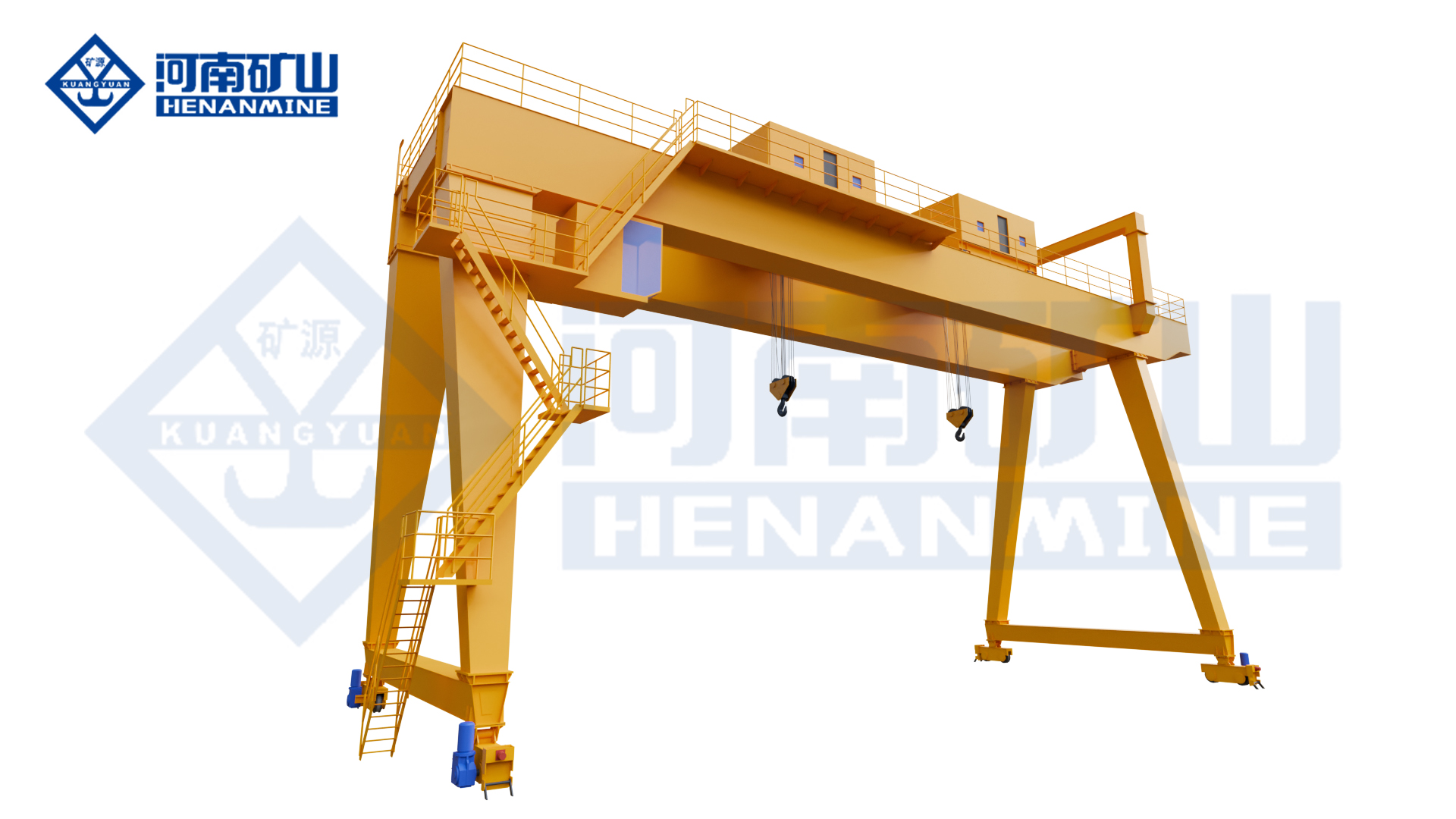
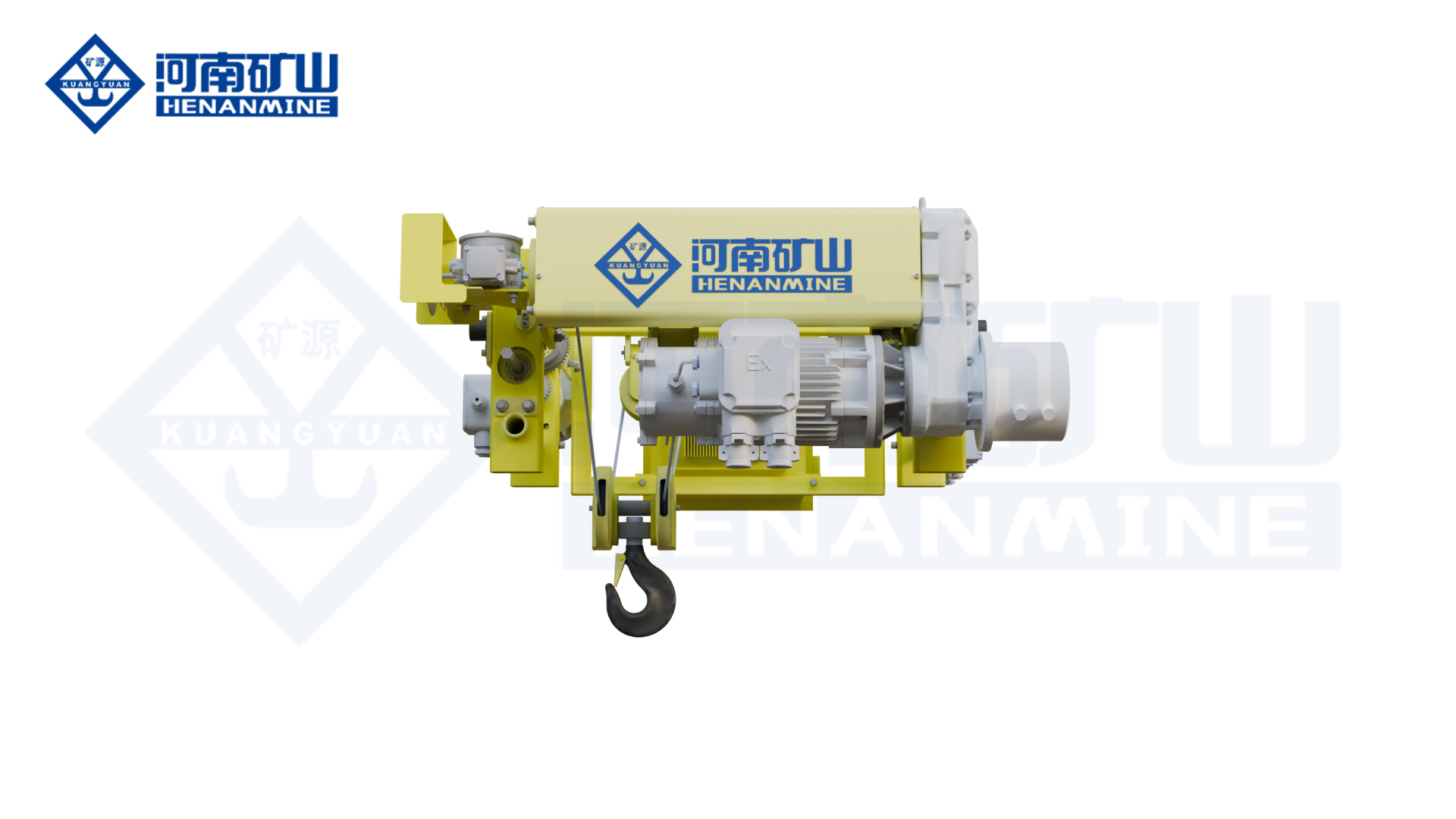
Henan Mine Crane kss new-type double-trolley hoist source image showing the primary hoist structure and lifting arrangement.
Wire rope electric hoists are compact lifting units used for lifting, pulling and loading / unloading. The source states that they can be installed independently on I-beams or integrated with single-girder, double-girder, jib and gantry cranes.
For procurement, KSS should be treated as a double-trolley lifting arrangement. The buyer must define load per trolley, lifting points, center of gravity and any combined-lift requirement before speed, control and rail interfaces are finalized.
Quick Specifications
| Product Model |
KSS |
| Type-Test Product Name |
Wire Rope Electric Hoist |
| Lifting Capacity |
Configured according to project requirements |
| Lifting Height |
Configured according to project requirements |
| Hoisting Speed |
Project-specific |
| Travel Speed |
Project-specific if trolley-mounted |
| Working Duty |
Selected from operating frequency and load spectrum |
| Mounting / Host Interface |
Configured to the I-beam, trolley rail or crane |
| Headroom / Hook Approach |
Project-specific |
| Control Method |
Project-specific |
| Power Supply |
According to site electrical conditions |
Best For: For buyers who need a new-type double-trolley hoist arrangement and want variable-speed motion, modular components and precise speed / position control for demanding handling tasks.
Request A KSS New-Type Double-Trolley Hoist Quote
Product Overview
Type-test specification: KSS.
Type-test product name: Wire Rope Electric Hoist.
Product title identifies a new-type double-trolley hoist.
Source states 90% self-production of core parts such as precision castings and advanced drive components.
Any capacity, lifting height, speed, duty, headroom, synchronization tolerance, energy-saving percentage or other guaranteed value that is not explicitly published for the exact product should be defined by the project and written into the technical agreement.
Why Choose KSS New-Type Double-Trolley Hoist?
Double-Trolley Product Form
Useful where the host crane or process requires two trolley positions rather than one.
1:10 VFD Speed Range
Source-stated variable-speed range supports slower heavy-load handling and faster light-load motion.
Precise Motion Control
Source highlights high-precision drive and speed regulation for smoother speed and position control.
Modular Serviceability
Core parts such as couplings and wheels are designed for faster replacement.
Lower Weight / Wheel Load Focus
Source reports comparative reductions versus traditional cranes.
Energy-Efficiency Focus
Source reports 10%–20% energy reduction versus traditional cranes, subject to project comparison basis.
Product Images

Official source image associated with the KSS new-type double-trolley wire rope hoist and its trolley / lifting arrangement.
|

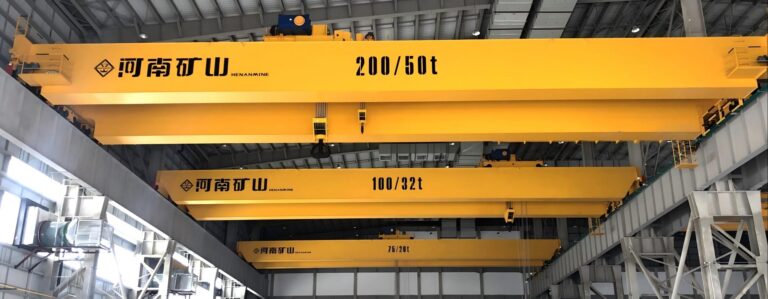
Official source image associated with the KSS new-type double-trolley wire rope hoist and its trolley / lifting arrangement.
|
Main Hoist Components
| Hoisting Motor |
Selected from capacity, duty, speed and product configuration. |
| Reducer / Transmission |
Transfers motor torque to the drum; source-specific features are listed below where confirmed. |
| Wire Rope Drum & Reeving |
Configured from lifting height, rope system and hook approach. |
| Hook Block |
Selected from rated load and lifting application. |
| Travel Trolley / Mounting System |
Configured to I-beam, trolley rail or host crane where travel is required. |
| Brake & Safety Devices |
Configured from the hoist duty and project safety requirements. |
| Electrical & Control System |
Configured according to the product's source-supported functions and project requirements. |
Technical Parameters
| Model |
KSS |
| Product Type |
KSS New-Type Double-Trolley Wire Rope Electric Hoist |
| Type-Test Product Name |
Wire Rope Electric Hoist |
| Capacity |
Project-specific |
| Lifting Height |
Project-specific |
| Hoisting Speed |
Project-specific |
| Travel Speed |
Project-specific if trolley-mounted |
| Working Duty |
Project-specific |
| Headroom / Hook Approach |
Project-specific |
| Beam / Rail Interface |
Project-specific |
| Control Method |
Project-specific |
| Power Supply |
According to site electrical conditions |
| Environment |
According to indoor/outdoor, dust, temperature, humidity and corrosion conditions |
Source-Confirmed Features & Buyer-Defined Options
Source-confirmed product facts:
- Type-test specification: KSS.
- Type-test product name: Wire Rope Electric Hoist.
- Product title identifies a new-type double-trolley hoist.
- Source states 90% self-production of core parts such as precision castings and advanced drive components.
- Modular design allows quick replacement of core parts such as couplings and wheels.
- Hoisting and travel mechanisms use variable-frequency speed regulation.
- Source states low noise, low energy use and smooth operation.
- Source states heavy-load slow and light-load fast operation.
- Source-stated speed-control range is 1:10.
- Source reports lightweight reduction of 15%–30% compared with traditional cranes.
- Source reports maximum wheel-load reduction of 20%–35%.
- Source reports energy reduction of 10%–20%.
- High-precision drive and speed-control equipment are source-listed for smoother speed / position control and reduced impact / sway.
Buyer-defined items:
- Maximum suspended load
- Lifting height and headroom
- Hoisting / travel speed
- Operating frequency / duty
- I-beam / rail / crane interface
- Control method
- Power supply
- Environmental conditions
- Installation / commissioning scope
Application Scenarios
| Double-Trolley Overhead Cranes |
Where two hoist-trolley positions are required. |
| Long / Large Loads |
Potential two-point lifting where the crane control and lifting plan are engineered for it. |
| Manufacturing / Assembly |
Variable-speed handling and controlled positioning. |
| Modern Crane Upgrades |
Where modular components and VFD motion are valued. |
How to Select the Right KSS New-Type Double-Trolley Hoist
1. Define the Two Trolley Roles
State whether the trolleys are independent, sequential or intended to lift one load together.
2. Define Maximum Load Per Trolley
Do not assume equal loading; provide center of gravity and lifting-point geometry.
3. Define Synchronization if Tandem Lifting Is Required
The source does not publish a universal synchronization tolerance or tandem-control guarantee.
4. Define Speed / Position Acceptance
If precision is contractual, provide measurable criteria rather than only asking for 'precise positioning'.
5. Treat Percentage Savings as Source Data
Weight, wheel-load and energy reductions require an agreed comparison baseline if they are contractual.
6. Define Host-Crane Interface
Provide trolley rails, gauge, wheel / rail arrangement and available envelope.
KSS Source-Reported Performance Data
| Speed-Control Range |
1:10 source-stated. |
| Lightweight Reduction |
15%–30% versus traditional cranes, source-reported. |
| Maximum Wheel-Load Reduction |
20%–35%, source-reported. |
| Energy Reduction |
10%–20%, source-reported. |
| Synchronization |
Not published as a universal value on this source page; buyer should define it if tandem lifting is required. |
Safety & Control: What Buyers Should Confirm
• Rated capacity and overload-protection requirement
• Upper / lower lifting limits
• Brake and emergency-stop requirements
• Travel limits if trolley-mounted
• Control station / pendant / remote requirements
• Host-crane interlocks if the hoist is integrated into a crane
• Any two-trolley coordination / synchronization protection where applicable
• Factory and site functional / load acceptance tests
Installation & Maintenance
Before manufacture, confirm beam / rail dimensions, available headroom, hook approach, lifting height, travel length, power supply, control location and maintenance access. If the hoist is part of a crane, provide the crane arrangement drawing so the trolley and electrical interfaces can be checked.
Maintenance should follow the final supplied manual and actual duty. Routine attention normally includes wire rope, hook, drum, brake, motor, reducer, trolley wheels where fitted, limits, fasteners and electrical connections. Product-specific modular or IoT functions should be included in the maintenance plan where supplied.
What Information Do We Need for a Quote?
| 1 |
Total maximum load |
| 2 |
Maximum load per trolley |
| 3 |
Load dimensions / center of gravity |
| 4 |
Lifting-point spacing |
| 5 |
Independent / combined trolley operating logic |
| 6 |
Synchronization tolerance if required |
| 7 |
Lifting height |
| 8 |
Required hoisting / travel speeds |
| 9 |
Host trolley-rail / crane interface |
| 10 |
Working duty |
| 11 |
Control method |
| 12 |
Power supply |
| 13 |
Performance comparison baseline if required |
| 14 |
Destination |
Frequently Asked Questions
Can capacity and lifting height be customized?
Yes. The source pages do not publish one universal capacity or lifting-height range for these exact products, so selection should be project-specific.
Can the hoist run on an I-beam?
The source states that wire rope electric hoists can be installed independently on I-beams or integrated with several crane types.
What is the most important dimension for a low building?
Available headroom and required upper hook position. For severe restrictions, compare the KS1 low-headroom arrangement.
How should source percentage claims be used?
Treat them as source product data. If a reduction or saving is contract-critical, define the comparison baseline and acceptance method.
What information improves quotation accuracy most?
Capacity, lifting height, duty, beam / rail dimensions, headroom, speed, control, power supply and a crane / building drawing.
Related Wire Rope Electric Hoists
KS New-Type Wire Rope Electric Hoist
KS1 Low-Headroom Wire Rope Electric Hoist
CD Wire Rope Electric Hoist
Request A KSS New-Type Double-Trolley Hoist Quote
Send your lifting capacity, lifting height, headroom, beam / rail dimensions, operating duty, required speeds, control method and power supply. Henan Mine Crane can then review the hoist and host-crane interface and prepare a project-specific configuration and quotation.
Request A Quote