ZJJB Clean Explosion-Proof Overhead Crane
For clean production areas where the crane must address both explosion risk and contamination / particle-control requirements.

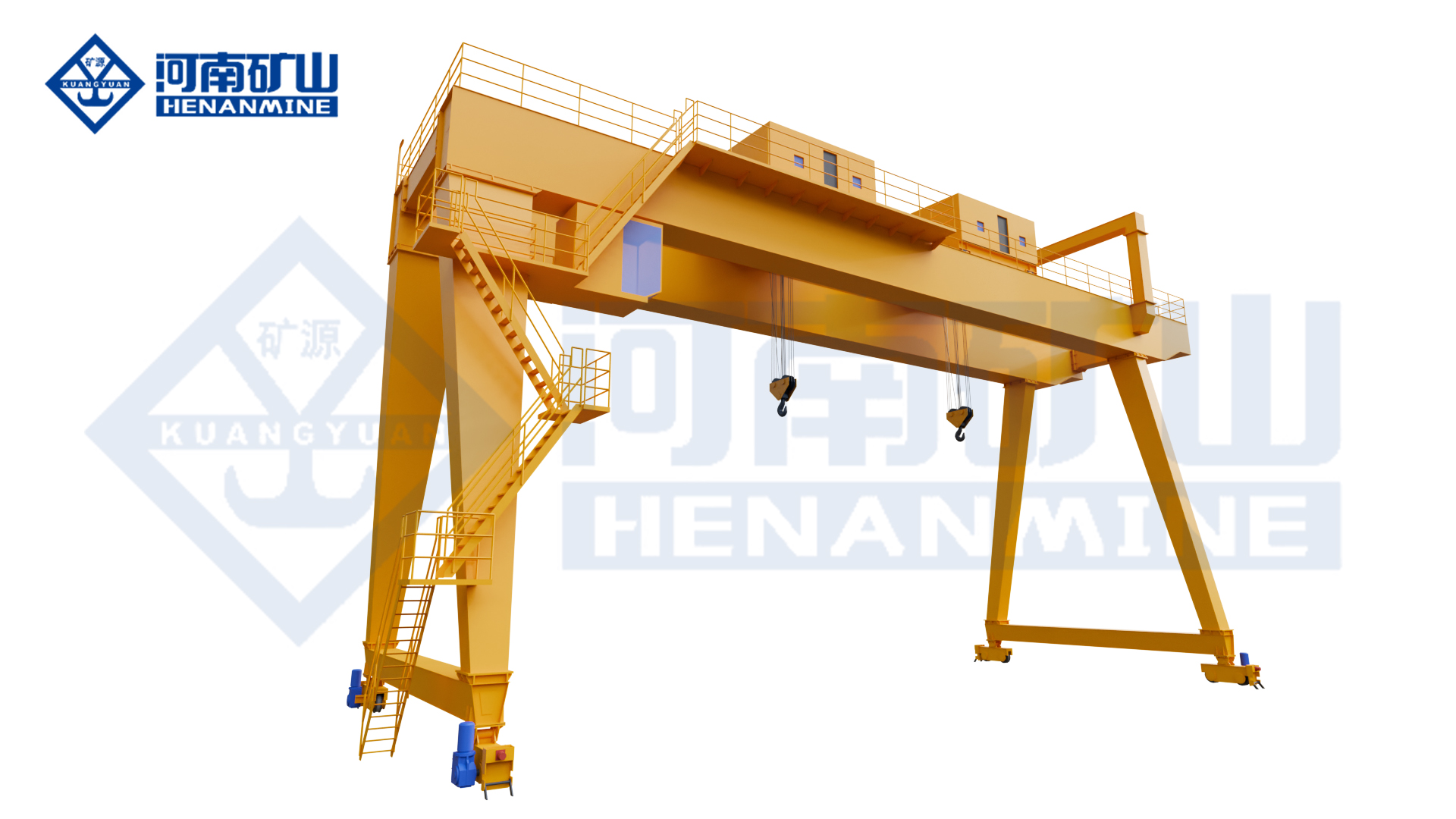
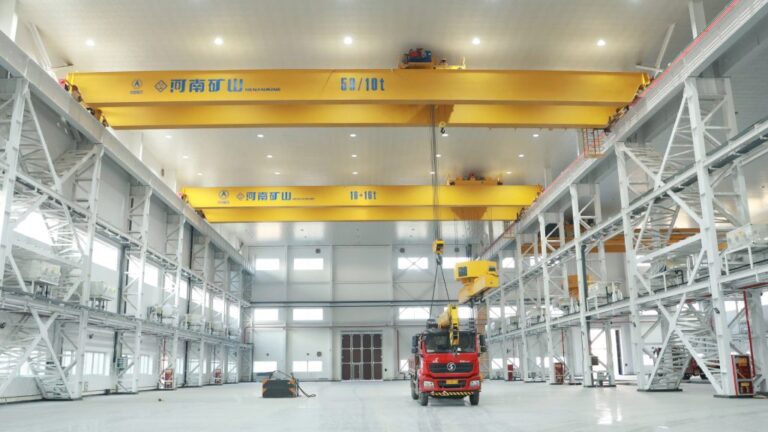
Henan Mine Crane zjjb clean explosion-proof crane showing the crane structure and lifting arrangement.
The ZJJB clean explosion-proof overhead crane combines explosion-protection technology with clean-environment requirements. The source identifies semiconductor manufacturing and precision chemical workshops as primary applications where both explosion risk and dust control are important.
This type should never be quoted from crane capacity alone. Buyers need to provide both the hazardous-area specification and the cleanliness / contamination-control requirement, because coatings, sealing, wear materials, dust collection and exposed components all affect the final configuration.
Quick Specifications
| Product Model |
ZJJB |
| Type-Test Product Name |
Explosion-Proof Bridge Crane |
| Lifting Mechanism |
Clean explosion-proof bridge-crane lifting system |
| Lifting Capacity |
Configured according to project requirements |
| Span |
Configured according to runway center distance |
| Lifting Height |
Configured according to workshop / process requirements |
| Working Duty |
Selected from load spectrum and operating frequency |
| Explosion Protection |
Configured according to the approved hazardous-area specification |
| Control Method |
Configured according to project requirements |
Best For: For clean production areas where the crane must address both explosion risk and contamination / particle-control requirements.
Request A ZJJB Clean Explosion-Proof Crane Quote
Product Overview
Special crane combining explosion-protection technology with clean-environment requirements.
Source identifies semiconductor manufacturing and precision chemical workshops as primary applications.
Variable-frequency control is used for stable operation and efficient handling.
For a new purchase, any capacity, span, speed, duty, clean-class or explosion-protection value that is not published on the source page should be confirmed from the actual project rather than copied from a similar crane model.
Why Choose ZJJB Clean Explosion-Proof Crane?
Clean + Explosion-Proof in One System
The product is designed for applications where both contamination control and explosion protection are required.
Anti-Static / Spark-Suppression Measures
The source confirms anti-static and spark-suppression treatment of mechanical parts.
Sealed Structure
Enclosed and sealed construction reduces dust accumulation in the crane body and drive interfaces.
Dust-Control Materials & Collection
Non-corrosive wear materials and collection devices are part of the source design concept.
Stainless Contact Components
The source specifies stainless-steel hooks, wheels and other direct-contact parts with passivation treatment.
Product Images

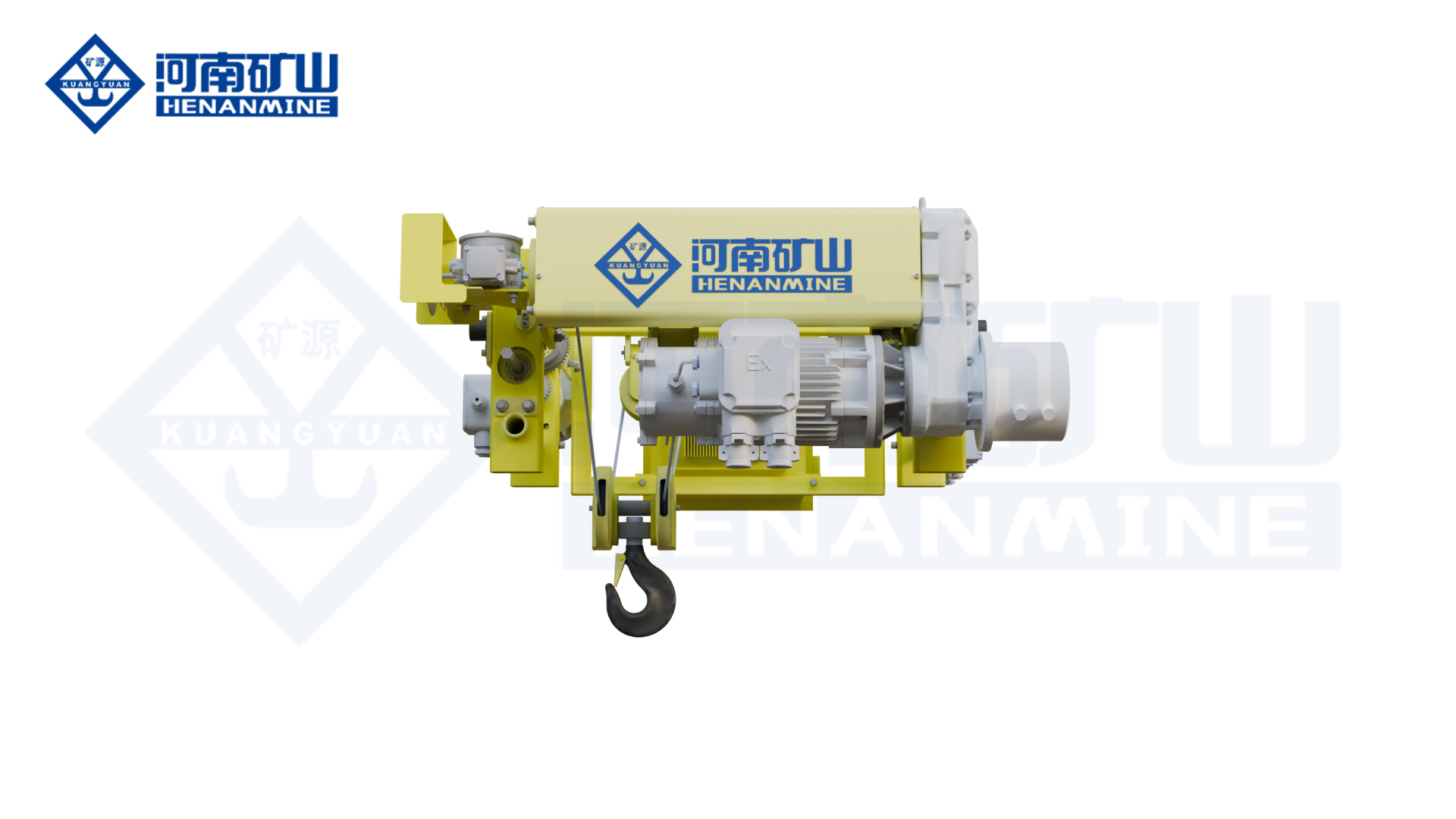
Additional source product view of the ZJJB Clean Explosion-Proof Crane and its explosion-protected lifting arrangement.
|

Additional source product view of the ZJJB Clean Explosion-Proof Crane and its explosion-protected lifting arrangement.
|

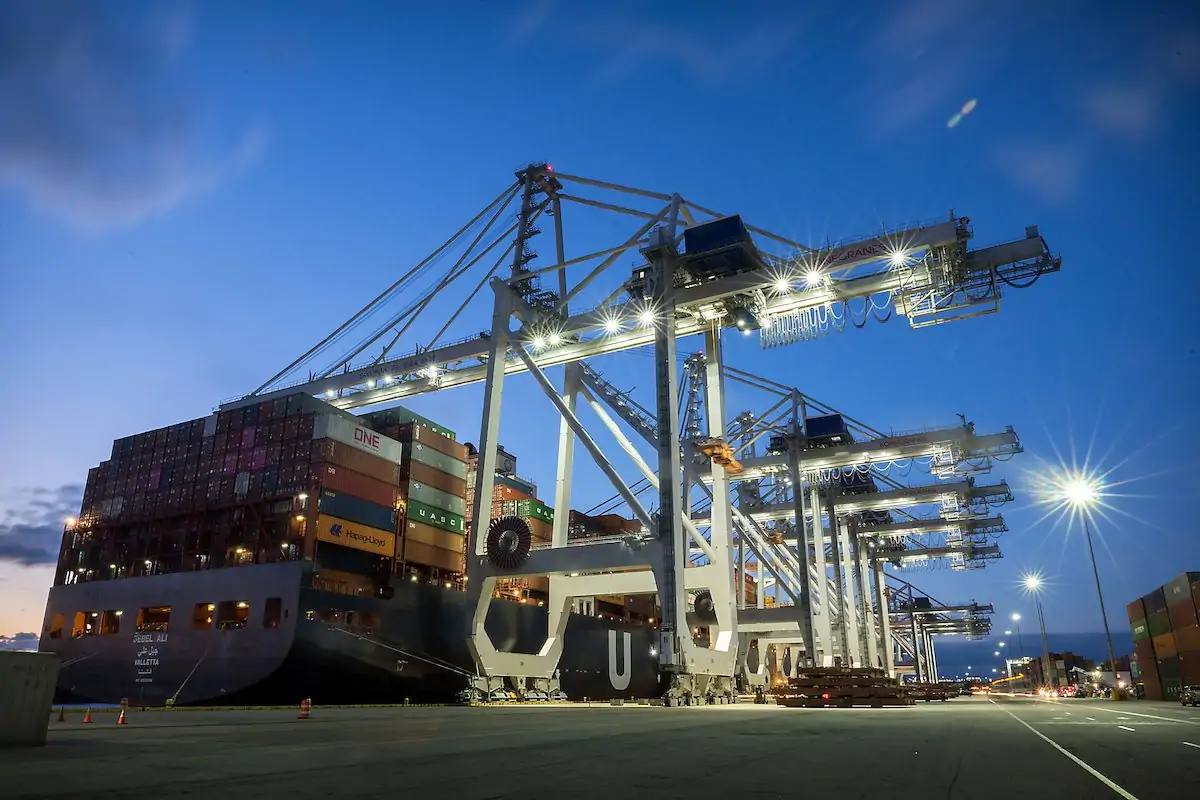
Source gallery image associated with the ZJJB Clean Explosion-Proof Crane product page, showing an industrial installation or application reference.
|

Source gallery image associated with the ZJJB Clean Explosion-Proof Crane product page, showing an industrial installation or application reference.
|

Source gallery image associated with the ZJJB Clean Explosion-Proof Crane product page, showing an industrial installation or application reference.
|

Source gallery image associated with the ZJJB Clean Explosion-Proof Crane product page, showing an industrial installation or application reference.
|
Main Crane Components
| Sealed Bridge / Crane Structure |
Fully enclosed and sealed areas to reduce dust accumulation. |
| Clean Explosion-Protected Hoisting System |
Selected for both classified-area and clean-process requirements. |
| VFD Motion Control |
Source-confirmed variable-frequency control for stable movement. |
| Anti-Static / Spark-Suppression Mechanical Components |
Specified around clean and explosion-protection requirements. |
| Stainless / Passivated Contact Parts |
Hooks, wheels and relevant contact components according to the source design. |
Technical Parameters
| Model |
ZJJB |
| Product Type |
ZJJB Clean Explosion-Proof Overhead Crane |
| Type-Test Product Name |
Explosion-Proof Bridge Crane |
| Lifting Mechanism |
Clean explosion-proof bridge-crane lifting system |
| Capacity |
Project-specific |
| Span |
Project-specific |
| Lifting Height |
Project-specific |
| Hoisting / Travel Speed |
Project-specific unless explicitly stated by the source |
| Working Duty |
Project-specific |
| Control Method |
Project-specific; source-confirmed options are listed where applicable |
| Explosion-Protection Grade |
Project-specific; must match the buyer's approved hazardous-area classification |
| Cleanliness Requirement |
Project-specific; no universal cleanroom class is published by the source |
| Power Supply |
According to site electrical conditions |
| Installation / Building Interface |
According to workshop, runway and crane configuration |
Source-Confirmed Features & Buyer-Defined Options
Source-confirmed product facts:
- Special crane combining explosion-protection technology with clean-environment requirements.
- Source identifies semiconductor manufacturing and precision chemical workshops as primary applications.
- Variable-frequency control is used for stable operation and efficient handling.
- Mechanical parts include anti-static and spark-suppression measures; the electrical system includes explosion-protection measures.
- High-pressure anti-static coating is used; the source describes the surface as resistant to dust adhesion and dust generation.
- Wear areas use non-corrosive materials and collection devices.
- Fully enclosed structure seals the body, drive parts and connection gaps to avoid dust accumulation.
- Hooks, wheels and other parts that directly contact materials use stainless steel with passivation treatment according to the source.
Buyer-defined items for quotation:
- Approved hazardous-area / explosion-protection specification
- Cleanroom / contamination-control specification
- Capacity and load type
- Span and lifting height
- Runway length / building layout
- Operating frequency and duty
- Control method
- Safety / warning / interface requirements
- Installation and commissioning scope
Application Scenarios
| Semiconductor Manufacturing |
Clean hazardous-area lifting around high-value process equipment. |
| Precision Chemical Workshops |
Material and maintenance handling where explosion protection and contamination control overlap. |
| High-Purity Process Areas |
Special lifting where dust adhesion and generation must be controlled. |
| Clean Classified Rooms |
Applications requiring both an approved clean specification and hazardous-area protection. |
How to Select the Right ZJJB Clean Explosion-Proof Crane
1. Define the Cleanliness Requirement
Provide the cleanroom or process cleanliness class, particle-control requirements and any approved material / coating restrictions.
2. Define the Hazardous-Area Requirement
Provide the approved explosion-protection classification, medium, group and temperature information.
3. Define Contamination-Control Details
State whether oil, corrosion products, wear particles or other contaminants have special limits.
4. Confirm Load, Span and Hook Height
Provide the normal crane sizing data and equipment / room layout.
5. Define Cleaning and Maintenance Rules
Explain required cleaning methods, access restrictions and whether components must tolerate specific cleaning agents.
Explosion-Proof Specification: What Buyers Must Confirm
- Approved hazardous-area classification / zone or division system
- Hazardous gas, vapor or combustible-dust material
- Gas / dust group where required
- Temperature class or maximum surface-temperature requirement where required
- Applicable local / project explosion-protection standard
- Ambient temperature, humidity, corrosion and dust conditions
- Which crane electrical and mechanical components fall inside the classified area
Procurement note: The source confirms explosion-proof capability for the product, but does not publish one universal protection grade. The purchase specification should state the approved hazardous-area data so the correct configuration can be selected and accepted.
Cleanliness & Contamination Control: What Buyers Must Confirm
- Required cleanroom / process cleanliness classification
- Permitted particle-generation and dust-adhesion limits
- Approved materials, coatings and surface treatments
- Restrictions on oil, grease, corrosion products or wear debris
- Required cleaning agents and cleaning procedures
- Maintenance access and contamination-control rules
Safety & Control: What Buyers Should Confirm
- Rated-capacity and overload-protection requirements
- Upper / lower hoisting and travel limits
- Brake and emergency-stop requirements
- Explosion-protected electrical and mechanical components required by the classified area
- Operator control position and visibility
- Anti-collision, warning, synchronization or process-interface requirements where applicable
- Factory / site acceptance and load-test requirements
Installation & Maintenance
Before manufacture and installation, confirm runway span, rail or runway-beam condition, elevation, straightness, available headroom, electrical supply and erection access. The hazardous-area boundary and equipment classification should also be confirmed before final electrical selection.
Maintenance should follow the final supplied crane manual and the plant's hazardous-area procedures. Routine inspection should cover hoisting mechanisms, brakes, ropes, hooks or attachments, wheels, drives, fasteners, limits, seals and explosion-protected electrical components. Clean explosion-proof cranes also require cleaning and inspection procedures that preserve contamination-control performance.
What Information Do We Need for a Quote?
| 1 |
Cleanroom / cleanliness classification or process cleanliness requirement |
| 2 |
Approved hazardous-area classification |
| 3 |
Hazardous medium, group and temperature requirement |
| 4 |
Maximum suspended load |
| 5 |
Span |
| 6 |
Lifting height |
| 7 |
Runway length |
| 8 |
Contamination / particle-control requirements |
| 9 |
Material / coating restrictions |
| 10 |
Cleaning method / maintenance access requirements |
| 11 |
Control method |
| 12 |
Workshop drawing / power supply / destination |
Frequently Asked Questions
What is a clean explosion-proof overhead crane?
It is a special crane designed to satisfy both hazardous-area explosion protection and clean-environment contamination-control requirements.
Which industries does the source identify?
Semiconductor manufacturing and precision chemical workshops are specifically listed.
What cleanroom class does the source guarantee?
The source page does not publish one universal cleanroom class. The required class must be provided by the buyer and incorporated into the project specification.
How is dust accumulation reduced?
The source describes anti-static coating, sealed construction, non-corrosive wear materials, collection devices and stainless/passivated contact components.
Does it use VFD control?
Yes. Variable-frequency control is explicitly stated by the source.
Related Explosion-Proof Overhead Cranes
LHB Explosion-Proof Electric Hoist Overhead Crane
QB Explosion-Proof Overhead Crane
QBE Double-Trolley Explosion-Proof Overhead Crane
Request A ZJJB Clean Explosion-Proof Crane Quote
Send your hazardous-area classification together with lifting capacity, span, lifting height, runway length, workshop drawing, operating cycle and control requirements. Henan Mine Crane engineers will review both the lifting duty and the explosion-protection requirements before preparing a project-specific configuration and quotation.
Request A Quote | View Overhead Cranes