QLC Lower-Rotating Electromagnetic Beam Overhead Crane
For steel-service buyers who need a rotating electromagnetic beam to pick, orient and transfer long magnetic loads inside or outside a fixed bay.

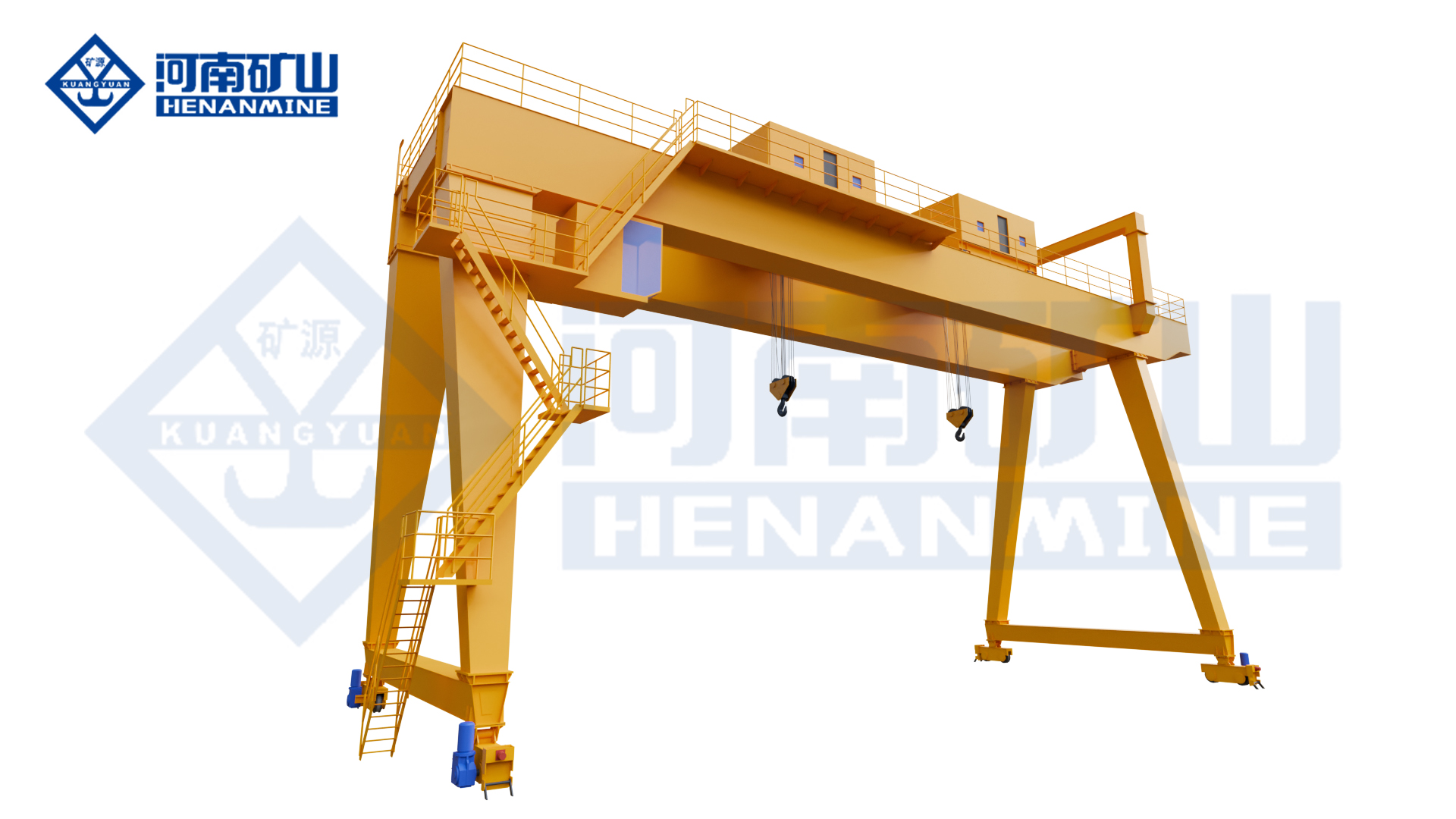
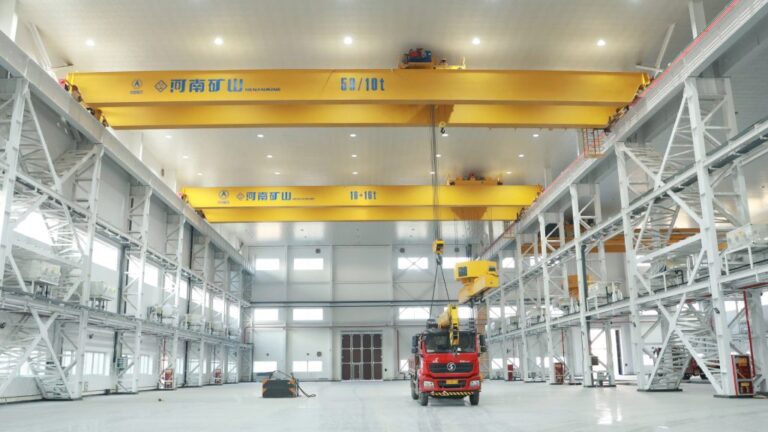
Henan Mine Crane qlc lower-rotating electromagnetic beam crane showing the primary crane structure and lifting arrangement.
The QLC lower-rotating electromagnetic beam overhead crane is a special crane for steel plate, section steel, coils and other magnetic materials. Its lower rotating lifting beam changes load orientation while electromagnetic lifters provide the pickup force.
Procurement should start with the steel product dimensions and orientation change required by the process. Load length, temperature, magnetic characteristics, rotation angle, stacking pattern and emergency power-hold requirement all affect the final lifting beam and magnet configuration.
Quick Specifications
| Product Model |
QLC |
| Type-Test Product Name |
General Overhead Crane |
| Lifting Capacity |
Configured according to project requirements |
| Span |
Configured according to runway center distance |
| Lifting Height |
Configured according to workshop / process requirements |
| Working Duty |
Configured from source data and actual load spectrum |
| Lifting Attachment |
Configured according to the product and load |
| Control Method |
Configured according to project requirements |
| Source-Stated Sway |
Within 5° |
| Source-Stated Magnet Attraction |
>= 1.5 × rated lifting capacity |
| Source-Stated Battery Hold |
15–30 min after main power loss |
Best For: For steel-service buyers who need a rotating electromagnetic beam to pick, orient and transfer long magnetic loads inside or outside a fixed bay.
Request A QLC Lower-Rotating Electromagnetic Beam Crane Quote
Product Overview
Designed for steel plates, sections, coils and similar materials in steel mills, ports and storage facilities.
Lower-rotating lifting beam provides load-orientation capability.
Photoelectric sensors identify and adjust rotation angle; braking stops rotation outside the permitted range.
Where the source page does not publish a numerical capacity, span, speed, duty, positioning accuracy or other guaranteed performance value, the final value should be selected and agreed from the actual project rather than copied from a similar crane.
Why Choose QLC Lower-Rotating Electromagnetic Beam Crane?
Rotating Steel Handling
Orient long magnetic loads without relying on floor-based turning equipment.
Anti-Sway Control
Mechanical and electrical anti-sway help reduce positioning time around stacks and process equipment.
Rotation-Limit Protection
Photoelectric angle sensing and braking protect the rotating attachment from exceeding its permitted range.
Emergency Magnet Holding
Source-confirmed battery holding provides time to manage a sudden power interruption.
Indoor / Outdoor Steel Service
The source positions the crane for fixed bays in steel mills, ports and warehouses, including high-temperature and dusty conditions.
Product Images

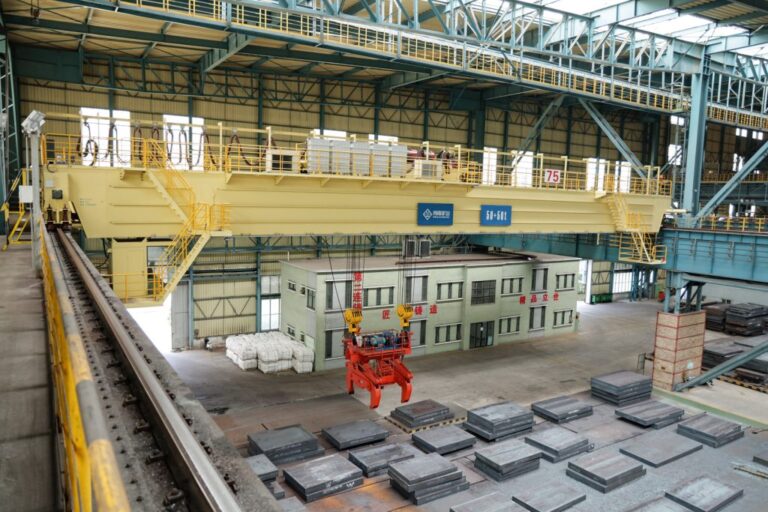
Source image associated with the QLC Lower-Rotating Electromagnetic Beam Crane, showing the crane, magnetic attachment or steel-handling application.
|

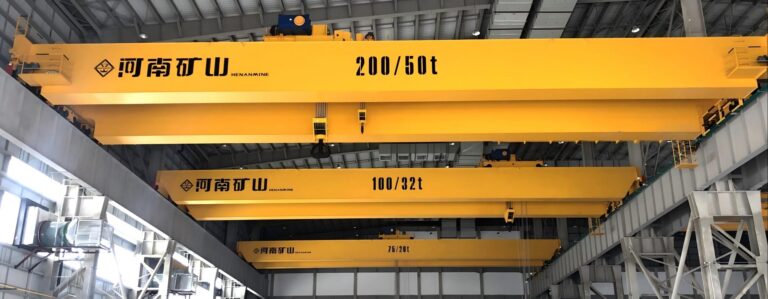
Source image associated with the QLC Lower-Rotating Electromagnetic Beam Crane, showing the crane, magnetic attachment or steel-handling application.
|
Main Crane Components
| Bridge Structure |
Engineered from capacity, span, duty, runway and product-specific process loads. |
| Hoisting / Trolley System |
Configured for the product's lifting mechanism and operating cycle. |
| Lifting Attachment |
Selected from the actual load geometry, material and process. |
| Travel System |
Bridge and trolley travel selected for required speed, duty and positioning. |
| Electrical & Control System |
Configured for operator control, safety functions and any source-supported automation / monitoring. |
Technical Parameters
| Model |
QLC |
| Product Type |
QLC Lower-Rotating Electromagnetic Beam Overhead Crane |
| Type-Test Product Name |
General Overhead Crane |
| Capacity |
Project-specific unless source-stated above |
| Span |
Project-specific unless source-stated above |
| Lifting Height |
Project-specific |
| Hoisting Speed |
Project-specific |
| Trolley / Crane Travel Speed |
Project-specific |
| Working Duty |
Project-specific unless source-stated above |
| Control Method |
Project-specific |
| Power Supply |
According to site electrical conditions |
| Operating Environment |
According to actual process conditions |
Source-Confirmed Features & Buyer-Defined Options
Source-confirmed product facts:
- Designed for steel plates, sections, coils and similar materials in steel mills, ports and storage facilities.
- Lower-rotating lifting beam provides load-orientation capability.
- Photoelectric sensors identify and adjust rotation angle; braking stops rotation outside the permitted range.
- Mechanical anti-sway uses bidirectional V-rope reeving; electrical anti-sway predicts sway and adjusts motor speed.
- Source reports sway controlled within 5 degrees.
- Source reports magnet attraction above 1.5 times rated lifting capacity and battery hold of 15–30 minutes after main-power loss.
Buyer-defined items:
- Capacity and total suspended load
- Span / lifting height / runway length
- Load geometry and lifting attachment
- Operating frequency and working duty
- Control and safety functions
- Positioning / synchronization / automation where applicable
- Installation, testing and commissioning scope
Application Scenarios
| Steel Plate Storage |
Pick, rotate and stack long plates. |
| Section / Bar Handling |
Move magnetic long products between process and storage positions. |
| Coil / Steel Yard Work |
Specialized magnetic handling where load orientation must change. |
| Ports & Warehouses |
Fixed-bay magnetic material transfer. |
How to Select the Right QLC Lower-Rotating Electromagnetic Beam Crane
1. Define the Steel Product
Provide material type, dimensions, maximum temperature and surface condition.
2. Define the Required Rotation
State pickup orientation, discharge orientation and permitted rotation range.
3. Define Magnet / Beam Layout
Provide load length, center of gravity and required magnet spacing.
4. Define Emergency Holding Requirement
Confirm required backup-hold philosophy and acceptance test.
5. Confirm Capacity, Span and Duty
Include lifting beam and magnet self-weight in the total suspended load.
Magnet & Rotation Data Buyers Should Define
| Magnetic Load |
Material grade, dimensions, temperature and surface condition affect magnet selection. |
| Rotation Envelope |
Define the required angle and any obstacles around the load. |
| Backup Power |
Source reports 15–30 minutes hold on the referenced design; new-project acceptance must be agreed separately. |
| Anti-Sway |
Source reports sway within 5 degrees on the referenced configuration; project performance should be specified separately. |
Safety & Control: What Buyers Should Confirm
• Rated capacity, overload protection and load-indication requirements
• Hoisting / travel limits, braking and emergency-stop requirements
• Attachment-specific safety such as magnet backup, grab interlocks, clamps or tandem synchronization where applicable
• Operator control method, visibility and safe access
• Anti-collision, anti-sway, positioning or automation requirements where required by the process
• Factory / site acceptance, load tests and project-specific functional tests
Installation & Maintenance
Before manufacture and installation, confirm runway span, rail / runway-beam condition, elevation, straightness, available headroom, power supply and erection access. Special attachments, multi-trolley systems, cantilevers, suspended runways and automated layouts should be coordinated with the workshop or yard drawing before production.
Maintenance should follow the supplied crane manual and actual duty. Inspection normally covers the hoisting mechanism, brakes, ropes, hooks / attachments, wheels, drives, fasteners, limits and electrical systems, with additional checks for magnets, grabs, clamps, sensors, encoders or automation hardware where fitted.
What Information Do We Need for a Quote?
| 1 |
Steel material type and temperature |
| 2 |
Maximum load including beam and magnets |
| 3 |
Maximum / minimum load dimensions |
| 4 |
Required rotation angle |
| 5 |
Magnet quantity / spacing if known |
| 6 |
Span and lifting height |
| 7 |
Runway length |
| 8 |
Lifts per hour / duty |
| 9 |
Emergency magnet-hold requirement |
| 10 |
Control method |
| 11 |
Workshop / yard drawing |
| 12 |
Power supply and destination |
Frequently Asked Questions
How is the final crane capacity selected?
Use the total suspended load, including the load itself plus any beam, grab, magnet, clamp, spreader or rigging that remains below the hook.
Can the capacity, span and lifting height be customized?
Yes, these values are project-specific unless a source range is explicitly listed on this page. Provide the workshop / yard data for engineering selection.
What should I provide for a faster quotation?
Provide load drawings or dimensions, maximum suspended load, span, lifting height, runway length, operating cycle, environment and the specific process function that makes this product necessary.
Can control and automation be customized?
Where the source supports PLC, VFD, positioning, WMS/MES/DCS or remote functions, the final scope should be defined from the buyer's interface and acceptance requirements.
How should source-reported performance numbers be treated?
They describe the source product configuration. Any value that matters contractually for a new project should be written into the technical agreement and acceptance plan.
Related General Overhead Cranes
QJ Lower-Rotating Beam Overhead Crane
QZ Intelligent Grab Bucket Double-Girder Overhead Crane
QEN Grab & Hook Dual-Purpose Overhead Crane
QDXG Zinc Pot Maintenance Overhead Crane
QE Double-Trolley Hook Overhead Crane
Request A QLC Lower-Rotating Electromagnetic Beam Crane Quote
Send your lifting load, span, lifting height, runway length, workshop or yard drawing, operating cycle, load geometry and special attachment / control requirements. Henan Mine Crane engineers will review the process and prepare a project-specific crane configuration and quotation.
Request A Quote | View Overhead Cranes