QZ Intelligent Grab Bucket Double-Girder Overhead Crane
For bulk-material plants that need more than manual grab lifting and want path planning, positioning, WMS/MES integration and unattended operation.

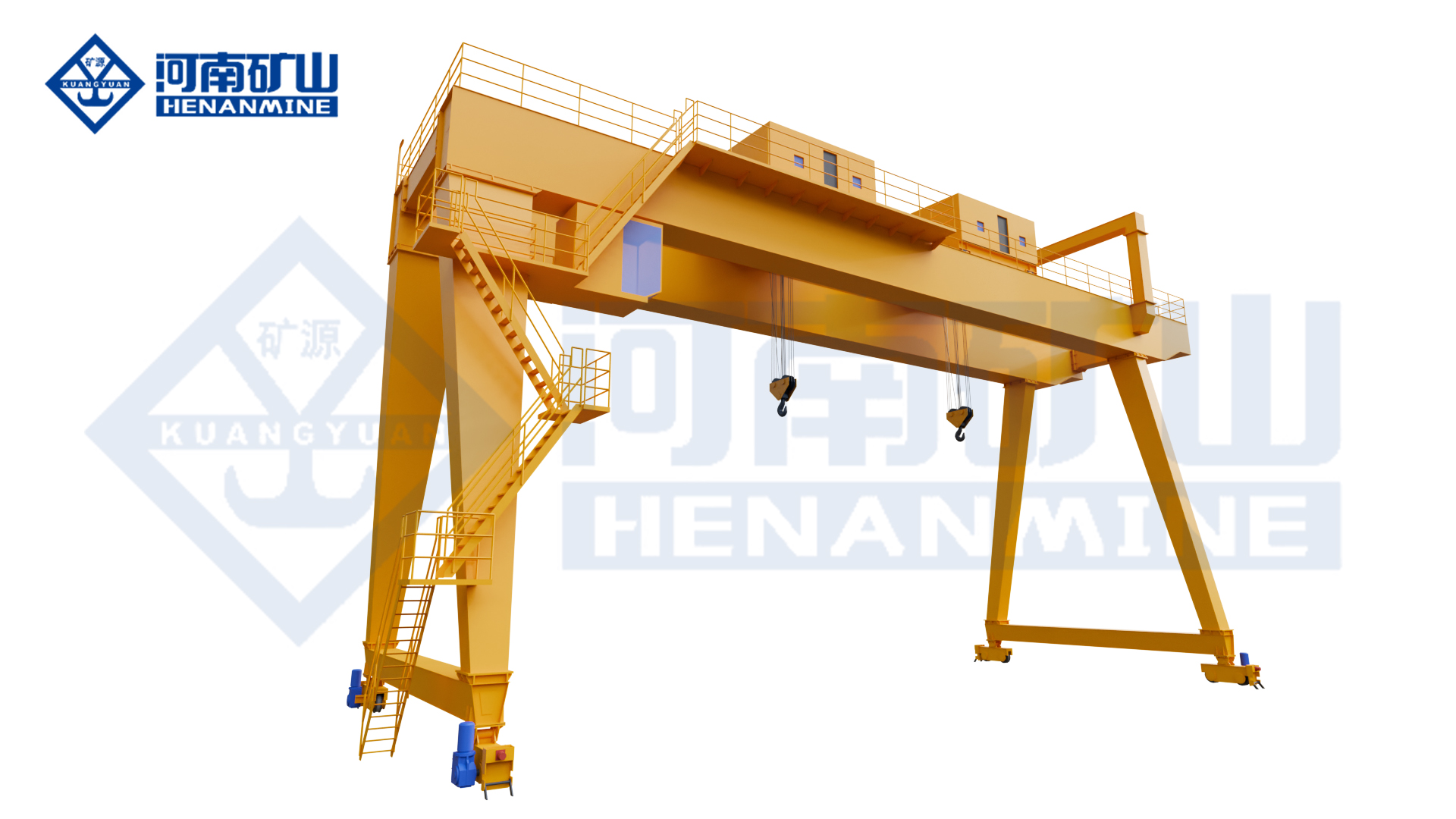
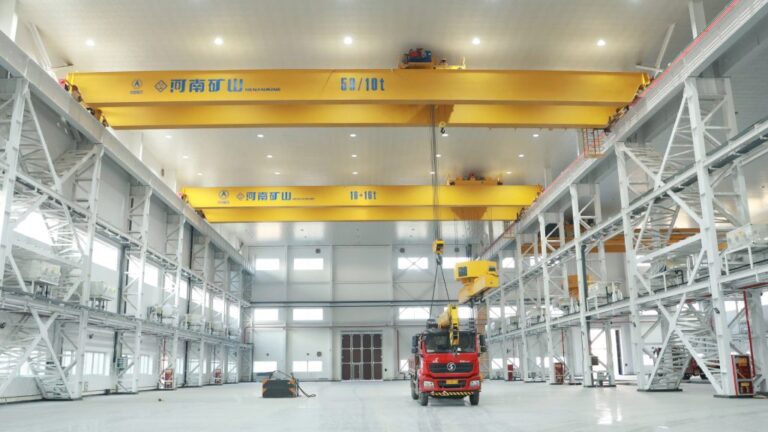
Henan Mine Crane qz intelligent grab crane showing the primary crane structure and lifting arrangement.
The QZ intelligent grab double-girder overhead crane uses a four-rope grab for ore, lime, raw coal, sand, coke, cement, slag and other bulk materials. The source positions the basic crane as a mature, fast and flexible solution for warehouses, stockyards and workshops.
The intelligent configuration adds automation around the material-flow process. Buyers should define bulk density, required throughput, storage geometry, hopper positions, stockpile scanning / positioning method and the interface to WMS, MES or other plant systems.
Quick Specifications
| Product Model |
QZ |
| Type-Test Product Name |
General Overhead Crane |
| Lifting Capacity |
Configured according to project requirements |
| Span |
Configured according to runway center distance |
| Lifting Height |
Configured according to workshop / process requirements |
| Working Duty |
Configured from source data and actual load spectrum |
| Lifting Attachment |
Configured according to the product and load |
| Control Method |
Configured according to project requirements |
| Source-Stated Wheel-Life Improvement |
About 20% vs traditional forged-wheel process (source claim) |
Best For: For bulk-material plants that need more than manual grab lifting and want path planning, positioning, WMS/MES integration and unattended operation.
Request A QZ Intelligent Grab Crane Quote
Product Overview
Four-rope grab for ore, lime, raw coal, sand, coke, cement, slag and similar bulk materials.
Can interface with MES; source lists anti-sway, path planning, precise positioning, automatic operation and wireless communication.
Source states WMS can support unmanned operation, 3D crane positioning and automatic loading/unloading control.
Where the source page does not publish a numerical capacity, span, speed, duty, positioning accuracy or other guaranteed performance value, the final value should be selected and agreed from the actual project rather than copied from a similar crane.
Why Choose QZ Intelligent Grab Crane?
Bulk-Material Automation
Designed around grab cycles rather than hook lifting.
MES / WMS Integration
Fits automated plant material-flow systems.
Path Planning + 3D Positioning
Useful when the crane must travel automatically between stockpile and discharge points.
Anti-Sway + Precise Positioning
Supports more stable automatic grabs and releases.
Maintainable Heavy Mechanisms
Integral trolley machining and source-highlighted wheel process support long-term travel quality.
Product Images

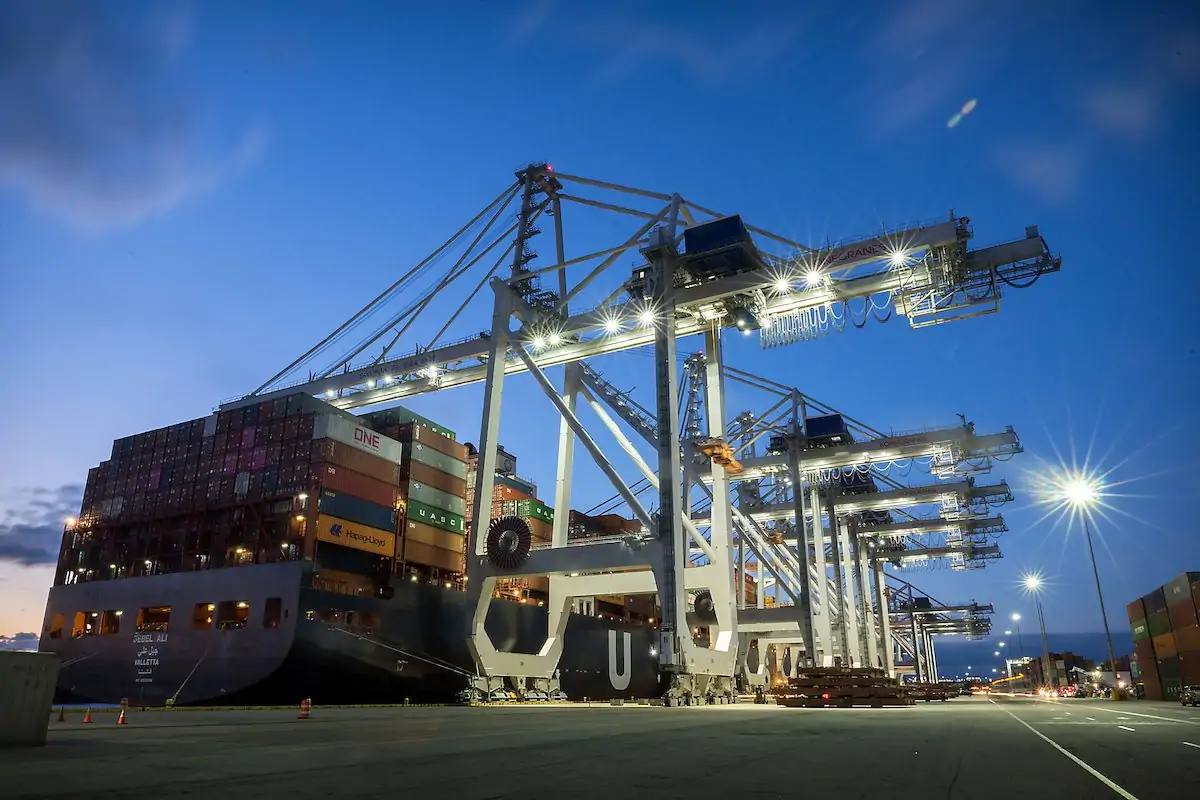
Source image associated with the QZ Intelligent Grab Crane, showing the grab crane, attachment or bulk-material application.
|

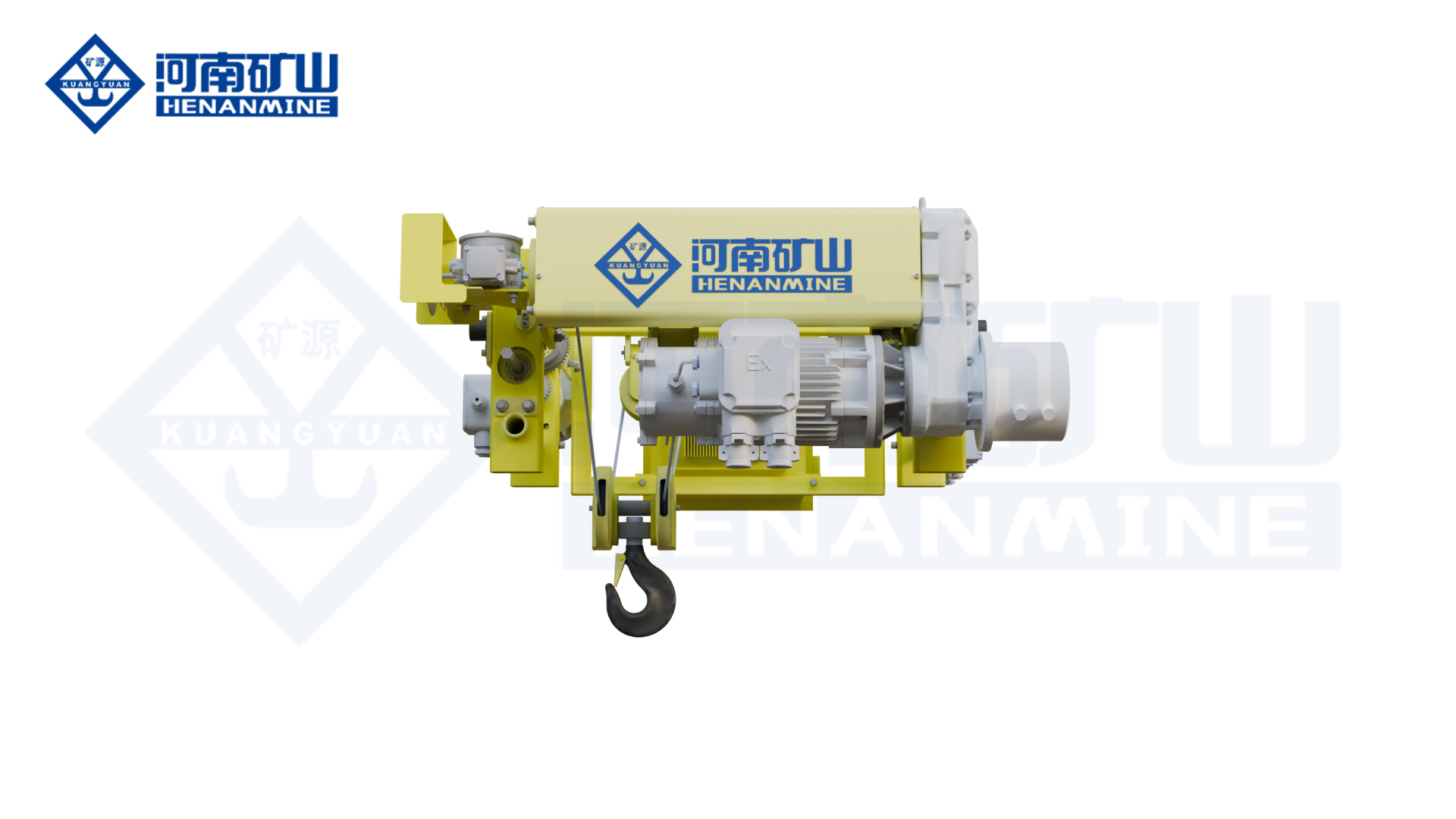
Source image associated with the QZ Intelligent Grab Crane, showing the grab crane, attachment or bulk-material application.
|

Source image associated with the QZ Intelligent Grab Crane, showing the grab crane, attachment or bulk-material application.
|

Source image associated with the QZ Intelligent Grab Crane, showing the grab crane, attachment or bulk-material application.
|

Source image associated with the QZ Intelligent Grab Crane, showing the grab crane, attachment or bulk-material application.
|

Source image associated with the QZ Intelligent Grab Crane, showing the grab crane, attachment or bulk-material application.
|
Main Crane Components
| Bridge Structure |
Engineered from capacity, span, duty, runway and product-specific process loads. |
| Hoisting / Trolley System |
Configured for the product's lifting mechanism and operating cycle. |
| Lifting Attachment |
Selected from the actual load geometry, material and process. |
| Travel System |
Bridge and trolley travel selected for required speed, duty and positioning. |
| Electrical & Control System |
Configured for operator control, safety functions and any source-supported automation / monitoring. |
Technical Parameters
| Model |
QZ |
| Product Type |
QZ Intelligent Grab Bucket Double-Girder Overhead Crane |
| Type-Test Product Name |
General Overhead Crane |
| Capacity |
Project-specific unless source-stated above |
| Span |
Project-specific unless source-stated above |
| Lifting Height |
Project-specific |
| Hoisting Speed |
Project-specific |
| Trolley / Crane Travel Speed |
Project-specific |
| Working Duty |
Project-specific unless source-stated above |
| Control Method |
Project-specific |
| Power Supply |
According to site electrical conditions |
| Operating Environment |
According to actual process conditions |
Source-Confirmed Features & Buyer-Defined Options
Source-confirmed product facts:
- Four-rope grab for ore, lime, raw coal, sand, coke, cement, slag and similar bulk materials.
- Can interface with MES; source lists anti-sway, path planning, precise positioning, automatic operation and wireless communication.
- Source states WMS can support unmanned operation, 3D crane positioning and automatic loading/unloading control.
- Fault automatic alarm is source-listed.
- Source reports forged/rolled composite wheel process and approximately 20% longer wheel life than traditional forged-wheel process.
- Trolley frame is integrally machined on a large boring machine to improve wheel installation accuracy.
Buyer-defined items:
- Capacity and total suspended load
- Span / lifting height / runway length
- Load geometry and lifting attachment
- Operating frequency and working duty
- Control and safety functions
- Positioning / synchronization / automation where applicable
- Installation, testing and commissioning scope
Application Scenarios
| Raw Material Yards |
Ore, coal, coke and slag handling. |
| Bulk Warehouses |
Automated storage and retrieval of loose material. |
| Process Feeding |
Automatic transfer to hoppers / process points. |
| Unattended Material Handling |
WMS/MES-directed crane operation. |
How to Select the Right QZ Intelligent Grab Crane
1. Define the Material
Provide bulk density, particle size, moisture and abrasiveness.
2. Define Required Throughput
State t/h and operating hours so grab size and cycle time can be calculated.
3. Define Storage Geometry
Provide stockpile, pit, hopper and obstacle coordinates.
4. Define Automation Boundary
State what WMS/MES commands the crane must receive and what status data it must return.
5. Define Positioning / Scanning
Specify required pickup accuracy and any 3D scanning or stockpile mapping requirement.
Automation Scope for an Intelligent Grab Crane
| Material Database |
Bulk density and material characteristics drive grab and load calculations. |
| Warehouse Interface |
Define WMS/MES messages, job dispatch and status feedback. |
| Positioning |
Define coordinates, repeatability / accuracy requirement and calibration method. |
| Fallback Mode |
Define how operators recover or work manually when automation is unavailable. |
Safety & Control: What Buyers Should Confirm
• Rated capacity, overload protection and load-indication requirements
• Hoisting / travel limits, braking and emergency-stop requirements
• Attachment-specific safety such as magnet backup, grab interlocks, clamps or tandem synchronization where applicable
• Operator control method, visibility and safe access
• Anti-collision, anti-sway, positioning or automation requirements where required by the process
• Factory / site acceptance, load tests and project-specific functional tests
Installation & Maintenance
Before manufacture and installation, confirm runway span, rail / runway-beam condition, elevation, straightness, available headroom, power supply and erection access. Special attachments, multi-trolley systems, cantilevers, suspended runways and automated layouts should be coordinated with the workshop or yard drawing before production.
Maintenance should follow the supplied crane manual and actual duty. Inspection normally covers the hoisting mechanism, brakes, ropes, hooks / attachments, wheels, drives, fasteners, limits and electrical systems, with additional checks for magnets, grabs, clamps, sensors, encoders or automation hardware where fitted.
What Information Do We Need for a Quote?
| 1 |
Bulk material and density |
| 2 |
Required throughput t/h |
| 3 |
Grab volume if known |
| 4 |
Span / lifting height / runway length |
| 5 |
Stockpile and hopper layout |
| 6 |
Cycles per hour / duty |
| 7 |
WMS/MES interface description |
| 8 |
Required positioning accuracy |
| 9 |
Obstacle / anti-collision requirements |
| 10 |
Control / fallback manual mode |
| 11 |
Power supply |
| 12 |
Destination and commissioning scope |
Frequently Asked Questions
How is the final crane capacity selected?
Use the total suspended load, including the load itself plus any beam, grab, magnet, clamp, spreader or rigging that remains below the hook.
Can the capacity, span and lifting height be customized?
Yes, these values are project-specific unless a source range is explicitly listed on this page. Provide the workshop / yard data for engineering selection.
What should I provide for a faster quotation?
Provide load drawings or dimensions, maximum suspended load, span, lifting height, runway length, operating cycle, environment and the specific process function that makes this product necessary.
Can control and automation be customized?
Where the source supports PLC, VFD, positioning, WMS/MES/DCS or remote functions, the final scope should be defined from the buyer's interface and acceptance requirements.
How should source-reported performance numbers be treated?
They describe the source product configuration. Any value that matters contractually for a new project should be written into the technical agreement and acceptance plan.
Related General Overhead Cranes
QLC Lower-Rotating Electromagnetic Beam Overhead Crane
QJ Lower-Rotating Beam Overhead Crane
QEN Grab & Hook Dual-Purpose Overhead Crane
QDXG Zinc Pot Maintenance Overhead Crane
QE Double-Trolley Hook Overhead Crane
Request A QZ Intelligent Grab Crane Quote
Send your lifting load, span, lifting height, runway length, workshop or yard drawing, operating cycle, load geometry and special attachment / control requirements. Henan Mine Crane engineers will review the process and prepare a project-specific crane configuration and quotation.
Request A Quote | View Overhead Cranes