KS New-Type Wire Rope Electric Hoist
For buyers who want a modern wire rope hoist with remote equipment-status visibility, standardized electrical connectors and modular core components that simplify service planning.

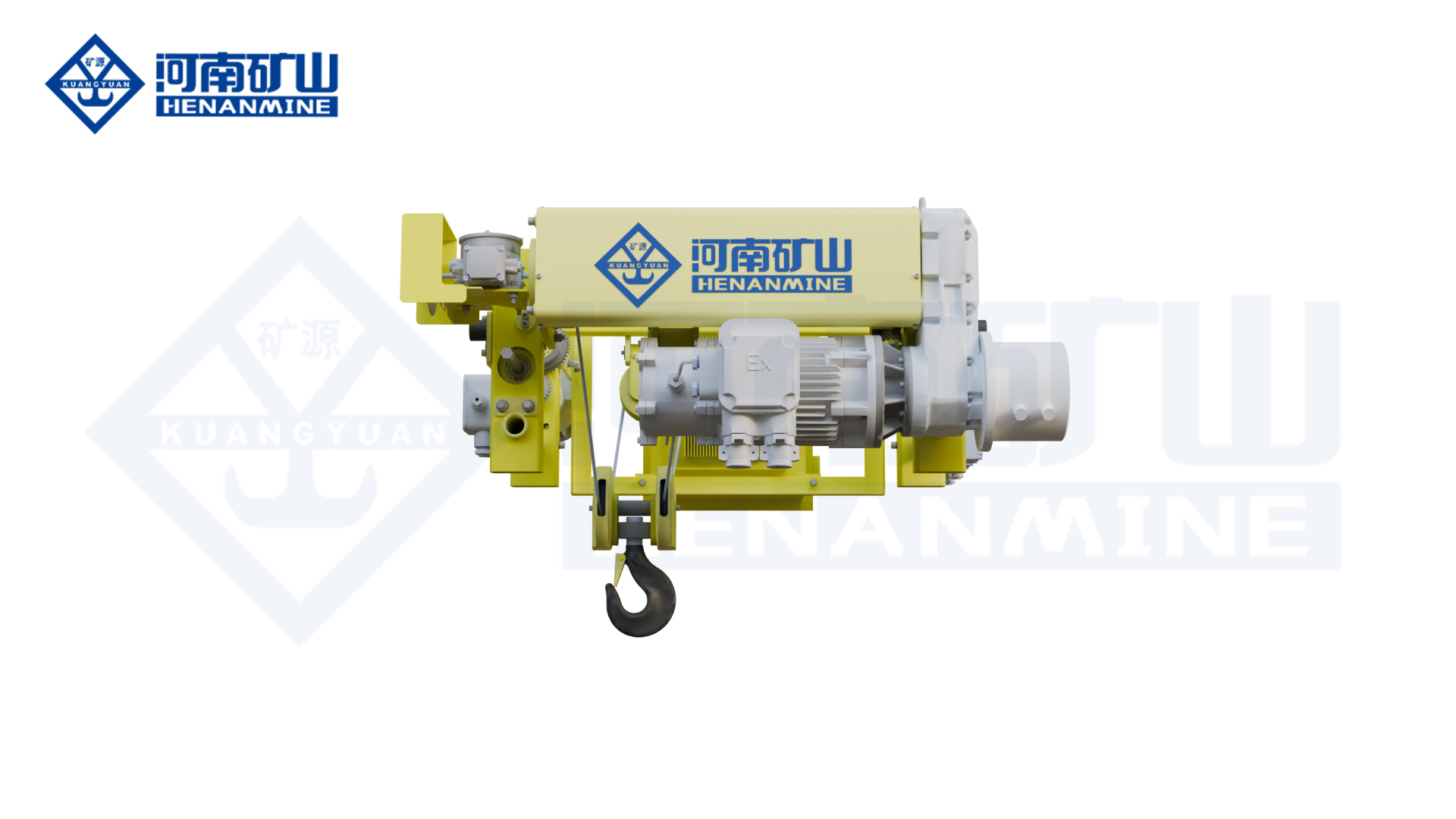
Henan Mine Crane ks new-type electric hoist source image showing the primary hoist structure and lifting arrangement.
Wire rope electric hoists are compact lifting units used for lifting, pulling and loading / unloading. The source states that they can be installed independently on I-beams or integrated with single-girder, double-girder, jib and gantry cranes.
For procurement, KS should be selected when the buyer values remote status access, standardized electrical connection and modular serviceability. Capacity, lifting height, duty, speed, headroom and host-crane dimensions still remain project-specific.
Quick Specifications
| Product Model |
KS |
| Type-Test Product Name |
Wire Rope Electric Hoist |
| Lifting Capacity |
Configured according to project requirements |
| Lifting Height |
Configured according to project requirements |
| Hoisting Speed |
Project-specific |
| Travel Speed |
Project-specific if trolley-mounted |
| Working Duty |
Selected from operating frequency and load spectrum |
| Mounting / Host Interface |
Configured to the I-beam, trolley rail or crane |
| Headroom / Hook Approach |
Project-specific |
| Control Method |
Project-specific |
| Power Supply |
According to site electrical conditions |
Best For: For buyers who want a modern wire rope hoist with remote equipment-status visibility, standardized electrical connectors and modular core components that simplify service planning.
Request A KS New-Type Electric Hoist Quote
Product Overview
Type-test specification: KS.
Type-test product name: Wire Rope Electric Hoist.
Source describes the general wire rope hoist as compact, lightweight, small in size and easy to operate.
Can be installed independently on an I-beam or used with single-girder, double-girder, jib or gantry cranes.
Any capacity, lifting height, speed, duty, headroom, synchronization tolerance, energy-saving percentage or other guaranteed value that is not explicitly published for the exact product should be defined by the project and written into the technical agreement.
Why Choose KS New-Type Electric Hoist?
Remote Status Visibility
IoT status access can help maintenance teams see operating condition remotely where this function is included in the project.
Modular Service Concept
Motor, reducer and brake modules use standardized interfaces, reducing the amount of disassembly needed for replacement.
IP55 Heavy-Duty Electrical Connectors
The source confirms IP55 protection for the heavy-duty aviation-plug connection, supporting quicker and more reliable electrical connection.
Flexible Host-Crane Integration
The source states that wire rope hoists can operate on I-beams or be integrated with several crane types.
Compact Hoist Platform
Useful where the buyer wants a lightweight lifting mechanism rather than a larger winch-trolley system.
Product Images

Official source image associated with the KS New-Type Electric Hoist and its compact wire rope hoist arrangement.
|

Official source image associated with the KS New-Type Electric Hoist and its compact wire rope hoist arrangement.
|
Main Hoist Components
| Hoisting Motor |
Selected from capacity, duty, speed and product configuration. |
| Reducer / Transmission |
Transfers motor torque to the drum; source-specific features are listed below where confirmed. |
| Wire Rope Drum & Reeving |
Configured from lifting height, rope system and hook approach. |
| Hook Block |
Selected from rated load and lifting application. |
| Travel Trolley / Mounting System |
Configured to I-beam, trolley rail or host crane where travel is required. |
| Brake & Safety Devices |
Configured from the hoist duty and project safety requirements. |
| Electrical & Control System |
Configured according to the product's source-supported functions and project requirements. |
Technical Parameters
| Model |
KS |
| Product Type |
KS New-Type Wire Rope Electric Hoist |
| Type-Test Product Name |
Wire Rope Electric Hoist |
| Capacity |
Project-specific |
| Lifting Height |
Project-specific |
| Hoisting Speed |
Project-specific |
| Travel Speed |
Project-specific if trolley-mounted |
| Working Duty |
Project-specific |
| Headroom / Hook Approach |
Project-specific |
| Beam / Rail Interface |
Project-specific |
| Control Method |
Project-specific |
| Power Supply |
According to site electrical conditions |
| Environment |
According to indoor/outdoor, dust, temperature, humidity and corrosion conditions |
Source-Confirmed Features & Buyer-Defined Options
Source-confirmed product facts:
- Type-test specification: KS.
- Type-test product name: Wire Rope Electric Hoist.
- Source describes the general wire rope hoist as compact, lightweight, small in size and easy to operate.
- Can be installed independently on an I-beam or used with single-girder, double-girder, jib or gantry cranes.
- IoT platform can be used for remote equipment-status viewing and predictive-maintenance support.
- Electrical connections use international-standard heavy-duty aviation plugs.
- Source states IP55 protection for the electrical connector arrangement.
- Motor, reducer, brake and other core components use modular design with standardized interfaces.
- Core modules can be replaced without dismantling the whole hoist according to the source.
Buyer-defined items:
- Maximum suspended load
- Lifting height and headroom
- Hoisting / travel speed
- Operating frequency / duty
- I-beam / rail / crane interface
- Control method
- Power supply
- Environmental conditions
- Installation / commissioning scope
Application Scenarios
| Manufacturing Workshops |
General production and equipment lifting. |
| Assembly Lines |
Repeated component handling where a compact wire rope hoist fits the crane layout. |
| Warehouses |
Loading and transfer using an I-beam, monorail or crane. |
| Overhead / Gantry Cranes |
Hoisting mechanism for compatible single- or double-girder crane systems. |
How to Select the Right KS New-Type Electric Hoist
1. Define the Full Suspended Load
Include load, hook block, lifting fixture and any permanent rigging.
2. Define Lifting Height and Headroom
Provide beam elevation, highest hook position and lowest pickup point.
3. Confirm the Host Interface
Provide I-beam / trolley rail dimensions or the host-crane arrangement.
4. Define Duty and Speed
Provide lifts per hour, operating hours and required hoisting / travel behavior.
5. Decide Whether IoT Is Required
If remote monitoring matters, define network access, status points and maintenance workflow.
6. Define Electrical Connection Requirements
Confirm whether the source-described IP55 connector arrangement matches the site's protection and maintenance requirements.
KS Buyer Decision: Standard Hoist vs New-Type Modular Hoist
| Choose KS When |
Remote status visibility, modular replacement and standardized heavy-duty connectors have practical maintenance value. |
| IoT Scope |
Source confirms capability; network, data points and user access remain project-specific. |
| Connector Protection |
IP55 applies to the source-described electrical connector arrangement, not automatically to every hoist component. |
| Service Planning |
If modular replacement is important, define spare-module and maintenance-access requirements in the quotation. |
Safety & Control: What Buyers Should Confirm
• Rated capacity and overload-protection requirement
• Upper / lower lifting limits
• Brake and emergency-stop requirements
• Travel limits if trolley-mounted
• Control station / pendant / remote requirements
• Host-crane interlocks if the hoist is integrated into a crane
• Any two-trolley coordination / synchronization protection where applicable
• Factory and site functional / load acceptance tests
Installation & Maintenance
Before manufacture, confirm beam / rail dimensions, available headroom, hook approach, lifting height, travel length, power supply, control location and maintenance access. If the hoist is part of a crane, provide the crane arrangement drawing so the trolley and electrical interfaces can be checked.
Maintenance should follow the final supplied manual and actual duty. Routine attention normally includes wire rope, hook, drum, brake, motor, reducer, trolley wheels where fitted, limits, fasteners and electrical connections. Product-specific modular or IoT functions should be included in the maintenance plan where supplied.
What Information Do We Need for a Quote?
| 1 |
Maximum lifting capacity |
| 2 |
Lifting height |
| 3 |
Required hoisting speed |
| 4 |
Travel speed / travel length if trolley-mounted |
| 5 |
Operating frequency / working duty |
| 6 |
Host I-beam or trolley-rail dimensions |
| 7 |
Available headroom / hook approach |
| 8 |
Control method |
| 9 |
Power supply |
| 10 |
IoT / remote-status requirement |
| 11 |
Environmental conditions |
| 12 |
Destination / installation scope |
Frequently Asked Questions
Can capacity and lifting height be customized?
Yes. The source pages do not publish one universal capacity or lifting-height range for these exact products, so selection should be project-specific.
Can the hoist run on an I-beam?
The source states that wire rope electric hoists can be installed independently on I-beams or integrated with several crane types.
What is the most important dimension for a low building?
Available headroom and required upper hook position. For severe restrictions, compare the KS1 low-headroom arrangement.
How should source percentage claims be used?
Treat them as source product data. If a reduction or saving is contract-critical, define the comparison baseline and acceptance method.
What information improves quotation accuracy most?
Capacity, lifting height, duty, beam / rail dimensions, headroom, speed, control, power supply and a crane / building drawing.
Related Wire Rope Electric Hoists
KS1 Low-Headroom Wire Rope Electric Hoist
KSS New-Type Double-Trolley Wire Rope Electric Hoist
CD Wire Rope Electric Hoist
Request A KS New-Type Electric Hoist Quote
Send your lifting capacity, lifting height, headroom, beam / rail dimensions, operating duty, required speeds, control method and power supply. Henan Mine Crane can then review the hoist and host-crane interface and prepare a project-specific configuration and quotation.
Request A Quote